Replacing sacrificial zinc anodes is one of the most important maintenance tasks for protecting a yacht’s underwater metals from galvanic corrosion. However, simply installing new anodes does not guarantee they will provide protection.
Many boat owners assume that a freshly installed zinc anode automatically begins working the moment it is bolted into place. In reality, even a brand-new anode can fail to protect underwater components if it lacks proper electrical contact with the bonding system or the metal it is intended to protect.
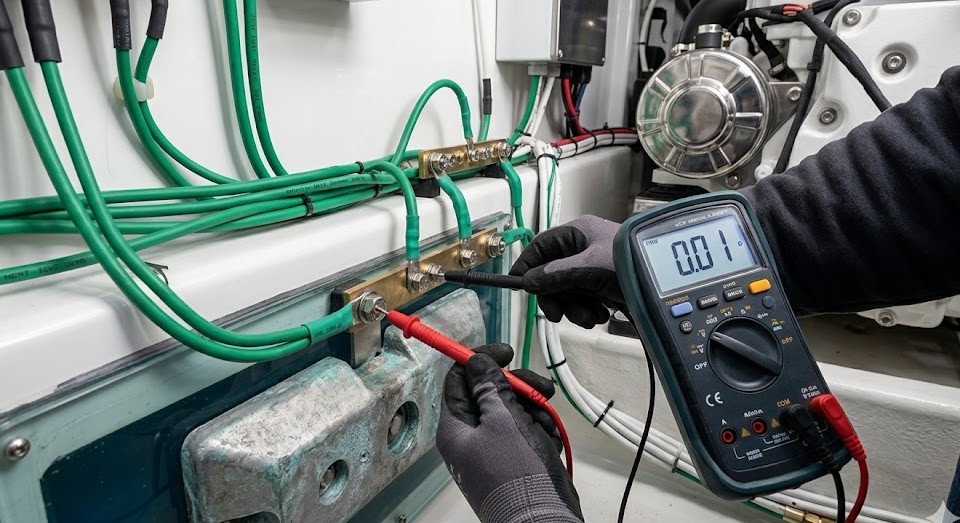
That is why experienced marine technicians routinely check electrical continuity anodes after installation. A simple multimeter test can verify whether current can flow properly between the anode and the protected component.
Understanding how to perform this test helps yacht owners confirm that their corrosion protection system is functioning as intended before expensive underwater damage occurs.
Why Electrical Continuity Matters for Zinc Anodes
Sacrificial anodes protect underwater metals through an electrochemical process. The anode intentionally corrodes before more valuable components such as propellers, shafts, rudders, trim tabs, and through-hulls.
For this protection to occur, electrical current must be able to flow freely between the anode and the protected metal.
If electrical continuity is interrupted by paint, corrosion, dirt, improper installation, or damaged bonding connections, the anode may be physically present but electrically ineffective.
In that situation, underwater metals can begin corroding despite having seemingly adequate anode protection.
What Is Electrical Continuity?
Electrical continuity simply means that electricity can travel through a complete conductive path.
When technicians check electrical continuity anodes, they are verifying that there is an uninterrupted electrical connection between:
- The zinc anode
- The bonding system
- The protected underwater component
If continuity is present, the corrosion protection system can function correctly.
If continuity is absent, the anode cannot provide effective protection.
Common Reasons New Anodes Fail
Several installation issues can prevent proper electrical contact.
- Paint beneath mounting surfaces
- Corrosion buildup
- Improper hardware installation
- Loose fasteners
- Contaminated contact surfaces
- Broken bonding wires
- Incorrect anode sizing
Even minor contamination between the anode and mounting surface can increase resistance and reduce effectiveness.
Why a Multimeter Is the Best Diagnostic Tool
A digital multimeter provides a quick and reliable method for evaluating bonding system performance.
A proper multimeter test marine bonding procedure allows owners and technicians to verify:
- Electrical continuity
- Resistance levels
- Bonding wire integrity
- Anode connectivity
- System performance
Most marine electrical inspections include continuity testing as part of a broader corrosion-prevention assessment.
How Marine Bonding Systems Work
A bonding system connects underwater metallic components using conductive wires.
These systems help equalize electrical potential and provide a common path to sacrificial anodes.
Typical bonded components include:
- Propeller shafts
- Struts
- Rudders
- Trim tabs
- Through-hulls
- Metal tanks
- Engine components
The American Boat and Yacht Council (ABYC) publishes standards for marine electrical and bonding systems that help reduce corrosion risks.
Preparing for a Multimeter Test Marine Bonding Inspection
Before beginning any testing procedure, ensure the vessel is in a safe condition.
Basic preparation steps include:
- Inspect visible bonding wires
- Check for loose hardware
- Identify all protected components
- Locate installed anodes
- Verify multimeter operation
A quality digital multimeter with continuity and resistance functions is typically sufficient for routine testing.
How to Check Electrical Continuity Anodes Using a Multimeter
The goal is to verify a continuous conductive path between the anode and the protected metal component.
A typical testing process includes:
- Set the multimeter to continuity or resistance mode.
- Place one probe on the zinc anode.
- Place the second probe on the protected component.
- Observe the reading.
- Repeat for each bonded component.
If continuity exists, the meter typically indicates a completed circuit or very low resistance.
High resistance readings may indicate installation or bonding problems.
Understanding Anode Installation Resistance
One of the most important measurements during testing is anode installation resistance.
Resistance represents opposition to electrical current flow.
For corrosion protection systems, lower resistance generally indicates better conductivity between the anode and the protected component.
Excessive anode installation resistance may result from:
- Corrosion layers
- Paint contamination
- Loose mounting hardware
- Damaged bonding conductors
- Poor surface preparation
The lower the resistance, the more effectively the sacrificial anode can perform its protective function.
Inspecting the Ground Wire Connection Yacht Owners Often Overlook
Another critical area is the ground wire connection yacht bonding systems rely upon.
Bonding conductors experience constant exposure to:
- Moisture
- Vibration
- Salt contamination
- Corrosion
- Mechanical stress
Even if the zinc itself is installed correctly, a damaged bonding conductor can interrupt electrical continuity.
Inspecting and testing bonding wires should be part of every anode replacement project.
Common Continuity Test Results and What They Mean
| Test Result | Possible Interpretation |
|---|---|
| Very Low Resistance | Good electrical connection |
| Continuity Tone Present | Circuit path exists |
| Moderate Resistance | Possible contamination or wear |
| High Resistance | Poor connection |
| No Continuity | Open circuit requiring repair |
Results should always be interpreted within the context of the vessel’s bonding system design.
Warning Signs of Bonding System Problems
Several symptoms may indicate inadequate electrical continuity.
- Rapid zinc consumption
- Uneven anode wear
- Corrosion on protected metals
- Pitting on propellers
- Shaft deterioration
- Recurring corrosion issues
If these conditions exist, a comprehensive bonding system inspection may be warranted.
Why Underwater Inspections Complement Electrical Testing
Electrical testing provides valuable data, but visual inspections remain equally important.
Professional underwater inspections can reveal:
- Anode wear patterns
- Corrosion activity
- Propeller condition
- Shaft deterioration
- Bonding system performance indicators
The BoatUS Foundation recommends routine inspection of corrosion protection systems as part of regular vessel maintenance.
Common Installation Mistakes That Increase Resistance
Painting Contact Surfaces
Paint acts as an insulator and can prevent proper current flow.
Failing to Clean Mounting Areas
Oxidation and contamination can increase resistance significantly.
Using Improper Fasteners
Incorrect hardware may compromise conductivity.
Ignoring Bonding Wire Condition
A deteriorated wire can interrupt the entire protection circuit.
Assuming New Means Functional
Even brand-new anodes should always be tested after installation.
Best Practices After Installing New Zinc Anodes
- Perform continuity testing immediately
- Inspect bonding conductors
- Document resistance readings
- Monitor anode wear over time
- Schedule periodic underwater inspections
- Replace damaged bonding components promptly
Proactive testing helps ensure that corrosion protection begins working from day one.
Frequently Asked Questions
Why should I check electrical continuity anodes after installation?
Continuity testing confirms that the anode has a complete electrical path to the components it is intended to protect from corrosion.
What is a multimeter test marine bonding inspection?
It is a diagnostic procedure that uses a multimeter to verify electrical continuity and resistance within a vessel’s bonding system.
What causes high anode installation resistance?
Common causes include paint, corrosion, loose hardware, contaminated contact surfaces, and damaged bonding wires.
Why is the ground wire connection yacht bonding systems use important?
Bonding conductors provide the electrical pathway that allows sacrificial anodes to protect underwater metals.
Can a new zinc anode fail immediately?
Yes. If electrical continuity is absent or resistance is excessive, the anode may provide little or no corrosion protection despite being new.
How often should bonding systems be tested?
Testing is recommended after anode replacement, during routine maintenance, and whenever corrosion-related issues are suspected.
Conclusion
Installing new sacrificial zincs is only half of the corrosion-protection equation. The ability to check electrical continuity anodes through proper testing ensures that those anodes can actually perform their intended function. A simple multimeter test marine bonding inspection can reveal hidden problems before they lead to expensive underwater metal damage.
By monitoring anode installation resistance and verifying every critical ground wire connection yacht bonding systems depend upon, owners can significantly improve corrosion protection and extend the lifespan of underwater components. A few minutes of testing today can help prevent costly repairs tomorrow.
Schedule a Professional Corrosion Protection Inspection
If you’ve recently installed new zinc anodes or are concerned about underwater corrosion, a professional bonding system evaluation can provide peace of mind. Experienced marine technicians and underwater inspectors can verify continuity, assess anode performance, identify bonding issues, and help ensure your vessel remains protected against galvanic corrosion. Contact a qualified marine inspection specialist today to schedule a comprehensive corrosion protection assessment.
