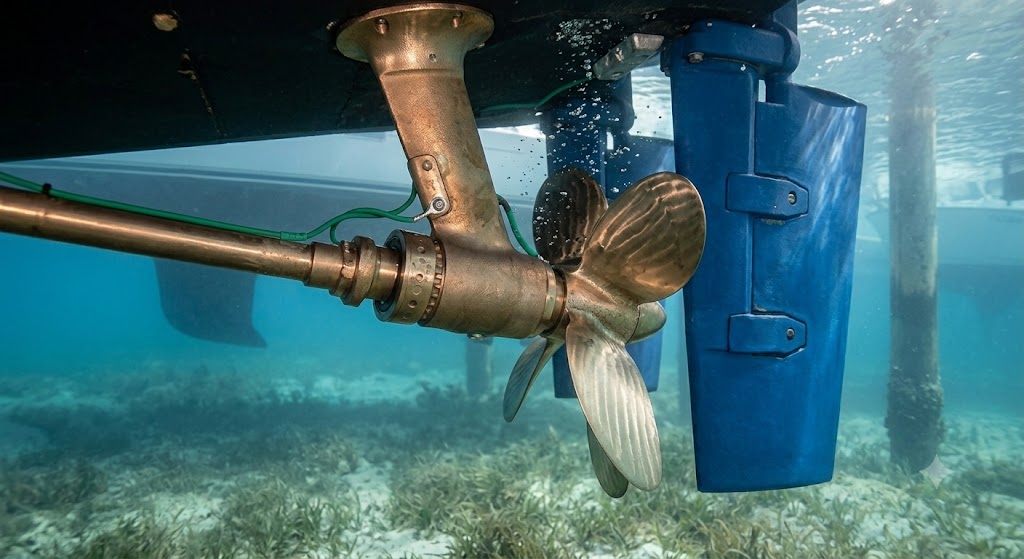
Your boat’s running gear works harder than almost any other underwater component. Propellers, shafts, struts, rudders, trim tabs, and stabilizers constantly operate in a demanding environment where water flow, marine growth, and corrosion all influence performance. While many boat owners focus on engine maintenance, they often overlook how hull fouling directly contributes to running gear cavitation damage.
Even a thin layer of slime or a few barnacles near the propeller can disrupt water flow, increasing turbulence and placing additional stress on the propeller blades. Left unchecked, this disturbance can contribute to cavitation, reduced efficiency, vibration, and premature wear. Routine hull scrubs help maintain smooth water flow, allowing your propulsion system to operate as designed while reducing the likelihood of expensive underwater repairs.
This guide explains how marine growth affects running gear, why cavitation develops, and how regular underwater maintenance protects both your boat’s performance and your investment.
What Is Running Gear?
Running gear refers to the underwater components responsible for propelling and steering a vessel. These parts operate together to transfer engine power into forward movement while maintaining stability and control.
Typical running gear includes:
- Propellers
- Propeller shafts
- Shaft struts
- Rudders
- Cutlass bearings
- Trim tabs
- Stabilizer fins
- Bow and stern thrusters
Because these components remain submerged, they are continuously exposed to marine growth, corrosion, and changing water conditions.
Understanding Running Gear Cavitation Damage
Running gear cavitation damage occurs when vapor bubbles form around a propeller blade due to changes in water pressure. As these bubbles collapse against the metal surface, they generate tiny but powerful shock waves.
Over time, repeated bubble implosions can lead to:
- Surface pitting
- Blade erosion
- Loss of efficiency
- Increased vibration
- Reduced propulsion performance
Although some cavitation may occur under normal operating conditions, excessive turbulence caused by hull fouling can increase the likelihood and severity of damage.
How Marine Growth Disrupts Water Flow
A clean hull allows water to flow smoothly toward the propeller. However, marine growth changes that flow.
Even relatively light fouling can create:
- Turbulence
- Uneven water pressure
- Increased drag
- Disturbed inflow to the propeller
- Higher engine workload
The closer marine growth is to the propeller, the greater its potential impact on propulsion efficiency.
Why Routine Hull Scrubs Matter
Routine underwater hull cleaning removes slime, algae, and early-stage fouling before they significantly affect water flow.
Regular maintenance helps:
- Maintain smooth hull surfaces
- Improve water flow to the propeller
- Reduce drag
- Support fuel efficiency
- Protect running gear performance
- Reduce the risk of excessive cavitation
Cleaning early is generally easier and less abrasive than removing heavy barnacle growth after it becomes established.
Areas That Should Never Be Overlooked
When scheduling underwater maintenance, the hull is only part of the picture. Running gear should always be inspected and cleaned at the same time.
Key inspection areas include:
- Propeller blades
- Propeller hub
- Shafts
- Struts
- Rudders
- Trim tabs
- Bow thrusters
- Water intakes
Marine growth on any of these components can affect overall vessel performance.
Signs Your Running Gear Needs Attention
Changes in performance often appear gradually.
Common warning signs include:
- Reduced top speed
- Higher fuel consumption
- Excessive vibration
- Slower acceleration
- Unusual propeller noise
- Reduced handling performance
While these symptoms can have multiple causes, underwater fouling should always be considered during troubleshooting.
Hull Fouling vs Clean Hull Performance
| Condition | Clean Hull | Fouled Hull |
|---|---|---|
| Water Flow | Smooth and consistent | Turbulent and disrupted |
| Propeller Efficiency | Optimized | Reduced |
| Fuel Consumption | Lower | Higher |
| Marine Growth | Minimal | Heavy accumulation |
| Running Gear Stress | Reduced | Increased |
Routine hull cleaning helps maintain the conditions required for efficient propulsion.
Why Propeller Inspections Are Essential
During every underwater hull scrub, propellers should also be inspected for:
- Marine growth
- Fishing line
- Blade damage
- Pitting
- Corrosion
- Loose hardware
Identifying these issues early often prevents larger mechanical problems later.
Professional Underwater Cleaning Makes a Difference
Experienced divers use techniques appropriate for different hull coatings and running gear materials.
Professional services often include:
- Hull cleaning
- Running gear cleaning
- Propeller inspection
- Zinc anode inspection
- Underwater photography
- Condition reporting
Combining cleaning with inspection provides a more complete picture of the boat’s underwater condition.
How Often Should Hull Scrubs Be Scheduled?
The ideal maintenance interval depends on:
- Water temperature
- Local fouling conditions
- Boat usage
- Antifouling paint type
- Marina location
Boats kept in warm coastal waters generally require more frequent underwater cleaning than vessels operating in cooler environments.
The BoatUS Foundation recommends regular underwater inspections and maintenance to help preserve boat performance and identify developing problems before they become costly repairs.
Common Mistakes Boat Owners Make
Cleaning Only the Hull
Ignoring the propeller and running gear allows marine growth to continue affecting propulsion performance.
Waiting Until Performance Drops
Routine maintenance is typically more effective than waiting until heavy fouling develops.
Ignoring Small Vibrations
Minor vibration may indicate fouling, propeller damage, or other underwater issues that deserve attention.
Skipping Underwater Inspections
Many running gear problems develop below the waterline where they remain unnoticed until performance declines.
Using Aggressive Cleaning Methods
Improper cleaning techniques can damage antifouling coatings and sensitive underwater components.
Best Practices for Protecting Running Gear
- Schedule routine underwater hull scrubs.
- Inspect running gear during every cleaning.
- Replace worn zinc anodes promptly.
- Address marine growth before it becomes severe.
- Monitor fuel efficiency and vessel performance.
- Document underwater inspections with photographs.
Frequently Asked Questions
What causes running gear cavitation damage?
Running gear cavitation damage occurs when vapor bubbles repeatedly form and collapse around propeller blades, gradually causing surface erosion and reducing efficiency.
Can marine growth increase cavitation?
Marine growth can disturb water flow into the propeller, increasing turbulence that may contribute to cavitation under certain operating conditions.
How often should running gear be cleaned?
The frequency depends on water conditions, boat usage, and local fouling rates, but regular underwater maintenance helps maintain peak performance.
Can routine hull scrubs improve fuel efficiency?
Yes. Removing marine growth reduces drag and helps restore smooth water flow, allowing the propulsion system to operate more efficiently.
Should propellers be inspected during every hull cleaning?
Absolutely. Cleaning provides an excellent opportunity to inspect propellers, shafts, rudders, zinc anodes, and other underwater hardware for early signs of wear or damage.
Conclusion
Preventing running gear cavitation damage starts with maintaining a clean underwater profile. Marine growth doesn’t just slow your boat—it alters water flow, increases drag, and places additional stress on the propulsion system. Routine hull scrubs and running gear inspections help maintain efficiency, reduce unnecessary wear, and identify developing problems before they lead to expensive repairs.
By combining regular underwater cleaning with professional inspections, boat owners can improve fuel economy, protect valuable propulsion components, and enjoy more reliable performance throughout the boating season.
Schedule a Professional Hull and Running Gear Cleaning
If your boat has been in the water for several months or you’ve noticed reduced performance, our professional underwater cleaning service can help. We clean hulls, propellers, shafts, rudders, trim tabs, and running gear while inspecting for marine growth, zinc anode wear, and early signs of damage. Contact us today to schedule an underwater inspection and keep your vessel operating at peak efficiency.
