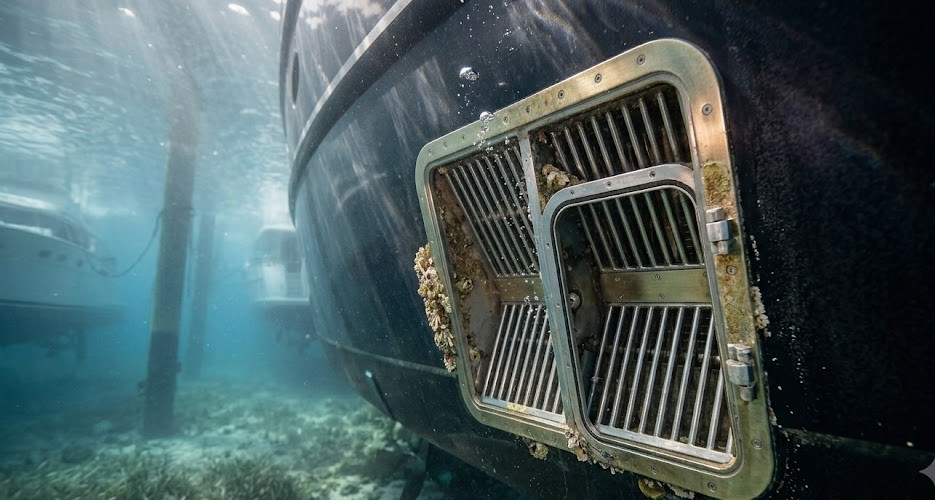
Water intake grates are among the most important yet overlooked components below the waterline. They supply seawater to engines, generators, air conditioning systems, refrigeration units, live wells, and other onboard equipment that depends on a steady flow of cooling water.
When these intake grates become clogged with algae, barnacles, mussels, or marine debris, water flow can be restricted, leading to reduced cooling efficiency and potential equipment problems. Fortunately, cavitation water intake cleaning provides a highly effective method of removing marine growth while minimizing unnecessary contact with the intake structure.
By restoring unrestricted water flow without relying on aggressive scraping or heavy mechanical abrasion, cavitation cleaning has become an increasingly popular solution for boat owners, yacht captains, and commercial operators looking to maintain reliable cooling system performance.
What Are Water Intake Grates?
Water intake grates are protective openings installed below the waterline that allow seawater to enter a vessel while preventing larger debris from entering the cooling system.
They commonly supply water to:
- Main engines
- Generators
- Marine air conditioning systems
- Refrigeration units
- Live wells
- Watermakers
- Fire suppression systems
Because these grates remain submerged year-round, they are highly susceptible to marine growth.
Why Water Intake Grates Become Blocked
Marine organisms naturally seek hard underwater surfaces where they can attach and grow. Intake grates provide an ideal location because they remain stationary and receive a constant flow of nutrient-rich seawater.
Common causes of blockage include:
- Marine slime
- Algae
- Barnacles
- Mussels
- Tubeworms
- Seaweed
- Floating debris
Even relatively light growth can reduce water flow through narrow intake openings.
Why Cavitation Water Intake Cleaning Is Effective
Cavitation water intake cleaning uses controlled hydrodynamic cavitation to remove marine growth from underwater surfaces.
As microscopic vapor bubbles form and collapse, they release concentrated energy that helps loosen biofouling from the intake grate without relying solely on aggressive physical scraping.
This cleaning method can help:
- Restore water flow
- Remove marine growth
- Reduce physical abrasion
- Protect intake surfaces
- Improve cooling system efficiency
How Restricted Water Flow Affects Your Boat
When intake grates become partially blocked, onboard systems receive less cooling water than intended.
Potential consequences include:
- Higher engine operating temperatures
- Reduced generator performance
- Poor air conditioning efficiency
- Cooling system alarms
- Increased equipment wear
- Unexpected shutdowns
Addressing restrictions early helps reduce the likelihood of more serious mechanical problems.
Signs Your Intake Grates Need Cleaning
Several symptoms may indicate reduced water flow.
- Engine temperature running higher than normal
- Weak air conditioning performance
- Frequent cooling alarms
- Reduced generator cooling
- Visible marine growth around intake openings
- Lower water discharge volume
If these signs appear, an underwater inspection should be scheduled as soon as practical.
Cavitation Cleaning vs Traditional Scraping
| Cleaning Method | Marine Growth Removal | Surface Contact | Suitable for Routine Maintenance |
|---|---|---|---|
| Cavitation cleaning | Excellent | Minimal | Yes |
| Plastic scraper | Good | Moderate | Yes |
| Metal scraper | Excellent | High | Limited use |
| Wire brush | Good | High | Use with caution |
The best cleaning method depends on the amount of fouling, the intake material, and manufacturer recommendations.
Benefits of Routine Intake Cleaning
Keeping intake grates clean provides several operational advantages.
- Improved cooling water flow
- More reliable engine performance
- Better generator efficiency
- Reduced risk of overheating
- Longer equipment life
- Lower maintenance costs
Routine underwater maintenance is often far less expensive than repairing damage caused by restricted cooling water.
Why Underwater Inspections Matter
Because intake grates are hidden below the waterline, problems often go unnoticed until equipment performance begins to decline.
Professional underwater inspections allow divers to evaluate:
- Marine growth levels
- Intake grate condition
- Signs of corrosion
- Physical damage
- Blockages
- Nearby running gear
Combining inspection with cleaning provides a complete assessment of underwater intake systems.
Other Areas That Benefit from Cavitation Cleaning
Many underwater components can benefit from cavitation cleaning in addition to intake grates.
- Hull surfaces
- Propellers
- Trim tabs
- Thruster tunnels
- Sea chests
- Dock structures
- Seawalls
Using a consistent maintenance approach helps preserve overall vessel performance.
Common Mistakes Boat Owners Make
Ignoring Small Amounts of Marine Growth
Even light fouling can gradually reduce cooling water flow if left untreated.
Waiting for Overheating Problems
Preventive cleaning is typically much less expensive than repairing heat-damaged equipment.
Cleaning Only the Hull
Water intake grates should always be inspected during routine underwater maintenance.
Using Aggressive Tools on Sensitive Surfaces
Improper cleaning methods may damage protective coatings or delicate intake components.
Skipping Routine Inspections
Because intake grates remain underwater, periodic inspections are essential for identifying developing problems.
Best Practices for Maintaining Water Intake Grates
- Inspect intake grates regularly.
- Remove marine growth before heavy fouling develops.
- Schedule professional underwater cleaning.
- Monitor engine operating temperatures.
- Inspect cooling water discharge during operation.
- Document underwater inspections with photographs.
The BoatUS Foundation recommends regular underwater inspections and preventive maintenance to help preserve vessel performance and identify hidden issues before they become costly repairs.
Frequently Asked Questions
What is cavitation water intake cleaning?
Cavitation water intake cleaning uses controlled hydrodynamic cavitation to remove marine growth from underwater intake grates while minimizing physical contact with the surface.
Can clogged intake grates cause engine overheating?
Yes. Restricted cooling water flow can reduce heat exchanger performance and contribute to elevated engine temperatures.
How often should water intake grates be cleaned?
The ideal schedule depends on local fouling conditions, water temperature, and how frequently the vessel is used.
Can cavitation cleaning damage intake grates?
When performed correctly using appropriate equipment, cavitation cleaning is intended to remove marine growth while minimizing unnecessary surface abrasion.
Should intake grates be inspected during every hull cleaning?
Yes. Inspecting and cleaning intake grates as part of routine underwater maintenance helps maintain proper cooling system performance.
Conclusion
Routine cavitation water intake cleaning plays an important role in maintaining reliable cooling water flow throughout your vessel. Clean intake grates help engines, generators, air conditioning systems, and other onboard equipment operate more efficiently while reducing the risk of overheating and costly repairs.
By combining regular underwater inspections with timely marine growth removal, boat owners can keep critical cooling systems operating at peak performance and avoid many of the problems associated with restricted seawater intake.
Schedule a Professional Water Intake Inspection
If your boat has been in the water for an extended period or you’ve noticed reduced cooling performance, our professional underwater service team can help. We provide cavitation cleaning, intake grate inspections, hull cleaning, running gear maintenance, and underwater photography to keep your vessel operating safely and efficiently. Contact us today to schedule a complete underwater inspection.
