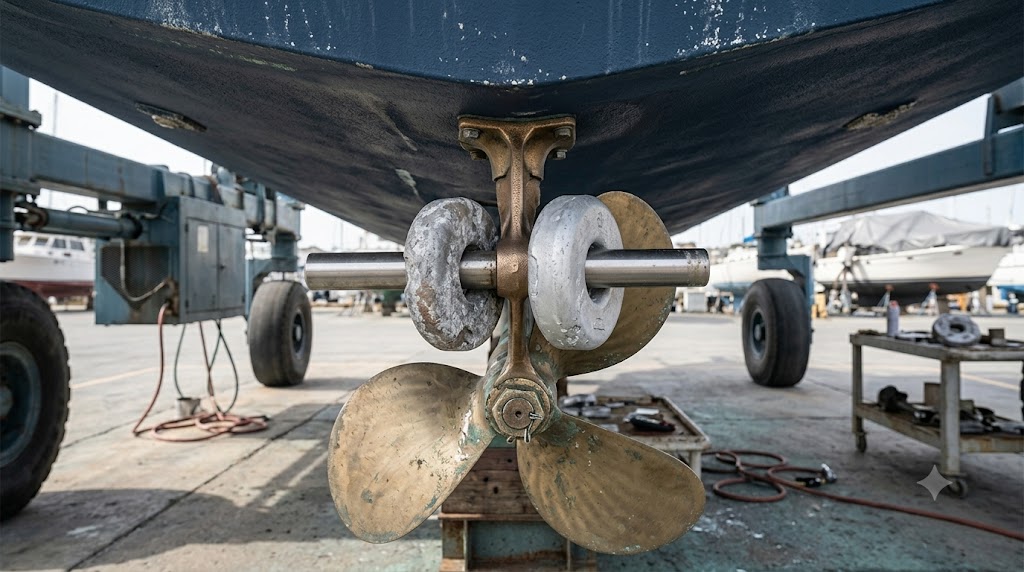
Sacrificial anodes are one of the most important components protecting a boat below the waterline. These relatively inexpensive pieces of metal quietly corrode in place of valuable underwater hardware, helping protect propellers, shafts, trim tabs, sterndrives, and other metal components from galvanic corrosion.
For decades, zinc was the standard choice for saltwater boats. Today, however, many boat manufacturers and marine service professionals are increasingly specifying aluminum anodes for vessels operating in saltwater and brackish environments. Understanding the differences between these materials can help boat owners make informed maintenance decisions while ensuring their vessel receives the proper corrosion protection.
This guide explains zinc vs aluminum marine anodes, why aluminum anodes are becoming more common, and how choosing the correct sacrificial material protects your boat’s underwater investment.
What Are Sacrificial Anodes?
Sacrificial anodes are specially engineered metals that corrode before more valuable underwater components. By becoming the most active metal in the electrical circuit, they help reduce galvanic corrosion affecting expensive marine hardware.
Anodes commonly protect:
- Propellers
- Propeller shafts
- Sterndrives
- Trim tabs
- Rudders
- Bow thrusters
- Heat exchangers
- Through-hull fittings
As the anodes slowly corrode, they require periodic inspection and replacement to maintain effective protection.
Understanding Zinc vs Aluminum Marine Anodes
The discussion around zinc vs aluminum marine anodes centers on corrosion performance, efficiency, operating environment, and maintenance requirements.
While both materials provide sacrificial protection, they behave differently in various water conditions.
| Feature | Zinc Anodes | Aluminum Anodes |
|---|---|---|
| Best Environment | Saltwater | Saltwater and brackish water |
| Weight | Heavier | Lighter |
| Electrochemical Capacity | Lower | Generally higher |
| Passivation Resistance | Can passivate in some conditions | Less prone in salt and brackish water |
| Typical Modern Usage | Still widely used | Increasingly specified by manufacturers |
Why Boat Builders Are Using More Aluminum Anodes
Many modern manufacturers recommend aluminum sacrificial anodes for new boats because they offer several practical advantages in appropriate environments.
Potential benefits include:
- Longer service life under many operating conditions.
- Higher electrical capacity compared with traditional zinc.
- Effective protection in both saltwater and brackish water.
- Lower weight.
- Consistent corrosion performance when properly installed.
It’s important to note that the appropriate anode material should always follow the vessel manufacturer’s recommendations.
When Zinc Anodes Are Still the Right Choice
Despite the growing popularity of aluminum, zinc remains an excellent option for many vessels.
Zinc anodes continue to be used on:
- Older boats originally designed for zinc.
- Commercial vessels.
- Saltwater-only applications.
- Certain propulsion systems specified by manufacturers.
Changing anode materials should not be done without confirming compatibility with the boat’s corrosion protection system.
What About Magnesium Anodes?
Magnesium is another sacrificial anode material, but it serves a different purpose.
Magnesium anodes are generally intended for:
- Freshwater boats.
- Freshwater marinas.
- Lakes.
- Reservoirs.
Using magnesium in saltwater can result in excessively rapid consumption, making it unsuitable for most coastal vessels.
How Sacrificial Anodes Protect Your Boat
When underwater metals are electrically connected in seawater, a galvanic cell naturally forms. Without sacrificial protection, expensive components may begin to corrode.
Anodes help protect:
- Bronze propellers.
- Stainless-steel shafts.
- Trim tabs.
- Rudder hardware.
- Sterndrives.
- Metal through-hulls.
Routine inspection ensures the anodes continue protecting these valuable components throughout the boating season.
Signs Your Anodes Need Attention
Regular underwater inspections make it easy to identify worn sacrificial anodes.
Watch for:
- Significant material loss.
- Uneven wear.
- Deep pitting.
- Loose mounting hardware.
- Heavy surface buildup.
- Missing sections.
Anodes showing excessive wear should be replaced before they become ineffective.
Why Underwater Inspections Matter
Most sacrificial anodes remain below the waterline, making routine inspections essential.
Professional divers can inspect:
- Anode condition.
- Propellers.
- Shafts.
- Running gear.
- Marine growth.
- Signs of corrosion.
Combining anode inspections with hull cleaning helps keep the entire underwater system in optimal condition.
Common Mistakes Boat Owners Make
Mixing Anode Materials Without Guidance
Replacing one material with another should only be done according to manufacturer recommendations or professional advice.
Ignoring Rapid Wear
Unusually fast anode consumption may indicate electrical issues that require further investigation.
Waiting Until Anodes Are Completely Gone
Replacing sacrificial anodes before they become heavily depleted helps maintain consistent corrosion protection.
Skipping Bonding System Inspections
Even the best anodes cannot perform properly if the bonding system has faults.
Assuming Every Boat Uses the Same Material
The ideal anode depends on the vessel, propulsion system, operating environment, and manufacturer specifications.
Best Practices for Sacrificial Anode Maintenance
- Inspect underwater anodes regularly.
- Replace heavily worn anodes promptly.
- Use the material recommended by the manufacturer.
- Inspect the bonding system during maintenance.
- Document anode wear with underwater photographs.
- Monitor wear patterns over time.
The BoatUS Foundation recommends routine underwater inspections and regular sacrificial anode maintenance to help protect boats from galvanic corrosion. The American Boat & Yacht Council (ABYC) also publishes standards covering marine electrical systems and corrosion protection.
Frequently Asked Questions
Are aluminum anodes replacing zinc?
Many modern manufacturers now recommend aluminum anodes for saltwater and brackish-water applications, but zinc remains appropriate for many boats. Always follow the manufacturer’s recommendations.
Are aluminum anodes better than zinc?
Neither material is universally better. The correct choice depends on the operating environment, boat design, and manufacturer guidance.
Can I replace zinc anodes with aluminum?
You should only switch materials after confirming compatibility with your vessel’s corrosion protection system and the manufacturer’s recommendations.
Why do sacrificial anodes wear away?
They are intentionally designed to corrode before more valuable underwater metals, helping reduce galvanic corrosion.
How often should anodes be inspected?
Boats kept in the water should have their sacrificial anodes inspected regularly, especially during routine underwater cleaning or scheduled maintenance.
Conclusion
Understanding zinc vs aluminum marine anodes helps boat owners make better decisions about corrosion protection. While aluminum anodes are becoming increasingly common on modern vessels due to their performance in saltwater and brackish environments, zinc continues to provide reliable protection for many boats. The most important factor is selecting the material specified for your vessel and inspecting it regularly.
Routine underwater inspections, timely anode replacement, and proper bonding system maintenance remain the best ways to protect valuable underwater hardware and avoid costly corrosion repairs.
Schedule a Professional Underwater Anode Inspection
If you’re unsure which sacrificial anodes your boat should use or want to check their condition, our professional underwater diving team can help. We inspect zinc and aluminum anodes, propellers, shafts, sterndrives, and running gear while documenting corrosion and wear with detailed underwater photography. Contact us today to schedule a comprehensive underwater inspection and keep your vessel fully protected.
