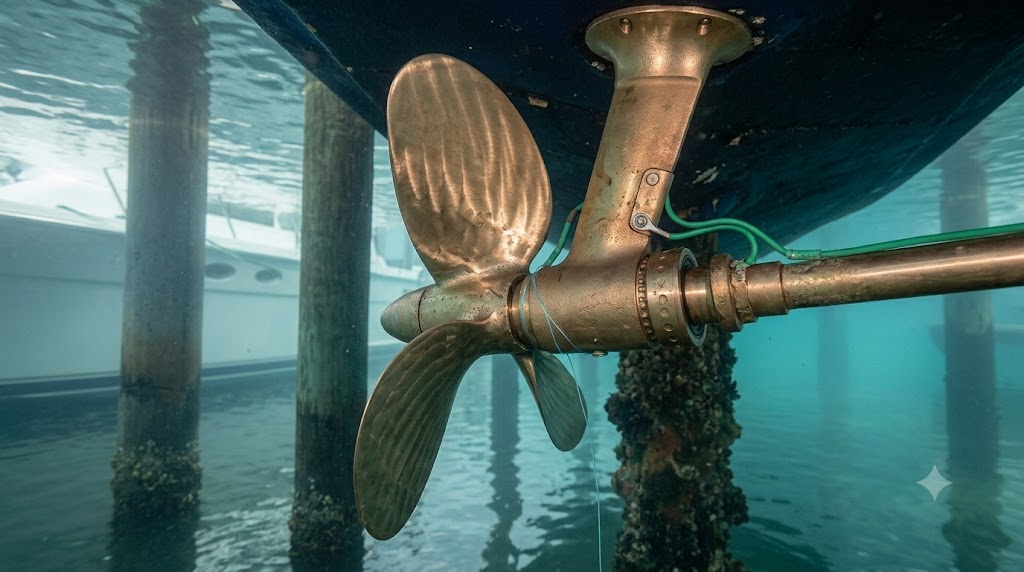
A smooth-running propulsion system depends on much more than a healthy engine. Every time your boat accelerates, the propeller, shaft, coupling, bearings, and transmission work together as a balanced system. If one component is damaged or out of alignment, the resulting vibration can travel throughout the drivetrain, affecting performance and potentially increasing wear on expensive mechanical components.
Professional routine propeller inspections help identify underwater damage before minor issues develop into costly repairs. A small propeller nick, fishing line wrapped around the shaft, marine growth, or a slightly bent blade can create noticeable vibration at cruising speed, placing additional stress on bearings, seals, couplings, and marine transmissions.
This guide explains why regular propeller inspections are an essential part of preventive boat maintenance, what causes high-speed vibration, and how underwater inspections help protect your propulsion system.
Why the Propeller Is Critical to Your Boat’s Performance
The propeller converts engine power into forward thrust. To do this efficiently, every blade must remain balanced, undamaged, and free from marine growth.
A properly maintained propeller helps:
- Deliver smooth acceleration.
- Maintain cruising efficiency.
- Reduce vibration.
- Improve fuel economy.
- Protect drivetrain components.
- Maintain predictable handling.
Even small imperfections can become more noticeable as propeller speed increases.
Why Routine Propeller Inspections Matter
Professional routine propeller inspections allow divers to identify damage while the boat remains in the water.
Routine inspections help detect:
- Bent blades.
- Minor impact damage.
- Fishing line around the shaft.
- Marine growth.
- Corrosion.
- Loose hardware.
Addressing these issues early often prevents more expensive repairs later.
Common Causes of High-Speed Vibration
Not all vibration originates from the engine. Underwater propulsion components are frequently responsible for vibration that appears only at higher speeds.
Common causes include:
- Damaged propeller blades.
- Barnacle accumulation.
- Marine growth on the shaft.
- Propeller imbalance.
- Fishing line wrapped around the shaft.
- Worn cutlass bearings.
Because these components remain underwater, problems often go unnoticed until performance begins to decline.
How Propeller Damage Affects the Drivetrain
A damaged propeller may no longer rotate smoothly around its centerline.
The resulting imbalance can transmit vibration through:
- Propeller shaft.
- Shaft coupling.
- Cutlass bearing.
- Shaft seal.
- Transmission output flange.
- Engine mounts.
While vibration does not automatically cause transmission failure, prolonged operation with excessive vibration can increase wear on drivetrain components.
Marine Growth Can Cause Vibration Too
Many owners associate vibration only with impact damage, but marine growth can produce similar symptoms.
Heavy fouling may:
- Disrupt water flow.
- Create propeller imbalance.
- Reduce thrust efficiency.
- Increase fuel consumption.
- Lower top speed.
Routine underwater cleaning helps restore smooth operation before hard marine growth becomes severe.
What Divers Inspect During a Propeller Inspection
A professional underwater inspection evaluates much more than the propeller itself.
Inspection typically includes:
- Propeller blades.
- Propeller hub.
- Propeller shaft.
- Cutlass bearing.
- Shaft anodes.
- Rudder.
- Struts.
- Running gear.
Photographs are often provided to document the condition of underwater components.
Signs Your Propeller Needs Inspection
Changes in boat performance often develop gradually.
Watch for:
- New vibration at cruising speed.
- Reduced top speed.
- Poor acceleration.
- Higher fuel consumption.
- Steering vibration.
- Unusual drivetrain noise.
These symptoms should be investigated promptly to prevent unnecessary wear.
Routine Inspection vs Waiting for Problems
| Maintenance Approach | Typical Result |
|---|---|
| Routine underwater inspections | Early detection of damage and marine growth |
| Scheduled propeller cleaning | Improved efficiency and smoother operation |
| Delayed inspections | Hidden damage may go unnoticed |
| Reactive repairs | Higher repair costs and increased downtime |
Preventive inspections are generally more economical than repairing damage after vibration has affected additional drivetrain components.
Why Underwater Inspections Save Money
Routine inspections allow problems to be corrected while they are still relatively minor.
Early detection may help prevent:
- Shaft seal damage.
- Bearing wear.
- Coupling wear.
- Marine growth buildup.
- Unexpected haul-outs.
- Extended downtime.
Inspecting underwater hardware regularly helps reduce maintenance surprises throughout the boating season.
Common Mistakes Boat Owners Make
Ignoring Minor Vibration
Small vibrations often indicate developing underwater problems that become more expensive if ignored.
Assuming the Engine Is Always the Cause
Many vibration issues originate from the propeller or running gear rather than the engine itself.
Waiting Until Haul-Out
Professional divers can inspect propellers while the boat remains in the water, allowing issues to be identified much sooner.
Skipping Propeller Cleaning
Marine growth affects balance and efficiency long before it becomes visually severe.
Ignoring Fishing Line Around the Shaft
Fishing line can damage shaft seals and should be removed as soon as possible.
Best Practices for Propeller Maintenance
- Schedule routine underwater propeller inspections.
- Clean marine growth before heavy fouling develops.
- Inspect zinc anodes regularly.
- Monitor vibration after striking underwater objects.
- Document underwater inspections with photographs.
- Investigate new drivetrain vibration immediately.
The BoatUS Foundation recommends regular underwater inspections and preventive maintenance to help identify hidden issues before they lead to more significant repairs.
Frequently Asked Questions
Why are routine propeller inspections important?
Routine inspections identify damage, marine growth, fishing line, and corrosion before these issues reduce performance or increase wear on the propulsion system.
Can a damaged propeller cause vibration?
Yes. Bent blades, impact damage, or heavy marine growth can create imbalance that produces noticeable vibration, especially at higher speeds.
Will propeller vibration damage my transmission?
Persistent excessive vibration can increase stress on drivetrain components such as bearings, couplings, and seals. Addressing vibration early helps reduce unnecessary wear.
How often should a propeller be inspected?
Inspection frequency depends on vessel use, operating conditions, and local fouling rates. Boats kept in the water generally benefit from regular underwater inspections.
Can underwater divers inspect the propeller without hauling out the boat?
Yes. Professional commercial divers can inspect propellers, shafts, running gear, and zinc anodes while the vessel remains in the water.
Conclusion
Professional routine propeller inspections are one of the most effective ways to protect your boat’s propulsion system. By identifying bent blades, marine growth, fishing line, corrosion, and other underwater issues early, you can reduce vibration, maintain fuel efficiency, and help minimize unnecessary wear on shafts, bearings, and transmission components.
Regular underwater inspections combined with timely cleaning and maintenance keep your boat operating smoothly while reducing the likelihood of unexpected repairs and downtime.
Schedule a Professional Propeller Inspection
If you’ve noticed vibration, reduced performance, or your boat has been in the water for several months, our professional underwater diving team can help. We provide propeller inspections, running gear assessments, hull cleaning, zinc anode inspections, and underwater photography to help keep your vessel operating safely and efficiently. Contact us today to schedule a comprehensive underwater inspection.
