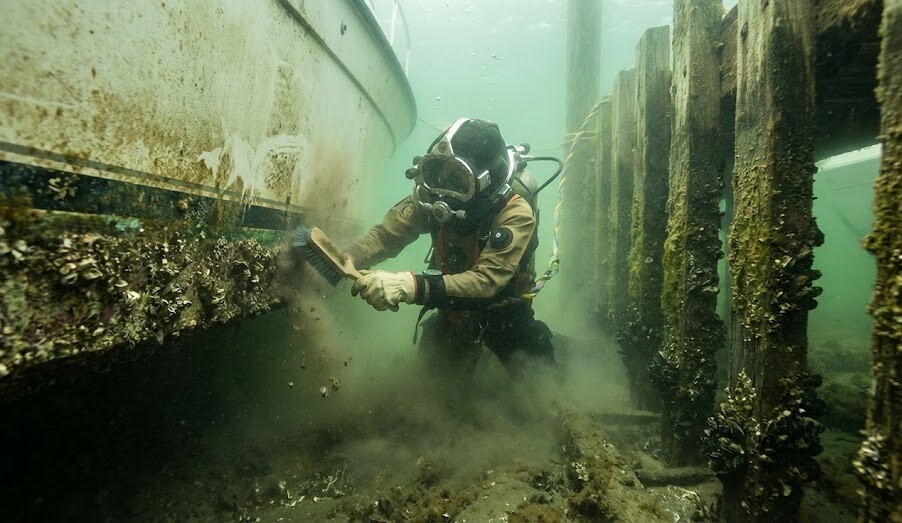
Many boat owners focus heavily on keeping their vessel clean while overlooking the condition of the dock it rests on every day. Understanding the difference between boat vs dock cleaning is essential for protecting your investment, maintaining performance, and avoiding hidden damage that can lead to costly repairs. While both types of cleaning address marine growth, they serve very different purposes and require different approaches.
This guide explains how boat cleaning and dock cleaning differ, why each is important, how often they should be performed, and what happens when one is ignored. Whether you own a private dock, use a marina slip, or manage waterfront property, knowing these distinctions helps you make smarter maintenance decisions.
Understanding Boat Cleaning
Boat cleaning focuses on maintaining the vessel itself, particularly areas exposed to water, sunlight, and marine organisms. Proper boat cleaning protects performance, fuel efficiency, and appearance.
Boat Hull Cleaning
Hull cleaning removes barnacles, algae, and slime from the bottom of the boat. Marine growth increases drag, reduces speed, and raises fuel consumption.
Above-Water Boat Cleaning
This includes washing decks, rails, non-skid surfaces, and topsides to prevent staining, oxidation, and surface wear.
Why Boat Cleaning Matters
- Improves fuel efficiency and speed
- Prevents long-term hull damage
- Maintains vessel appearance and value
- Ensures safe handling and performance
Understanding Dock Cleaning
Dock cleaning focuses on the structural elements that support and surround your vessel. Dock maintenance is often underestimated, yet it plays a critical role in safety and longevity.
Dock Piling Cleaning
Dock piling cleaning removes barnacles, algae, and marine growth from pilings that remain submerged year-round. Growth buildup adds weight, traps moisture, and accelerates deterioration.
Dock Structure Cleaning
This includes cleaning walkways, frames, braces, floats, and hardware that support dock stability and user safety.
Why Dock Cleaning Matters
- Preserves structural integrity of pilings
- Reduces risk of dock failure or collapse
- Improves safety for people and vessels
- Prevents costly emergency repairs
Boat vs Dock Cleaning: Key Differences
While both involve marine growth removal, the goals and methods are very different.
| Category | Boat Cleaning | Dock Cleaning |
| Primary focus | Vessel performance and appearance | Structural safety and longevity |
| Main problem addressed | Drag and fuel efficiency loss | Structural deterioration |
| Cleaning frequency | Every 4–8 weeks | Every 3–6 months |
| Risk of neglect | Reduced performance | Dock instability or failure |
| Requires underwater work | Yes | Yes |
Why Boaters Should Care About Dock Cleaning
Many boaters assume dock maintenance is someone else’s responsibility, especially in marinas. However, dock conditions directly affect your vessel.
- Loose or damaged pilings can impact boats during tides or storms
- Heavy marine growth can reduce water circulation around slips
- Structural failure can damage vessels tied to the dock
Clean, well-maintained docks reduce risk to boats and improve marina safety overall.
How Marine Growth Affects Both Boats and Docks
Marine growth behaves differently depending on where it attaches.
- On boats: increases drag and fuel use
- On pilings: adds constant weight and stress
- On hardware: accelerates corrosion
- On floats: affects buoyancy and balance
According to the Environmental Protection Agency, responsible marine maintenance helps reduce environmental impact while extending the lifespan of marine structures.
DIY vs Professional Cleaning for Boats and Docks
Some cleaning tasks can be handled by boat owners, while others require professionals.
DIY Cleaning Works Best For
- Light algae on hulls
- Above-water boat washing
- Basic dock surface cleaning
Professional Cleaning Is Best For
- Underwater hull cleaning
- Dock piling cleaning
- Cavitation and eco-friendly methods
- Underwater inspections
Professional services ensure safety, thoroughness, and compliance with environmental guidelines.
How Often Should Boats and Docks Be Cleaned?
Cleaning frequency depends on water conditions and usage.
- Boat hulls: every 4–8 weeks in saltwater
- Dock pilings: every 3–6 months
- After storms: inspection and cleaning recommended
The BoatUS Foundation emphasizes routine maintenance to prevent long-term damage and unexpected costs.
FAQs About Boat vs Dock Cleaning
Can I clean my boat but skip dock cleaning?
You can, but neglecting dock maintenance increases the risk of structural failure and damage to your vessel.
Is dock cleaning more important than boat cleaning?
Both are important, but dock cleaning affects safety and structural integrity, making it critical.
Does dock cleaning help prevent boat damage?
Yes. Stable, well-maintained docks reduce movement, impact risk, and hardware failure.
Are eco-friendly cleaning methods available?
Yes. Cavitation and non-toxic cleaning methods are widely used for both boats and docks.
Conclusion
Understanding the difference between boat vs dock cleaning helps boaters protect both their vessel and the structure that supports it. Boat cleaning improves performance and appearance, while dock cleaning safeguards safety and long-term stability. Ignoring either one can lead to avoidable damage and unnecessary expenses.
For professional marine maintenance, contact us today. We provide expert Hull Cleaning, Cavitation Cleaning, Zinc Replacement, Underwater Inspections, and Wash & Detailing services to keep your boat and dock in top condition year-round.