Dock pilings support the entire structure of a dock, marina, or pier, yet most of their critical components remain hidden below the waterline. Choosing the right dock piling inspection service is essential for identifying early signs of damage, preventing structural failure, and avoiding costly emergency repairs. Not all inspection services are the same, and selecting the wrong provider can leave serious problems undetected.
This guide explains how to choose a reliable dock piling inspection service, what qualifications matter, which inspection methods are most effective, and how professional inspections protect both safety and long-term value.
Why a Professional Dock Piling Inspection Service Matters
Dock piling deterioration often begins underwater, where marine growth, corrosion, rot, and erosion go unnoticed. A professional dock piling inspection service provides a comprehensive evaluation of piling condition above and below the waterline.
- Identifies hidden structural damage early
- Prevents sudden dock failure or collapse
- Supports informed repair or replacement decisions
- Reduces liability and safety risks
- Extends the lifespan of dock infrastructure
Skipping or delaying inspections increases both financial and safety risks.
Key Qualifications to Look for in a Dock Piling Inspection Service
Choosing the right provider starts with evaluating their qualifications and experience.
Commercial Diving Experience
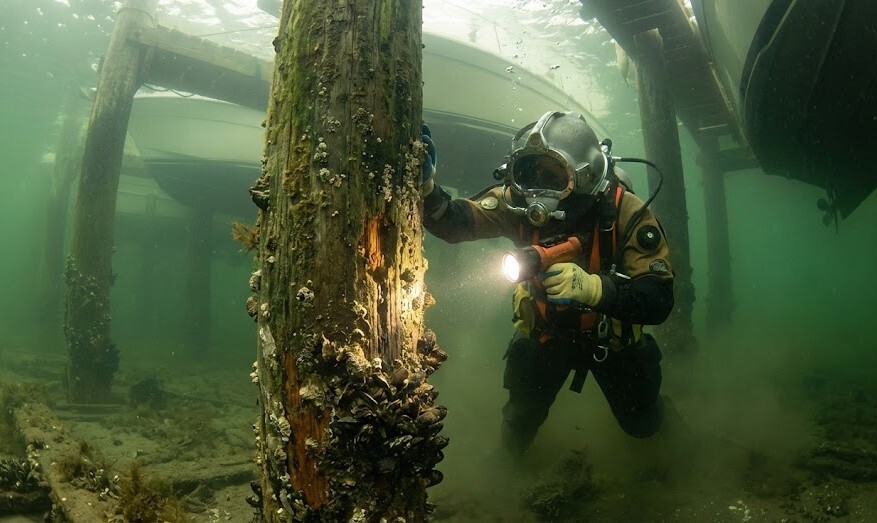
Underwater dock inspections require trained commercial divers who understand marine structures, safety protocols, and underwater visibility challenges.
Marine Structural Knowledge
An effective piling inspection service understands different piling materials, including wood, concrete, steel, and composite systems.
Local Environmental Experience
Marine growth patterns, water conditions, and environmental regulations vary by location. A local provider is more familiar with region-specific challenges.
Compliance and Safety Standards
Professional inspection services follow industry safety practices and environmental guidelines recommended by the Environmental Protection Agency.
What a Quality Dock Piling Inspection Service Should Include
A thorough inspection should go beyond a quick visual check.
| Inspection Component | What It Covers | Why It Matters |
| Underwater visual inspection | Cracks, corrosion, rot, erosion | Reveals hidden structural issues |
| Marine growth assessment | Barnacles, algae, mussels | Identifies growth-related damage |
| Structural stability check | Movement or misalignment | Detects foundation problems |
| Hardware and fastener review | Brackets, bolts, connectors | Prevents connection failures |
| Documentation and reporting | Photos and written findings | Supports repair planning |
Inspection Methods Used by Professional Services
Understanding inspection methods helps you evaluate service quality.
Visual Diver Inspections
Trained divers inspect pilings closely using underwater lighting and tools to identify visible damage.
Marine Growth Removal for Inspection
Light cleaning may be performed to expose piling surfaces and assess their true condition.
Measurement and Condition Tracking
Professionals document crack size, corrosion depth, and structural movement for future comparison.
Photo and Video Documentation
Clear documentation allows dock owners and marina managers to make informed decisions.
Questions to Ask Before Hiring a Dock Piling Inspection Service
Asking the right questions helps separate qualified professionals from inexperienced providers.
- How often do you perform underwater dock inspections?
- Do you inspect both above and below the waterline?
- Will I receive written reports and photos?
- Do you follow environmental and safety regulations?
- Can you identify whether repairs or cleaning are needed?
Red Flags to Avoid When Choosing an Inspection Service
Certain warning signs suggest an inspection service may be inadequate.
- Inspections performed only from the surface
- No underwater documentation provided
- Vague findings with no clear recommendations
- Lack of marine or commercial diving experience
- Unrealistically low pricing
Cutting corners on inspections often leads to higher costs later.
How Often Should Dock Pilings Be Professionally Inspected?
Inspection frequency depends on dock usage and environmental conditions.
- Commercial marinas: annually or semi-annually
- Private docks: every 1–2 years
- After storms or vessel impacts: immediate inspection
The BoatUS Foundation recommends regular underwater inspections for docks in saltwater environments.
Cost vs Value of a Dock Piling Inspection Service
Professional inspections are a small investment compared to the cost of repairs or dock replacement.
| Scenario | Without Inspection | With Inspection |
| Hidden damage | Undetected | Identified early |
| Repair cost | High | Lower |
| Safety risk | Increased | Reduced |
| Dock lifespan | Shortened | Extended |
FAQs About Dock Piling Inspection Services
Is a dock piling inspection the same as cleaning?
No. Inspections assess condition, while cleaning removes marine growth. Both are important.
Can inspections detect underwater rot or corrosion?
Yes. Professional inspections are designed to identify hidden deterioration.
Are inspections required for insurance or marina compliance?
Some insurers and marinas require periodic underwater inspections.
Do inspection services provide repair recommendations?
Yes. Most professional services include maintenance or repair guidance.
Conclusion
Choosing the right dock piling inspection service is critical for maintaining dock safety, preventing costly failures, and extending the life of your waterfront structure. A qualified provider offers thorough underwater inspections, clear documentation, and expert insight that surface-only checks simply cannot match.
If you need a reliable, professional dock piling inspection service, contact us today. We also provide Hull Cleaning, Cavitation Cleaning, Zinc Replacement, Underwater Inspections, and Wash & Detailing to keep your dock and marine assets safe, compliant, and well-maintained year-round.