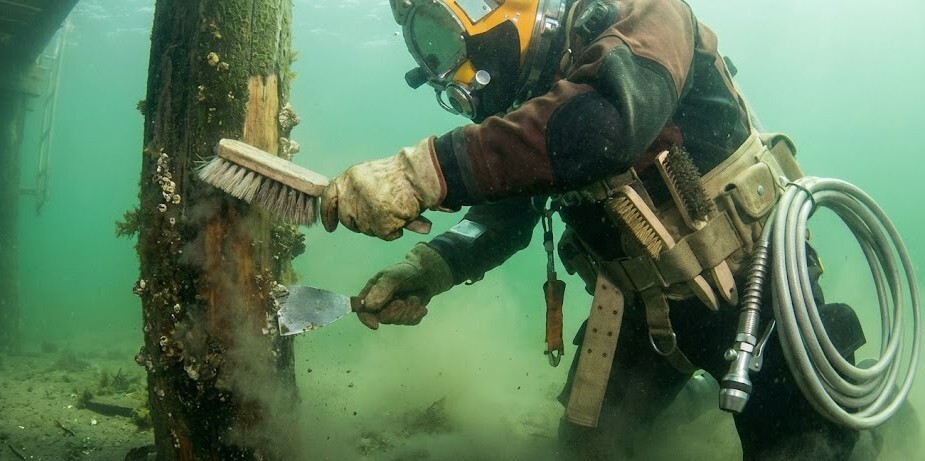
Proper dock maintenance starts with using the right tools for the job. Dock piling cleaning equipment plays a critical role in removing marine growth safely, protecting piling materials, and ensuring long-term structural integrity. From basic hand tools to advanced underwater systems, the equipment used can make the difference between effective maintenance and costly damage.
This guide breaks down the essential dock piling cleaning equipment used by professionals, explains when each tool is appropriate, and helps dock owners understand why specialized gear is often necessary for underwater and marine environments.
Why Using the Right Dock Piling Cleaning Equipment Matters
Dock pilings are exposed to constant moisture, salt, algae, barnacles, and debris. Using improper tools can damage surfaces, strip protective layers, or harm surrounding marine life. Professional-grade dock piling cleaning equipment is designed to remove growth efficiently while minimizing structural and environmental impact.
- Prevents damage to wood, concrete, and steel pilings
- Improves cleaning effectiveness and coverage
- Enhances safety during underwater operations
- Reduces regrowth of marine organisms
- Ensures compliance with environmental standards
Choosing the right tools is just as important as choosing the right cleaning method.
Common Types of Marine Growth Removed from Dock Pilings
Before selecting dock piling cleaning equipment, it’s important to understand the types of growth being removed.
| Marine Growth | Description | Equipment Typically Used |
| Barnacles | Hard-shelled organisms attached to surfaces | Scrapers, cavitation tools |
| Algae | Slippery green or brown film | Brushes, soft mechanical tools |
| Mussels | Clustered shellfish buildup | Manual removal tools |
| Seaweed | Attached or floating vegetation | Hand tools, brushes |
Essential Manual Dock Piling Cleaning Tools
Manual tools form the foundation of most dock piling cleaning operations, especially for light to moderate growth.
Nylon and Stiff-Bristle Brushes
Brushes are used to scrub algae and soft marine growth without damaging piling surfaces. Nylon bristles are preferred for wood and composite pilings.
Plastic and Wooden Scrapers
Scrapers help remove barnacles and tougher growth while minimizing surface damage. Metal scrapers are avoided unless used carefully by professionals.
Long-Handled Cleaning Tools
Extended handles allow above-water cleaning or shallow underwater access without requiring diving equipment.
Underwater Dock Cleaning Equipment
When cleaning below the waterline, specialized underwater dock cleaning equipment is required for safety and effectiveness.
Commercial Diving Gear
Professional divers use full scuba gear, including wetsuits, regulators, and safety equipment, to access submerged pilings safely.
Underwater Lighting
Low visibility is common around docks. Underwater lights improve inspection accuracy and ensure thorough cleaning.
Handheld Underwater Tools
These tools are designed for submerged use and allow precise removal of marine growth without excessive force.
Advanced Dock Piling Cleaning Equipment
For heavy marine growth or environmentally sensitive areas, advanced tools provide superior results.
Cavitation Cleaning Systems
Cavitation equipment uses controlled microbubbles to remove marine growth without chemicals or abrasive pressure. This method is highly effective and environmentally responsible.
Low-Pressure Underwater Wash Systems
Unlike traditional pressure washers, these systems are designed specifically for underwater use and minimize surface erosion.
Inspection and Monitoring Tools
Underwater cameras and measuring tools help document piling condition before and after cleaning.
The Environmental Protection Agency recommends using equipment designed for marine environments to reduce ecological impact.
Safety Equipment Used During Dock Piling Cleaning
Safety is a critical part of any dock piling cleaning operation.
- Protective gloves and eyewear
- Cut-resistant diving gloves
- Surface support equipment
- Communication systems for divers
- Emergency and rescue gear
Using professional safety equipment reduces risk and ensures compliance with industry standards.
DIY Equipment vs. Professional Dock Piling Cleaning Equipment
| Aspect | DIY Equipment | Professional Equipment |
| Effectiveness | Limited | High |
| Safety | Moderate risk | Professionally managed |
| Environmental compliance | Variable | Consistent |
| Cost over time | Higher with mistakes | Lower long-term |
While DIY tools may work for light cleaning, professional dock piling cleaning equipment delivers consistent, safer, and longer-lasting results.
How Often Should Dock Piling Cleaning Equipment Be Used?
The frequency of cleaning depends on water conditions, piling material, and marine growth levels.
- High-growth saltwater areas: every 3–4 months
- Moderate growth environments: every 6 months
- Freshwater docks: annually
Regular use of proper equipment prevents heavy buildup and reduces the need for aggressive cleaning.
FAQs About Dock Piling Cleaning Equipment
Can pressure washers be used underwater?
Traditional pressure washers are not recommended underwater and can damage piling materials.
Is cavitation equipment safe for dock pilings?
Yes. Cavitation cleaning is gentle, effective, and environmentally friendly when used correctly.
Do professionals use chemicals during piling cleaning?
Most professionals rely on mechanical and cavitation methods rather than harsh chemicals.
Can the wrong tools damage dock pilings?
Yes. Improper equipment can erode surfaces, remove protective layers, and shorten piling lifespan.
Conclusion
Using the right dock piling cleaning equipment is essential for effective maintenance, safety, and long-term dock performance. From manual brushes to advanced cavitation systems, each tool serves a specific purpose in removing marine growth while protecting piling materials.
For professional dock piling cleaning and underwater maintenance, contact us today. We provide Hull Cleaning, Cavitation Cleaning, Zinc Replacement, Underwater Inspections, and Wash & Detailing services to ensure your dock and marine assets remain clean, protected, and performing at their best.