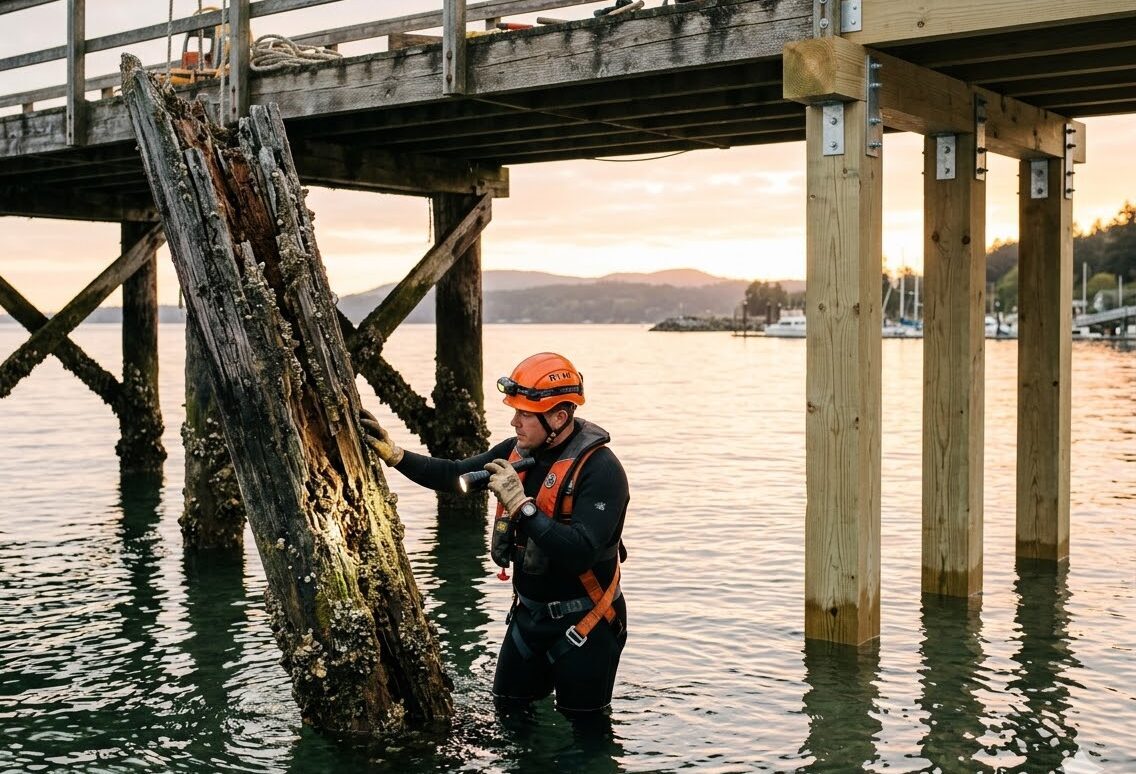
Your dock pilings work hard every single day — absorbing wave impact, supporting heavy loads, and battling relentless exposure to saltwater, marine organisms, and the elements. For most dock owners, regular cleaning is the go-to maintenance strategy, and that’s a smart habit. But there comes a point when no amount of scrubbing, pressure washing, or algae removal can undo the structural damage that has occurred deep inside a piling. Knowing when dock piling replacement is the right call — rather than another round of cleaning — can save you thousands of dollars, prevent accidents, and protect your entire waterfront investment. In this guide, we break down the critical warning signs, compare costs, explain piling lifespans by material type, and help you make a confident, informed decision.
Why Dock Pilings Deteriorate Over Time
Dock pilings are constantly submerged in one of the most corrosive environments on earth. Whether you’re dealing with saltwater or freshwater, your pilings face biological, chemical, and physical threats every day. Understanding these threats is the first step in knowing whether cleaning or full dock piling replacement is the right path forward.
- Marine Borers and Shipworms: Species like Teredo navalis (shipworm) and Limnoria (gribble) bore into unprotected wood pilings, hollowing them from the inside out. By the time surface damage is visible, the interior may already be completely compromised.
- Algae and Barnacle Buildup: While algae and barnacles are surface-level threats manageable through cleaning, their constant presence can accelerate surface erosion over time, especially on older pilings.
- Saltwater Corrosion: Steel and metal components within or attached to pilings are especially vulnerable. Saltwater accelerates oxidation, which weakens structural connections and piling integrity.
- UV Degradation and Weathering: The portion of a piling above the waterline faces relentless sun, rain, and freeze-thaw cycles, causing cracking and surface degradation that eventually allows moisture to penetrate deeper.
- Physical Impact: Repeated boat strikes, storm surge, and heavy loads can crack or shift pilings, causing long-term structural misalignment that cleaning simply cannot fix.
Dock Piling Replacement vs. Cleaning: Understanding the Difference
Cleaning is a form of preventive maintenance. It removes surface-level threats — algae, barnacles, calcium deposits, slime — and helps preserve the outer integrity of a piling. When performed every three to six months, professional piling cleaning is one of the most cost-effective ways to extend piling lifespan.
However, dock piling replacement becomes necessary when the structural core of the piling is compromised. At that point, cleaning is cosmetic — it makes the piling look better but does nothing to restore load-bearing capacity or structural stability. In fact, continuing to rely on a compromised piling after repeated cleaning creates a dangerous false sense of security.
The key question to ask is: Is the damage surface-level or structural? If the answer is structural, no amount of cleaning will prevent eventual failure.
Top Warning Signs You Need Dock Piling Replacement
Identifying the right time for dock piling replacement requires both visual inspection and professional underwater assessment. Here are the most critical warning signs that your pilings have passed the point where cleaning can help:
1. Visible Soft Spots, Rot, or Spongy Wood
When you press a screwdriver or probe into a wood piling and it sinks easily, that piling is rotting from the inside. Soft, spongy sections — particularly near the waterline or at the mud line — indicate advanced decay. Cleaning cannot restore a structurally rotted piling.
2. Shipworm Infestation
Shipworm damage is one of the most deceptive forms of piling deterioration. The exterior may look mostly intact while the interior has been completely hollowed out. If boreholes, sawdust-like debris, or tunneled wood are found during inspection, dock piling replacement is the only safe option. Wrapping and sealing can slow infestation on healthy pilings, but not on infested ones.
3. Large Cracks or Splits Running Lengthwise
Hairline surface cracks can sometimes be sealed and managed through maintenance. However, deep longitudinal cracks that run along the length of the piling significantly reduce load-bearing capacity. These are a clear indicator that dock piling replacement is needed, particularly in high-load or high-traffic dock areas.
4. Excessive Lean or Movement
If a piling visibly leans, sways when touched, or feels loose at the base, its foundation connection is compromised. A piling that moves is a dangerous piling. This is not a cleaning issue — it’s a structural emergency requiring immediate dock piling replacement.
5. Corrosion on Steel or Concrete Pilings
Steel pilings that show deep surface pitting, large rust patches, or exposed rebar are past the point of surface treatment. Similarly, concrete pilings with spalling — where chunks of concrete are flaking away to reveal interior rebar — require replacement, as the reinforcement is now exposed to corrosive saltwater.
6. Pilings Older Than 20–25 Years Without Wrapping
Untreated wood pilings in saltwater environments typically last between 10 and 25 years. If your pilings are approaching or exceeding this age without protective wrapping or encapsulation, a professional underwater inspection is critical — and dock piling replacement is likely overdue.
7. Dock Structure Is Visibly Unstable or Uneven
A sagging, tilting, or bouncing deck surface often points to failing pilings below. If multiple pilings are failing simultaneously, a full dock piling replacement project may be more cost-effective than piecemeal repairs.
Dock Piling Lifespan by Material Type
Understanding how long your specific type of piling is designed to last helps frame the replacement vs. cleaning decision:
| Piling Material | Average Lifespan | Primary Threat | Replacement Trigger |
|---|---|---|---|
| Untreated Wood | 10–15 years | Shipworms, rot | Infestation, soft spots |
| Pressure-Treated Wood (CCA/ACQ) | 15–25 years | UV, weathering, marine borers | Cracking, rot at waterline |
| Concrete Pilings | 25–50 years | Spalling, rebar corrosion | Exposed rebar, major spalling |
| Steel Pilings | 20–35 years | Saltwater corrosion | Deep pitting, structural thinning |
| Fiberglass/Composite Pilings | 50+ years | UV degradation, impact | Structural fractures, delamination |
Dock Piling Replacement Cost vs. Cleaning Cost in 2025–2026
One of the most common reasons dock owners delay dock piling replacement is cost. However, comparing the numbers side-by-side often reveals that early replacement is far more economical than waiting until total structural failure — which can require emergency work, full dock removal, and replacement of connected hardware.
| Service | Average Cost Range (2025–2026) | Notes |
|---|---|---|
| Professional Piling Cleaning | $100 – $400 per session | Surface algae, barnacle removal |
| Minor Dock Piling Repairs | $100 – $800 | Nails, fasteners, minor wraps |
| Moderate Piling Repair/Wrap | $800 – $2,000 | Piling wraps, encapsulation |
| Single Piling Replacement | $400 – $1,500 per piling | Depends on material, depth, access |
| Full Dock Piling Replacement | $3,500 – $33,000+ | Full dock rebuild with new pilings |
A useful rule of thumb: if the cost of repairs exceeds 50% of the cost to fully replace the dock, replacement is almost always the better financial decision long-term. Replacing one or two failing pilings proactively is far more affordable than an emergency rebuild after structural failure.
The Role of Professional Underwater Inspection
Many of the most critical signs that dock piling replacement is needed are not visible from above the waterline. The zone from one foot above the water surface to one foot below the mud line is where the most aggressive biological and chemical deterioration occurs. Surface inspection alone — even by experienced eyes — can miss hollow interiors, deep cracks, or extensive borer damage that only a certified marine diver can detect.
Professional underwater dock inspections involve divers physically probing, measuring, and photographing each piling at and below the waterline. They can identify structural loss, borer entry points, and the true extent of corrosion on metal fittings. An annual underwater inspection is one of the smartest investments a dock owner can make — it provides the data needed to make confident decisions about cleaning versus dock piling replacement.
For guidance on safe and environmentally responsible underwater maintenance practices, the U.S. Environmental Protection Agency’s Safer Choice program offers valuable resources on marine-safe cleaning and maintenance products.
When Cleaning Is Still the Right Choice
Not every piling needs replacing. In fact, with a proactive maintenance program, dock piling replacement can be delayed significantly or avoided entirely for years. Cleaning is the right choice when:
- The piling is structurally sound with no soft spots, cracks, or movement
- Growth is limited to surface-level algae, barnacles, or slime
- The piling is within its expected lifespan and has been properly protected
- A recent professional underwater inspection found no structural concerns
- The piling has protective wrapping that remains intact and sealed
Pairing regular professional cleaning with protective wraps, pile caps, and annual underwater inspections is the most cost-effective long-term strategy for any dock owner. According to the BoatUS Foundation, proactive dock maintenance programs significantly reduce long-term repair and replacement costs compared to reactive approaches.
How to Protect Your Pilings After Replacement
Once you’ve invested in dock piling replacement, protecting that investment from day one is essential. Here are the most effective protection strategies used by marine professionals in 2025–2026:
- Piling Wraps and Sleeves: Polyethylene or fiberglass wraps encapsulate the piling from the mud line upward, physically blocking shipworm access and slowing surface degradation. These should be replaced or re-inspected every three to five years.
- Pile Caps: Caps on top of each piling prevent rain infiltration and UV exposure on the end grain, which is the most vulnerable part of any wood piling.
- Anti-Fouling Coatings: Marine-grade anti-fouling treatments applied above and at the waterline reduce the adhesion of barnacles and algae, making future cleaning faster and more effective.
- Regular Cleaning Schedules: Professional cleaning every three to six months prevents growth accumulation that accelerates surface degradation.
- Zinc Anodes: Installing zinc anodes near metal fittings on and around pilings provides cathodic protection against galvanic corrosion in saltwater environments.
Frequently Asked Questions About Dock Piling Replacement
How do I know if my dock pilings need to be replaced or just cleaned?
The key distinction is structural vs. surface damage. If pilings show soft spots, cracks, infestation, excessive lean, or movement, dock piling replacement is needed. If they’re structurally sound but covered in algae or barnacles, professional cleaning is sufficient. When in doubt, schedule an underwater inspection with a certified marine diver.
How long does dock piling replacement typically take?
Replacing a single piling typically takes one to two days, depending on water depth, soil conditions, and accessibility. A full dock piling replacement project can take several days to a couple of weeks. Your marine contractor can provide a more accurate timeline after assessing your specific dock configuration.
Can I clean dock pilings myself, or should I hire a professional?
Light surface cleaning above the waterline can be a DIY task using stiff brushes and marine-safe cleaning solutions. However, cleaning at and below the waterline requires professional divers with the right equipment. Improper scraping can accelerate surface damage, and underwater work carries significant safety risks without proper training and gear.
How often should dock pilings be inspected?
Most marine maintenance professionals recommend a comprehensive professional inspection at least once per year, ideally at the end of the active boating season. Docks in aggressive saltwater environments or those supporting heavy loads should be inspected twice per year. Underwater inspections should always be performed after major storms, boat impact incidents, or any signs of structural change.
Conclusion: Make the Smart Decision for Your Dock
Your dock pilings are the foundation of everything — your boat, your equipment, and the safety of everyone who uses your waterfront. Cleaning is a powerful maintenance tool, but it has real limits. When pilings show signs of structural failure — rot, infestation, cracking, excessive lean, or corrosion — no amount of cleaning will restore their integrity. Recognizing when dock piling replacement is the right call is not just a financial decision; it’s a safety imperative.
The best dock owners combine routine professional cleaning, annual underwater inspections, and timely dock piling replacement into a comprehensive maintenance strategy. This approach protects your investment, ensures structural safety, and dramatically reduces long-term costs. Don’t wait for a failure to force your hand — get ahead of it with professional assessments and proactive care.
Ready to protect your dock and waterfront investment? Contact our professional marine team today for expert services — we keep your dock and vessel in peak condition year-round.