Marinas operate in some of the most demanding marine environments, with constant exposure to saltwater, vessel traffic, tides, and weather. Implementing consistent marina dock and piling maintenance best practices is essential to protect infrastructure, ensure safety, and control long-term operating costs. Unlike private docks, marina structures support heavy daily use, making professional maintenance a necessity rather than an option.
This guide outlines proven marina dock and piling maintenance best practices, covering inspections, cleaning schedules, marine growth control, safety considerations, and long-term planning strategies used by well-managed marinas.
Why Marina Dock and Piling Maintenance Is Critical
Dock pilings are the foundation of every marina system. If pilings deteriorate, the entire dock structure becomes unsafe and unreliable. Proactive marina dock and piling maintenance helps prevent operational disruptions and costly emergency repairs.
- Protects high-traffic commercial dock infrastructure
- Reduces liability and safety risks
- Extends piling and dock lifespan
- Prevents unplanned shutdowns or slip closures
- Improves tenant and customer confidence
Routine Inspection Best Practices for Marinas
Consistent inspection is the backbone of effective marina dock and piling maintenance.
Above-Water Inspections
Above-water inspections should focus on deck boards, framing, hardware, cleats, and visible sections of pilings. Loose fasteners, corrosion, and structural movement are early warning signs.
Underwater Dock and Piling Inspections
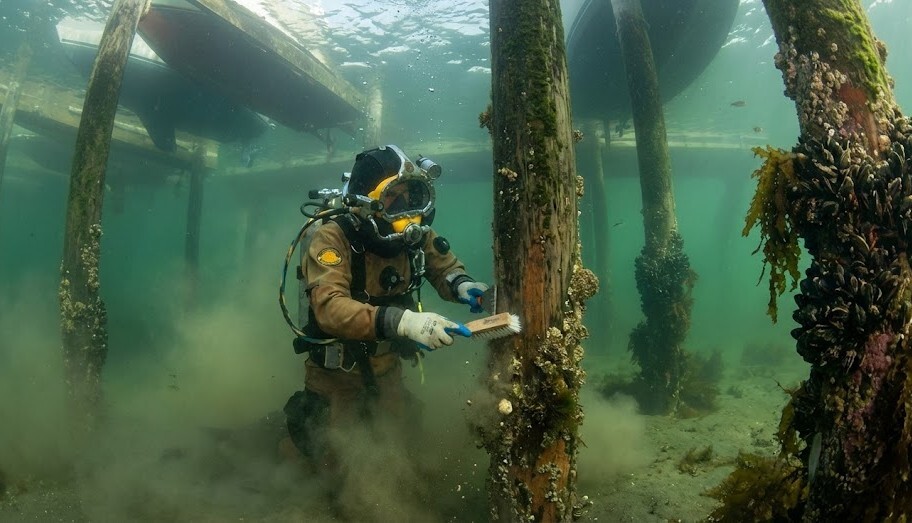
Most serious piling issues develop below the waterline. Professional underwater inspections identify hidden problems such as rot, corrosion, cracking, spalling, and marine borer damage.
According to the BoatUS Foundation, commercial docks benefit significantly from scheduled underwater inspections at least once per year.
Best Practices for Marina Dock Cleaning
Marine growth control is a core component of marina dock and piling maintenance.
Dock Piling Cleaning
Dock piling cleaning removes barnacles, algae, mussels, and biofouling that add weight and trap moisture against piling surfaces.
- Saltwater marinas: every 3–6 months
- Moderate growth areas: semi-annually
- Freshwater marinas: annually
Walkway and Surface Cleaning
Above-water dock surfaces should be cleaned regularly to prevent slips, staining, and material breakdown.
Managing Marine Growth in High-Traffic Marinas
Marinas experience faster marine growth due to vessel movement, nutrient levels, and limited water circulation.
| Marine Growth Type | Impact on Marina Structures | Best Practice |
| Barnacles | Adds weight and hides damage | Routine underwater cleaning |
| Algae | Creates slippery surfaces | Regular brushing and inspection |
| Mussels | Clusters stress pilings | Professional removal |
Unchecked growth accelerates deterioration and increases maintenance costs.
Piling Protection Strategies for Marinas
Preventive protection reduces long-term maintenance demands.
Piling Wraps and Jackets
Wraps and jackets shield pilings from marine growth, moisture intrusion, and impact damage, particularly in high-traffic slips.
Anti-Fouling Treatments
Marine-approved anti-fouling coatings reduce growth accumulation and simplify future cleaning.
Zinc and Corrosion Protection
Galvanic corrosion can destroy metal components quickly. Regular zinc replacement protects hardware and steel pilings.
Safety and Compliance Best Practices
Marina dock and piling maintenance must comply with environmental and safety regulations.
- Use eco-friendly cleaning methods
- Avoid debris release into waterways
- Document inspections and maintenance
- Restrict access during repairs
The Environmental Protection Agency emphasizes responsible marina maintenance to protect water quality.
Preventive vs Reactive Maintenance in Marinas
| Approach | Preventive Maintenance | Reactive Maintenance |
| Cost over time | Lower | Higher |
| Safety risk | Minimal | High |
| Downtime | Planned | Unexpected |
| Dock lifespan | Extended | Shortened |
Well-managed marinas prioritize preventive maintenance to maintain uninterrupted operations.
Best Practices After Storms or Heavy Vessel Activity
Post-event inspections are essential after storms, hurricanes, or unusually heavy marina traffic.
- Inspect pilings for movement or cracking
- Check dock alignment and connections
- Assess underwater damage immediately
Prompt action prevents small issues from escalating.
FAQs About Marina Dock and Piling Maintenance
How often should marinas inspect dock pilings?
At least annually, with additional inspections after storms or high-impact events.
Is professional maintenance necessary for marinas?
Yes. Commercial docks require professional-grade equipment and expertise.
Can maintenance reduce marina liability?
Absolutely. Well-maintained docks reduce accidents and insurance risks.
Do piling wraps eliminate the need for cleaning?
No, but they significantly reduce cleaning frequency and damage.
Conclusion
Implementing consistent marina dock and piling maintenance best practices is essential for safety, durability, and operational efficiency. Regular inspections, professional cleaning, marine growth management, and preventive protection strategies help marinas avoid costly disruptions and extend the life of their infrastructure.
For reliable commercial marina maintenance, contact us today. We provide professional services including Hull Cleaning, Cavitation Cleaning, Zinc Replacement, Underwater Inspections, and Wash & Detailing to keep marina docks, pilings, and vessels safe, compliant, and performing at the highest level.