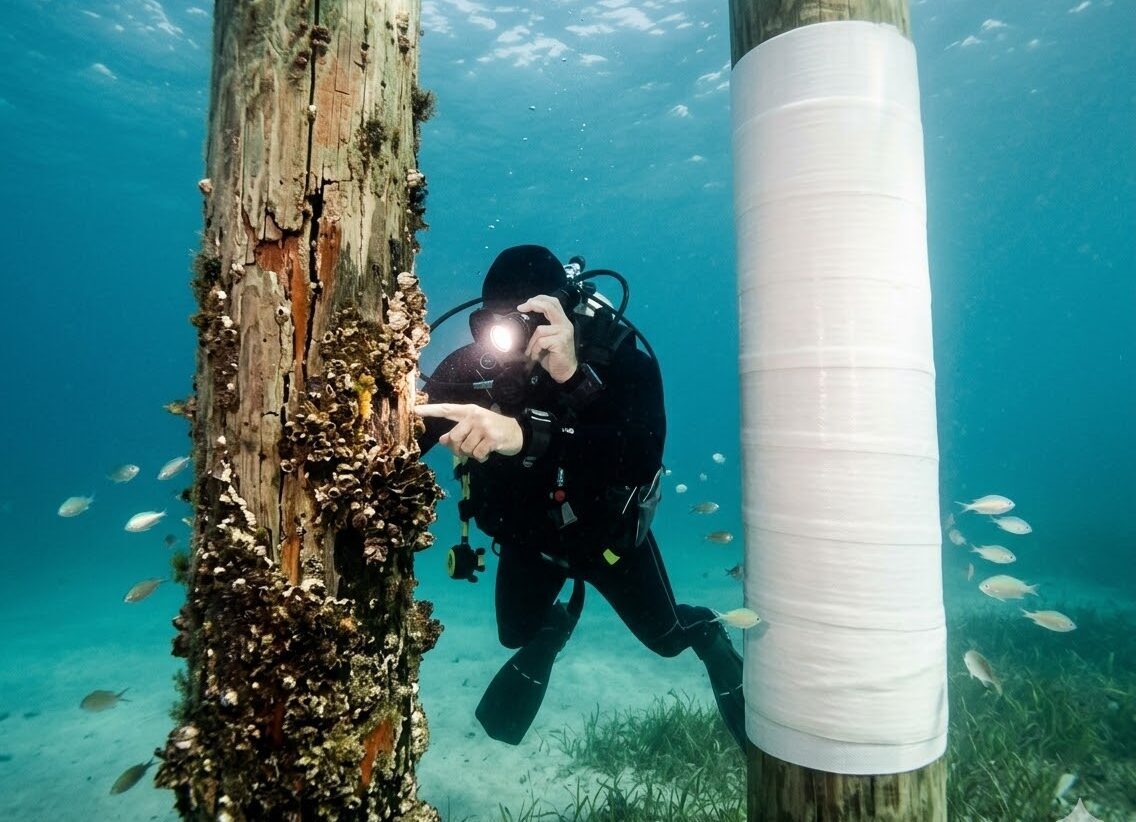
When dock pilings show signs of deterioration, many waterfront property owners assume that full replacement is the only path forward. In reality, a range of proven underwater repair options for damaged dock pilings exist — and when applied at the right time, they can restore structural integrity, extend piling lifespan by decades, and save you a significant amount of money. From fiberglass jacketing and carbon fiber wraps to epoxy injection and concrete encasement, today’s marine repair technologies are more advanced and accessible than ever. This comprehensive guide covers every major underwater repair method available in 2025–2026, explains when each one is appropriate, breaks down real costs, and helps you understand when repair is the smarter choice over full replacement.
Why Underwater Piling Repairs Are Often the Smarter Choice
Full piling replacement is expensive, time-consuming, and disruptive. It often requires removing dock sections, obtaining permits, bringing in heavy equipment, and temporarily losing use of your waterfront structure. For many types of piling damage — particularly those caught early or in the mid-stage — professional underwater repair options deliver comparable results at a fraction of the cost.
The key is diagnosis. The type of damage your piling has sustained, the material the piling is made from, and the extent of structural compromise all determine which repair method is appropriate. Not every damaged piling needs to be pulled out — but every damaged piling does need professional assessment before a repair or replacement decision is made.
A general financial rule of thumb used across the marine industry: if the cost of repair is less than 50% of the cost of full replacement, repair is usually the better investment. With single piling replacement costing anywhere from $400 to $1,600 depending on depth, material, and access, targeted underwater repairs often represent substantial savings — especially on multi-piling docks.
The Most Effective Underwater Repair Options for Damaged Dock Pilings
Below is a detailed breakdown of every major underwater repair option available for damaged dock pilings, including how each method works, what type of damage it addresses, and what dock owners can expect in terms of cost and longevity.
1. Fiberglass Jacket Repair (Piling Encasement)
Fiberglass jacketing is one of the most widely used and trusted methods for repairing damaged dock pilings, particularly wood and concrete pilings that have experienced surface erosion, minor cracking, or marine borer activity. A custom-fitted fiberglass sleeve is placed around the damaged section of the piling, then filled with either concrete grout or epoxy to create a solid, watertight encasement.
This method physically restores load-bearing capacity by surrounding the weakened piling section with a rigid structural shell. Because fiberglass is corrosion-resistant, UV-stable, and impervious to marine organisms, the repaired section is often stronger and more durable than the original piling material. Fiberglass jackets can be installed underwater by certified commercial divers with minimal disruption to the dock structure above.
- Best for: Wood pilings with mid-stage marine borer damage, cracked or spalled concrete pilings, and steel pilings with surface corrosion
- Expected lifespan after repair: 20–30 years with proper maintenance
- Average cost: $300 – $900 per piling depending on diameter and depth
- Can be performed underwater: Yes
2. Carbon Fiber Wrap Repair
Carbon fiber wrapping is the most advanced and highest-performance underwater repair option available for damaged dock pilings today. Known for its extraordinary tensile strength — approximately ten times stronger than steel by weight — carbon fiber composite wraps are bonded directly to the piling surface using marine-grade epoxy resin, creating a seamless, high-strength shell around the damaged area.
Carbon fiber wraps are particularly effective for concrete pilings that have experienced spalling, internal rebar corrosion, or cracking due to freeze-thaw cycles or saltwater intrusion. They can also be applied to steel pilings suffering from advanced surface pitting. Because carbon fiber does not corrode, does not absorb moisture, and does not support biological growth, it represents a long-term structural solution rather than a short-term patch.
- Best for: Concrete pilings with structural cracking or spalling, steel pilings with corrosion-related thinning, and high-load commercial dock applications
- Expected lifespan after repair: 30–50+ years
- Average cost: $500 – $1,500 per piling depending on damage extent
- Can be performed underwater: Yes, by certified commercial divers
3. Epoxy Injection and Grout Filling
For pilings with isolated cracks, surface voids, or early-stage spalling, epoxy injection is a minimally invasive and highly effective repair technique. Marine-grade epoxy is injected under pressure directly into cracks, voids, and compromised sections of the piling, where it bonds chemically with the surrounding material and cures to form an extremely hard, waterproof seal.
Epoxy injection does not require encasement or significant structural modification, making it one of the fastest and most cost-effective underwater repair options for damaged dock pilings in earlier stages of deterioration. For concrete pilings, marine grout is often used in combination with epoxy to fill larger voids and restore section integrity before a protective jacket is applied.
- Best for: Concrete pilings with hairline to moderate cracking, isolated surface voids, and early-stage spalling without exposed rebar
- Expected lifespan after repair: 10–20 years depending on damage severity and environment
- Average cost: $150 – $500 per piling
- Can be performed underwater: Yes
4. Vinyl and Polyethylene Piling Wrap Systems
Vinyl and polyethylene wrap systems — such as the well-known SnapJacket system — are widely used for both repair and prevention on wood dock pilings. These heavy-duty UV-protected sleeves are fitted around the piling from below the mud line upward, physically blocking marine borer access while simultaneously compressing and stabilizing any remaining surface damage.
The wrap is typically filled with concrete or marine-grade grout to provide additional structural reinforcement. While vinyl wraps are not as structurally robust as fiberglass or carbon fiber jackets for severely compromised pilings, they are an excellent, cost-effective solution for moderately damaged wood pilings and an outstanding preventative tool when installed on healthy or mildly affected pilings.
- Best for: Wood pilings with early to moderate marine borer damage, surface erosion, and biological fouling
- Expected lifespan after repair: 20–50 years depending on fill material and installation quality
- Average cost: $100 – $400 per piling (DIY options available; professional installation recommended)
- Can be performed underwater: Yes
5. Cathodic Protection Systems
While not a structural repair in the traditional sense, cathodic protection is a critical underwater repair option for steel and metal dock pilings that are experiencing galvanic corrosion. Zinc anodes or impressed current systems are installed at and below the waterline to redirect electrochemical corrosion activity away from the piling itself.
Zinc anodes are sacrificial — they corrode in place of the piling, protecting the structural metal. Anode replacement is a routine maintenance task that should be performed by a certified diver every one to three years depending on water salinity and electrical activity in the marina. When combined with surface coatings, cathodic protection significantly extends the lifespan of steel and aluminum dock pilings and connected hardware.
- Best for: Steel pilings, aluminum pilings, and all metal dock hardware in saltwater environments
- Expected benefit: Significantly extends service life of protected metal components
- Average cost: $50 – $300 per anode installation including diver labor
- Can be performed underwater: Yes
6. Timber Splice Repair
In cases where a wood piling has severe deterioration localized to a specific section — often around the waterline zone or just below it — a timber splice repair can be performed. A new, treated timber section is mechanically attached to the sound portion of the existing piling, effectively replacing the damaged segment without requiring full piling extraction and replacement.
This approach is frequently used when the base of the piling below the mud line remains sound — a common scenario since the anaerobic mud environment inhibits the marine organisms and oxygen-driven decay processes that attack the upper piling sections. The splice is typically then encased in a fiberglass or carbon fiber jacket for added protection and a seamless finish.
- Best for: Wood pilings with damage confined to the waterline zone or upper submerged section, where the base remains structurally intact
- Expected lifespan after repair: 15–25 years with proper encasement
- Average cost: $400 – $1,000 per piling including jacket encasement
- Can be performed underwater: Partially — diver-assisted
Comparison of Underwater Repair Methods for Damaged Dock Pilings
| Repair Method | Best Piling Material | Damage Level | Average Cost Per Piling | Lifespan Added | Underwater Installation |
|---|---|---|---|---|---|
| Fiberglass Jacket | Wood, Concrete, Steel | Moderate to Severe | $300 – $900 | 20–30 years | Yes |
| Carbon Fiber Wrap | Concrete, Steel | Moderate to Severe | $500 – $1,500 | 30–50+ years | Yes |
| Epoxy / Grout Injection | Concrete | Early to Moderate | $150 – $500 | 10–20 years | Yes |
| Vinyl / Poly Wrap | Wood | Early to Moderate | $100 – $400 | 20–50 years | Yes |
| Cathodic Protection | Steel, Aluminum | Corrosion Prevention | $50 – $300 | Ongoing protection | Yes |
| Timber Splice | Wood | Localized Severe | $400 – $1,000 | 15–25 years | Partially |
When Underwater Repair Is Not Enough
As effective as these underwater repair options for damaged dock pilings can be, there are situations where repair is no longer viable and full replacement becomes necessary. Attempting to repair a piling that is beyond saving is not only a waste of money — it is a serious safety risk.
Full piling replacement should be seriously considered when:
- Shipworm infestation has completely hollowed the interior of the piling, leaving only a thin shell of surface material
- Structural cross-section loss exceeds 40–50% of the original diameter in the critical load zone
- A concrete piling has extensive exposed rebar with active corrosion that has caused significant section loss
- Steel pilings have corrosion-related thinning to the point that wall thickness is critically reduced throughout
- Multiple pilings on the same dock section are simultaneously compromised, indicating systemic failure
- The piling has completely separated from its mud-line foundation or shows uncontrolled movement
The only reliable way to assess whether repair or replacement is appropriate is through a professional underwater inspection. Visual inspection from above the waterline cannot reveal the true internal condition of a piling. A certified commercial diver trained in marine structural assessment will physically probe, measure, and document the condition of each piling at and below the waterline, providing the data needed to make a confident, informed decision.
The Role of Professional Underwater Inspection Before Any Repair
Selecting the right underwater repair option for a damaged dock piling without a proper inspection is like prescribing medication without a diagnosis. The wrong repair approach applied to the wrong type of damage can create a false sense of security — making a structurally unsafe piling appear sound from above the waterline while the actual problem continues to develop unseen below.
A professional underwater inspection for dock pilings typically includes visual and physical assessment of each piling from the deck surface to the mud line, photographic or video documentation of all damage found, structural probing to identify soft spots, voids, and borer activity, measurement of remaining cross-section where possible, and a written report with repair or replacement recommendations.
Most marine maintenance professionals recommend annual underwater inspections for residential docks in saltwater environments and biannual inspections for commercial or high-traffic dock facilities. Post-storm inspections should always be performed after any significant weather event, as storm surge and wave action can rapidly accelerate existing damage or create new structural concerns. For more information on safe marine maintenance practices, the National Oceanic and Atmospheric Administration (NOAA) provides extensive resources on coastal and marine environmental stewardship.
Protecting Repaired Pilings for Maximum Longevity
Once underwater repairs have been completed, a proactive protection strategy will ensure you get the maximum lifespan from the investment. The following steps are recommended by marine maintenance professionals for 2025–2026:
- Schedule regular professional cleaning: Algae, barnacle, and marine growth buildup accelerates surface degradation on all piling materials. Professional cleaning every three to six months removes growth before it compounds damage.
- Inspect and replace zinc anodes annually: Sacrificial zinc anodes provide essential galvanic protection for all metal components. A certified diver should inspect and replace depleted anodes each year.
- Monitor wrap and jacket integrity: After jacketing or wrapping repairs, have a diver visually inspect seals and edges annually to ensure no water infiltration or growth penetration has occurred.
- Apply anti-fouling coatings where appropriate: Marine-grade anti-fouling treatments above and at the waterline reduce the adhesion rate of barnacles and algae, reducing maintenance frequency and protecting repair surfaces.
- Keep a maintenance log: Documenting each inspection, repair, and cleaning performed on your pilings allows you to track deterioration trends over time and plan for future interventions before they become emergencies.
According to the NOAA Sea Grant Program, proactive piling maintenance and timely repairs consistently outperform reactive replacement strategies in both cost efficiency and structural safety outcomes over a dock’s full service life.
Frequently Asked Questions About Underwater Repair Options for Damaged Dock Pilings
Can all types of dock pilings be repaired underwater?
Most types of dock pilings — including wood, concrete, and steel — can be repaired underwater using the appropriate method for their material and damage type. Fiberglass and carbon fiber jackets work across all three materials. Epoxy injection is most suitable for concrete, while vinyl wraps are specifically designed for wood pilings. The key factor is whether enough sound structural material remains to support the repair — which only a professional underwater inspection can determine.
How long does an underwater piling repair take?
Most single-piling underwater repairs can be completed within one to two days depending on water depth, damage extent, and the repair method being used. Fiberglass or carbon fiber jacketing may require curing time before the piling returns to full load capacity. For multi-piling repair projects, timelines of three to seven days are typical. Your marine contractor will provide a specific timeline after completing the inspection and scoping the repair work.
Is it safe to use the dock while underwater piling repairs are in progress?
In most cases, dock usage during repair work is not recommended for safety reasons and to avoid disturbing the repair process. Specific restrictions depend on the repair method and how many pilings are being worked on simultaneously. Your marine repair contractor will advise you on access restrictions before work begins. Once repairs are completed and cured, the dock can typically return to normal use.
How do I know which underwater repair method is right for my dock pilings?
The correct repair method depends on the piling material, the type of damage, the extent of structural compromise, and the depth and accessibility of the piling. This determination should always be made by a certified marine contractor or commercial diver following a professional underwater inspection. Choosing a repair method without proper inspection risks applying the wrong solution — or missing damage that requires full replacement rather than repair.
Conclusion: Protect Your Dock With the Right Underwater Repair Strategy
Damaged dock pilings do not always mean expensive full replacements. From fiberglass and carbon fiber jackets to epoxy injection, vinyl wrap systems, timber splices, and cathodic protection, there is a proven underwater repair option for almost every stage and type of piling damage. The key is acting early, getting a professional underwater inspection to accurately assess the damage, and selecting the repair method that matches both your piling material and the severity of deterioration.
A proactive approach to underwater repair for damaged dock pilings — combined with regular cleaning, zinc anode replacement, and annual inspections — is the most cost-effective strategy available for protecting your waterfront investment. Waiting until structural failure forces your hand will always cost more, take longer, and carry greater safety risk than addressing damage when it is first identified.
Need a professional underwater inspection for your dock pilings? Contact our certified marine team today — we specialize in expert Underwater Inspections to assess, diagnose, and protect your dock structure before small damage becomes a costly emergency.