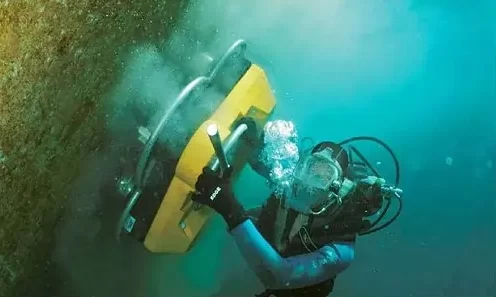
Professional underwater hull inspection involves systematic examination of a vessel’s submerged components by certified divers or remotely operated vehicles (ROVs) to assess structural integrity, detect damage, and identify maintenance needs without costly dry-docking. This comprehensive marine maintenance procedure evaluates shell plating, propellers, rudders, anodes, and other underwater structures to ensure vessel safety and operational efficiency. Modern inspection technology combines visual assessment techniques, advanced equipment, and detailed documentation to provide vessel owners with actionable insights about their ship’s condition beneath the waterline.
Understanding the underwater hull inspection process helps vessel owners make informed maintenance decisions while ensuring compliance with classification society requirements. These inspections save time and money compared to traditional dry-docking while maintaining thorough safety standards through advanced technology and certified professional expertise.
Pre-Inspection Planning and Preparation
Before any underwater hull inspection begins, thorough preparation ensures the procedure proceeds safely and efficiently while meeting all regulatory requirements. The inspection team reviews the vessel’s maintenance history, previous inspection reports, and any outstanding repair recommendations to identify areas requiring special attention. Vessel owners must confirm eligibility for underwater inspection, as ships with outstanding structural repair recommendations may require traditional dry-docking instead.
The planning phase includes assembling qualified personnel, verifying UWILD (Underwater Inspection in Lieu of Dry-Docking) certification, and scheduling the inspection to minimize operational disruption while maintaining regulatory compliance. Professional teams coordinate with classification societies to ensure the inspection meets all specific requirements for the vessel type and age.
Documentation preparation forms a critical component of pre-inspection planning. Inspectors gather vessel drawings showing shell openings, docking plugs, bilge keels, welded seams, appendages, and reference points that guide the underwater examination. These plans enable systematic coverage of all required areas while providing orientation references for divers or ROV operators navigating around the hull structure.
Equipment Verification and Safety Protocols
Professional hull inspection teams conduct comprehensive equipment inspections before deployment to ensure operational readiness and personnel safety. Divers verify diving helmets and masks for cracks, seal integrity, and communication functionality while checking breathing gas supplies, umbilical lines, harnesses, and exposure suits appropriate for water temperature conditions.
For ROV-based inspections, operators test CCTV systems, ensure power independence through battery backup, and verify that all recording equipment functions properly. Communication systems receive particular attention, with function tests of diver-to-surface communications and redundancy systems to maintain constant contact throughout the underwater hull inspection process.
Types of Underwater Hull Inspection Methods
Professional marine vessel inspection employs two primary visual assessment approaches, each serving distinct purposes based on inspection objectives and regulatory requirements. General Visual Inspection (GVI) provides a broad overview of hull condition from moderate distance, typically conducted at arm’s length from components using natural or supplemental lighting.
This method efficiently detects visible defects including rust, corrosion, biofouling, flaking paint, and obvious structural damage across large surface areas. GVI serves as the standard approach for routine underwater hull inspection and satisfies basic classification society requirements for vessels in good condition.
Close Visual Inspection (CVI) involves detailed examination with specialized lighting, surface cleaning, and measurement tools such as thickness gauges, probes, and laser scalers to assess specific areas of concern. CVI requires additional qualifications and delivers granular data about structural integrity, coating condition, and precise damage extent for areas where GVI reveals potential problems.
Critical Components Examined During Hull Inspection
During a professional underwater hull inspection, certified inspectors systematically examine numerous critical components that affect vessel safety and performance. The shell plating receives thorough scrutiny for excessive corrosion, deterioration from chafing or ground contact, unfairness, buckling, and proper weld integrity, with special attention to bilge strake connections and bilge keels.
Inspectors assess propeller hubs for blade damage, cavitation erosion, and proper attachment; shaft seals for leakage; stern bearings and rudder bearings for wear; and sea suctions, valves, and through-hull fittings for obstruction or damage. Anodes are evaluated for consumption rate and effectiveness in providing cathodic protection against corrosion.
The inspection covers underwater appendages including stabilizer fins, bow thrusters, and sonar domes, along with mooring equipment, anchor pockets, and any visible damage or abnormalities throughout the submerged hull surface. According to IACS (International Association of Classification Societies) unified requirements, specific components require mandatory examination during each underwater survey to maintain classification certification.
Shell Plating and Structural Assessment
The vessel’s shell plating represents the primary barrier against water ingress and requires meticulous examination during the underwater hull inspection process. Inspectors systematically survey plating sections for corrosion patterns, pitting, wastage, and structural deformations that could compromise watertight integrity.
Areas prone to accelerated deterioration—including the keel line, bow sections, stern areas, and locations where biological organisms accumulate—receive enhanced scrutiny during the inspection. The examination identifies paint system failures, coating degradation, and areas where protective layers have been compromised, as these conditions accelerate corrosion and facilitate biofouling attachment.
Advanced ROV Technology in Modern Hull Inspections
Contemporary underwater hull inspection increasingly relies on Remotely Operated Vehicles (ROVs) that enhance efficiency, safety, and accuracy while eliminating risks to human divers. ROVs equipped with high-definition cameras, imaging sonar, thickness gauges, and laser measurement tools navigate around hull structures in various water clarity conditions.
Advanced ROV systems feature multi-thruster designs enabling complex maneuvering patterns with 270-degree panning cameras and 4K imaging capabilities for detailed defect identification. Modern ROVs integrate imaging sonar for murky water inspections and cathodic protection probes for comprehensive hull structural evaluations, delivering thorough assessments without vessel removal from water.
Professional ROV hull inspection services can reduce costs by up to 50% compared to traditional diving services while providing superior documentation quality through high-resolution video recording. These systems dramatically reduce inspection time compared to traditional dry-docking while maintaining thorough documentation standards required by classification societies and regulatory authorities.
ROV Capabilities and Equipment Standards
Professional-grade ROVs used for underwater hull inspection must meet specific equipment standards established by classification societies. According to IACS requirements, ROV systems must include closed circuit color television with sufficient illumination equipment, video recording devices, still photography capability, and equipment for thickness gauging and measurements.
ROV operators require at least one year of experience conducting inspections on vessels, along with documented knowledge of ship underwater structures, non-destructive testing methods, and proper operational procedures. Advanced ROVs feature magnetic crawlers and thruster stabilization that ensure stable movement along the hull even in high currents or challenging environmental conditions.
The Step-by-Step Underwater Hull Inspection Process
Professional underwater hull inspection follows a systematic sequence ensuring complete coverage and accurate assessment of all critical components. The process begins with final equipment checks and communication system verification between underwater personnel and surface monitoring teams.
Inspectors conduct an overall visual survey of the hull’s external body, examining vessel shapes, lines, and curves to detect discontinuities, ruptures, or deformations that might indicate structural problems. This initial broad assessment helps identify areas requiring detailed close-up examination.
The team then proceeds to focused examinations at locations where anomalies were identified and at structures stipulated by classification society rules, particularly in cargo areas, tank sections, and critical structural zones. Throughout the inspection, constant two-way communication maintains contact between underwater personnel and surface monitoring teams, with progress recorded via CCTV systems for real-time assessment and permanent documentation.
Initial Descent and Overall Assessment
The underwater hull inspection begins with the diver or ROV descending to the vessel’s keel or designated starting point, with continuous communication confirming equipment functionality and environmental conditions. Inspectors perform a systematic sweep of the entire hull from bow to stern, documenting overall condition and noting areas requiring detailed attention.
This initial pass allows inspectors to assess general hull condition, biofouling extent, coating effectiveness, and visible damage patterns before conducting focused examinations of specific components. The systematic approach ensures complete hull coverage while efficiently identifying priority areas for detailed investigation.
Biofouling Assessment and Marine Growth Documentation
A critical component of the underwater hull inspection process involves evaluating biofouling extent, type, and distribution across submerged surfaces. Inspectors identify accumulations of biological organisms including barnacles, mussels, algae, and microfouling that cause corrosion, increased drag, and reduced operational efficiency despite modern antifouling paint systems.
The assessment categorizes fouling severity using standardized classification systems, documenting location, organism types, and thickness of marine growth accumulation. This information determines whether in-water cleaning is required immediately or can be scheduled during future maintenance intervals.
Before detailed inspections can accurately assess underlying hull condition, underwater cleaning services often remove marine growth from structures, enabling clear visibility of plating, welds, and coating systems. Professional teams document pre-cleaning and post-cleaning conditions to demonstrate thoroughness and identify issues previously obscured by biofouling.
Documentation Standards and Recording Requirements
Thorough documentation forms the foundation of professional underwater hull inspection, providing comprehensive records from initial planning through final assessment. Every phase requires meticulous recording, including pre-dive equipment checks, environmental conditions, inspection methodology, findings at each hull section, and photographic or video evidence of all anomalies.
Modern inspections utilize underwater CCTV systems with recording capabilities, enabling real-time monitoring by quality control representatives and surveyors while creating permanent visual records. Classification societies mandate specific documentation standards for UWILD inspections, requiring detailed reports that describe component condition, identify defects with precise location data, and provide recommendations for repairs or continued monitoring.
Professional inspection reports include annotated photographs or video frames showing defect locations referenced to vessel drawings, measurement data from thickness gauging or clearance checks, and comparative analysis with previous inspection results. This documentation serves multiple purposes: satisfying regulatory requirements, establishing baseline conditions for future comparison, supporting maintenance planning, and providing evidence of due diligence in vessel care.
Classification Society Inspection Requirements
Underwater hull inspection must meet stringent requirements established by classification societies including ABS (American Bureau of Shipping), DNV, Lloyd’s Register, and other IACS member organizations. These requirements specify inspection intervals, mandatory examination areas, documentation standards, and acceptable condition criteria for maintaining vessel certification.
Classification societies typically require underwater inspections at intermediate survey intervals, with specific requirements varying based on vessel age, type, and operational profile. Vessels less than 15 years old generally qualify for UWILD under standard conditions, while older vessels may require additional approval based on hull condition, inspection history, and compliance with thickness measurement requirements.
Surveyors from classification societies typically attend underwater hull inspections to verify compliance with established procedures and witness examination of critical components. Their presence ensures independent verification of inspection quality and provides official certification that the examination meets regulatory standards.
UWILD Eligibility and Certification
Conducting effective underwater inspections requires strict adherence to certification standards and regulatory frameworks. UWILD certification demonstrates proficiency in conducting thorough underwater assessments while ensuring compliance with safety standards and classification society requirements.
Only certified divers with documented training in ship structures and inspection techniques traditionally perform these examinations, though modern regulations increasingly permit ROV-based assessments when conducted according to approved procedures. Recent U.S. Coast Guard guidance released in 2025 clarifies requirements for vessels participating in UWILD programs, including physical features, documentation, and eligibility criteria based on vessel age and condition.
Inspection Findings and Condition Classification
Upon completing the underwater hull inspection, qualified inspectors assign condition classifications to examined components based on established criteria. Vessels and their components typically receive designations indicating whether they are in good condition requiring no immediate action, requiring further monitoring with scheduled follow-up, or needing repair before continued operation.
For significant findings, inspectors provide maintenance and repair recommendations accompanied by severity classifications, budgetary estimates, and expected component lifespan projections, enabling proactive maintenance planning. Classification societies may impose operational restrictions or mandate repairs before issuing survey completion certificates, particularly when inspections reveal structural deficiencies affecting watertight integrity, propulsion systems, or steering mechanisms.
Inspection reports categorize defects using standardized terminology and reference systems that facilitate communication between vessel operators, classification societies, and repair facilities. This standardization ensures all stakeholders understand the severity and location of identified issues requiring attention.
Common Defects Detected During Hull Inspections
Underwater hull inspections routinely identify various defects and conditions requiring attention to maintain vessel integrity and operational efficiency. Corrosion represents the most common finding, manifesting as general surface deterioration, localized pitting, or accelerated wastage in specific areas exposed to aggressive marine environments.
Paint system failures including flaking, blistering, and coating loss expose underlying steel to accelerated corrosion while facilitating biofouling attachment. These coating deficiencies often appear first at areas of high mechanical stress, previous repair locations, or zones with inadequate surface preparation during initial application.
Structural deformations such as plate buckling, unfairness, and dents result from grounding incidents, collision damage, or improper loading stresses. Mechanical component issues include propeller blade cavitation damage, shaft seal leakage, rudder bearing wear, and anode consumption exceeding expected rates based on vessel age and operating environment.
Propulsion System Inspection Details
The propulsion system receives particular attention during professional underwater hull inspection due to its direct impact on vessel performance and fuel efficiency. Inspectors examine propeller blades for cavitation erosion, mechanical damage from debris strikes, fatigue cracking, and proper pitch alignment that affects thrust generation.
Shaft systems are assessed for straightness, seal integrity, bearing wear, and proper clearances, as these components operate under significant mechanical loads and require precise maintenance. Rudder assemblies undergo scrutiny for structural integrity, bearing play, pintle condition, and proper attachment to steering mechanisms.
Marine growth accumulation on propeller blades significantly reduces propulsive efficiency and increases fuel consumption, making cleaning and polishing essential maintenance procedures often performed in conjunction with underwater hull inspection services. Professional teams document propeller condition with high-resolution photography showing individual blade surfaces for detailed analysis.
Post-Inspection Maintenance Recommendations
Following underwater hull inspection completion, qualified inspectors compile comprehensive reports detailing findings and providing actionable maintenance recommendations. These reports prioritize identified issues by severity, distinguishing between immediate safety concerns requiring urgent repair and minor defects suitable for monitoring until the next scheduled inspection.
For each significant finding, inspectors specify recommended repair methods, estimated costs, required materials, and optimal timing for maintenance interventions. The documentation includes photographic evidence annotated with precise location references, enabling maintenance crews to efficiently locate and address identified issues without extensive searching.
Long-term maintenance planning utilizes inspection data to predict component lifespan, schedule proactive replacements, and optimize maintenance intervals based on actual condition rather than arbitrary time periods. Vessel operators integrate these recommendations into computerized maintenance management systems, tracking repair completion and maintaining historical records for trend analysis.
Advantages Over Traditional Dry-Docking
Professional underwater hull inspection offers significant operational and economic advantages compared to traditional dry-docking procedures. The method provides substantial cost reduction by eliminating expenses associated with vessel removal, dry-dock facility rental, and extended out-of-service periods that impact commercial operations.
Time efficiency dramatically improves as underwater inspections typically complete within hours or days rather than the weeks required for dry-docking mobilization, inspection, and vessel re-floating. This rapid turnaround minimizes revenue loss from vessel downtime while maintaining operational schedules.
Safety enhancements emerge from eliminating dangerous dry-docking procedures where failing blocks can cause catastrophic vessel capsizing and crew endangerment. Underwater hull inspection allows vessels to maintain operational readiness with minimal service interruption, particularly valuable for commercial ships on tight schedules or military vessels requiring rapid deployment capability.
Cost Comparison and Economic Benefits
Multiple factors influence underwater hull inspection costs, with vessel size representing the primary determinant affecting inspection duration and resource requirements. ROV-based inspection services typically range from $5,000 to $20,000 depending on vessel size and complexity, while traditional dry-docking can cost $50,000 to several hundred thousand dollars for large commercial vessels.
The economic benefits extend beyond direct inspection costs to include fuel savings from maintaining clean hulls, reduced engine wear from optimal operating conditions, and extended coating life through timely intervention when minor defects are detected. Professional underwater hull inspection programs demonstrate return on investment within the first inspection cycle through these combined savings.
Inspection Frequency and Scheduling Considerations
Determining appropriate underwater hull inspection frequency involves balancing regulatory requirements, operational demands, and risk management considerations. Classification societies typically mandate annual inspections for commercial vessels, with additional surveys required at intermediate and special survey intervals.
Vessels operating in particularly harsh environments, carrying hazardous cargo, or exhibiting accelerated deterioration rates may require more frequent inspections to ensure safety. Operational factors influence scheduling decisions, as inspections ideally occur during planned port calls, cargo operations, or periods of reduced activity to minimize service disruption.
Shipowners increasingly employ risk-based inspection planning that identifies key structural elements requiring focused attention and allocates resources to components with highest failure probability or consequence. Seasonal considerations affect inspection timing, as calmer water conditions, better visibility, and moderate temperatures facilitate more thorough and efficient assessments.
Safety Protocols for Diving Operations
Professional underwater hull inspection requires strict adherence to comprehensive safety protocols protecting personnel throughout diving operations. Before each dive, medical fitness certification must be confirmed, with verification that no illness, injury, or medication could impair dive performance or create underwater hazards.
Dive teams implement buddy system protocols, maintain constant surface communication, establish emergency procedures, and ensure rescue equipment remains immediately available throughout operations. Environmental hazards receive careful assessment, including current strength, water temperature, visibility conditions, and potential vessel movement that could endanger underwater personnel.
When divers work beneath vessels, particular attention addresses collision risks from ship movement with current or tide changes, along with entanglement hazards from mooring lines or underwater obstacles. The adoption of ROV technology eliminates many human risks by removing personnel from hazardous underwater environments while maintaining inspection quality and thoroughness.
Environmental Considerations During Inspections
Modern underwater hull inspection incorporates environmental protection principles to minimize ecological impact during assessment and maintenance activities. When hull cleaning accompanies inspection, best practices require capturing removed biofouling material to prevent invasive species transfer between geographic regions.
The International Maritime Organization provides guidance on in-water cleaning operations, emphasizing procedures that protect marine ecosystems while maintaining vessel performance. Inspection teams assess antifouling coating effectiveness as these systems reduce biofouling accumulation, thereby decreasing cleaning frequency and associated environmental disruption.
Proper timing of cleaning operations considers local regulations, marine protected areas, and sensitive environmental periods such as spawning seasons. ROV-based inspections offer environmental advantages by reducing underwater disturbance compared to multiple diver passes, while advanced imaging technology enables thorough assessment with minimal physical contact.
Future Technology Trends in Hull Inspection
Emerging technologies continue transforming underwater hull inspection capabilities, accuracy, and efficiency through automation and artificial intelligence integration. Machine learning algorithms now analyze inspection footage to automatically detect, classify, and measure defects, reducing human interpretation variability and accelerating report generation.
Advanced sonar technologies provide three-dimensional hull mapping with millimeter-scale resolution, creating detailed baseline models for comparison during subsequent inspections to detect subtle changes indicating developing problems. Autonomous underwater vehicles (AUVs) capable of conducting entire hull surveys without human control are entering service, offering reduced operational costs and consistent inspection patterns.
Augmented reality systems assist inspection teams by overlaying previous inspection data onto current views, immediately highlighting changes and guiding attention to historically problematic areas. These technological advances promise to make underwater hull inspection even more efficient and thorough while reducing costs and improving safety for inspection personnel.
Frequently Asked Questions
How long does a professional underwater hull inspection take?
A standard underwater hull inspection for medium-sized commercial vessels typically requires 2-4 hours for completion, though duration varies significantly based on vessel size, hull complexity, water conditions, and inspection scope. Large vessels with multiple propellers, complex appendages, or extensive prior damage requiring detailed assessment may need 6-8 hours or multiple sessions. ROV-based inspections often complete faster than traditional diver inspections due to rapid deployment, continuous operation without decompression requirements, and efficient maneuvering capabilities around hull structures.
Can all vessels use underwater inspection instead of dry-docking?
Not all vessels qualify for underwater inspection in lieu of dry-docking (UWILD), as classification societies establish specific eligibility criteria limiting this option. Vessels with outstanding recommendations for repairs to propellers, rudders, stern frames, sea valves, or other underwater structures must undergo dry-docking to complete necessary work. Ships requiring structural modifications, major plating repairs, or extensive coating renewal typically need dry-dock facilities providing complete hull access and controlled working environments. Classification societies evaluate each vessel’s inspection history, age, operational profile, and condition before approving UWILD as an acceptable alternative.
What qualifications do underwater hull inspectors need?
Professional underwater hull inspectors require multiple certifications demonstrating technical competence and safety proficiency. Diver-inspectors must hold commercial diving certifications, UWILD-specific training recognition, and often specialized qualifications for close visual inspections. Classification society approval represents an additional requirement, with organizations maintaining lists of certified inspection personnel authorized to conduct surveys meeting regulatory standards. ROV operators performing hull inspections typically require manufacturer-specific equipment training and at least one year of experience conducting inspections on vessels, though formal diver certification is not necessary for ROV-only operations.
