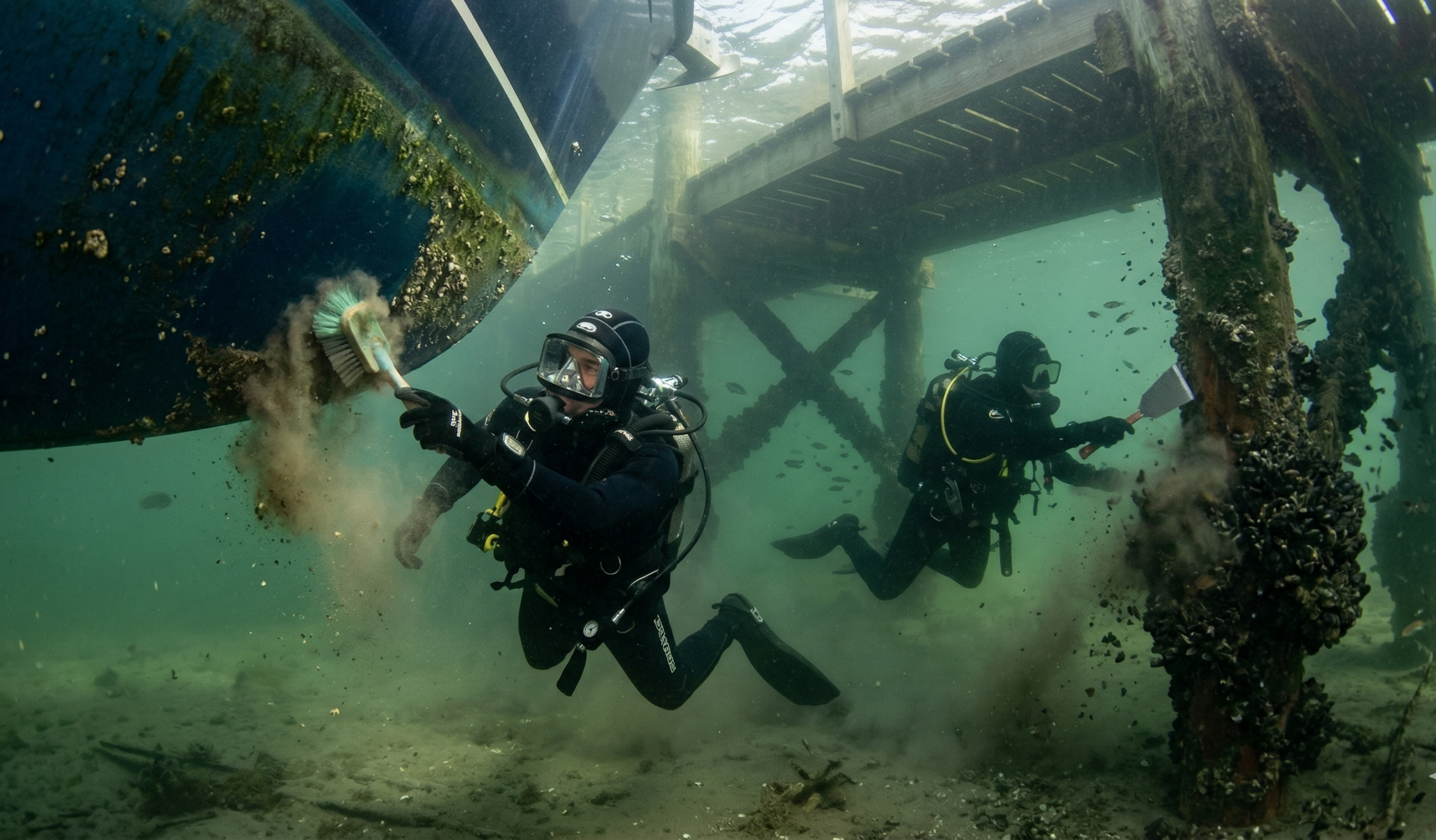
Marine environments demand regular maintenance, but not all cleaning tasks are the same. Understanding hull cleaning vs dock piling cleaning is essential for boat owners, marina operators, and waterfront property managers. While both services focus on removing marine growth, they serve very different purposes—one protects vessel performance, while the other safeguards structural integrity.
This guide breaks down the differences, methods, benefits, and maintenance schedules for hull cleaning and dock piling cleaning so you can make informed decisions about protecting your assets.
What Is Hull Cleaning?
Hull cleaning refers to the removal of marine growth from the underwater surface of a boat. Over time, algae, barnacles, and biofouling accumulate on hulls, affecting performance and efficiency.
Purpose of Hull Cleaning
- Reduce drag and improve speed
- Increase fuel efficiency
- Prevent long-term hull damage
- Maintain smooth vessel operation
How Hull Cleaning Is Performed
Professional divers typically use soft brushes or specialized tools designed to clean without damaging anti-fouling coatings.
What Is Dock Piling Cleaning?
Dock piling cleaning focuses on removing marine growth from the vertical supports of docks and marinas. Unlike boats, these structures remain submerged constantly, making them more susceptible to heavy buildup.
Purpose of Dock Piling Cleaning
- Maintain structural strength of pilings
- Prevent corrosion, rot, and deterioration
- Reduce excess weight from marine growth
- Enable accurate inspections
How Dock Piling Cleaning Is Performed
Cleaning may involve manual scraping, brushing, or cavitation techniques depending on the severity of marine growth.
Hull Cleaning vs Dock Piling Cleaning: Key Differences
The differences between these two services go beyond surface-level cleaning.
| Aspect | Hull Cleaning | Dock Piling Cleaning |
| Main goal | Improve vessel performance | Protect dock structure |
| Frequency | Every 4–8 weeks | Every 3–6 months |
| Growth type | Light to moderate | Heavy and layered |
| Risk of neglect | Fuel inefficiency and drag | Structural damage or failure |
| Cleaning tools | Soft brushes | Scrapers, cavitation tools |
Why Both Types of Cleaning Are Necessary
Ignoring either hull cleaning or dock piling cleaning can lead to serious issues.
- Dirty hulls reduce speed and increase fuel costs
- Unclean pilings weaken dock structures
- Marine growth spreads between surfaces
- Safety risks increase for vessels and users
Maintaining both ensures optimal performance and structural reliability.
Marine Growth Impact: Boat vs Dock
Marine growth affects boats and docks differently due to movement and exposure.
- Boat hulls experience friction and drag
- Dock pilings carry constant structural load
- Stationary pilings accumulate heavier growth
The Environmental Protection Agency highlights the importance of responsible marine maintenance practices.
DIY vs Professional Cleaning
Some maintenance can be handled by boat owners, but professional services offer better results.
DIY Cleaning
- Suitable for light cleaning
- Limited reach underwater
- Higher risk of incomplete removal
Professional Cleaning
- Thorough underwater coverage
- Safer and more effective
- Includes inspection and damage detection
When Should You Schedule Cleaning?
- Hull cleaning: every 4–8 weeks in saltwater
- Dock piling cleaning: every 3–6 months
- After storms: inspect and clean both
The BoatUS Foundation recommends routine maintenance for marine equipment longevity.
Cost Considerations
| Factor | Hull Cleaning | Dock Piling Cleaning |
| Frequency | Higher | Lower |
| Complexity | Moderate | Higher |
| Long-term value | Fuel savings | Structural protection |
FAQs About Hull Cleaning vs Dock Piling Cleaning
Are hull cleaning and dock cleaning the same?
No, they serve different purposes—one focuses on boats, the other on dock structures.
Which is more important?
Both are essential, but dock piling cleaning is critical for safety.
Can marine growth damage both?
Yes, it affects performance on boats and structure on docks.
Do both require professional services?
Yes, especially for thorough underwater cleaning.
Conclusion
Understanding hull cleaning vs dock piling cleaning helps ensure both your vessel and dock remain in optimal condition. Hull cleaning improves efficiency and performance, while dock piling cleaning protects the structural backbone of your waterfront setup. Neglecting either can lead to unnecessary costs and safety risks.
For professional marine cleaning services, contact us today. We provide Hull Cleaning, Cavitation Cleaning, Zinc Replacement, Underwater Inspections, and Wash & Detailing to keep your boat and dock in peak condition year-round.
