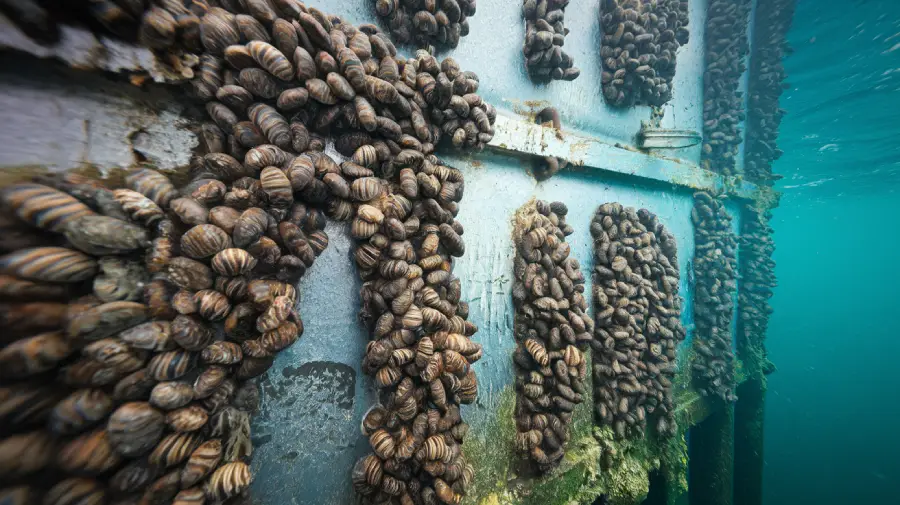
If you’ve spotted clusters of sharp, striped shells gripping your hull, intake screens, or trailer, you’re dealing with zebra mussels. These invasive mollusks don’t just cling; they cement themselves onto any submerged surface and create serious maintenance problems if ignored. The key to dealing with zebra mussels is understanding how their shells bond, why they spread so fast, and what specialized cleaning techniques actually work without tearing up your hull.
Here’s the thing. Zebra mussels attach with fibers that act like natural epoxy. Rip them off the wrong way, and you either slice into your gelcoat or leave behind fragments that turn into new attachment points. A controlled approach keeps your hull intact and stops you from spreading them into new waterways.
Why Zebra Mussels Are a Bigger Problem Than Regular Marine Growth
Zebra mussels grow in clusters and multiply quickly. They block cooling systems, cling to props, damage paint, and add drag that hits both performance and fuel costs. Unlike barnacles or algae, zebra mussels don’t detach easily once dry. They become brittle, sharp, and glued to the surface.
Many states require boaters to remove all visible mussels before launching into another lake. This makes safe removal not just smart, but legally necessary in many regions.
What Makes Zebra Mussels Hard to Remove
Their attachment system is the challenge. Zebra mussels anchor to surfaces using tiny but incredibly strong byssal threads. These threads wrap into pores and crevices on fiberglass, metal, and painted layers. When they die or dry out, the threads harden like epoxy. That’s why scraping alone often fails or chips the hull.
Good cleaning relies on weakening these threads first, not muscling through them.
Tools and Materials for Safe Zebra Mussel Removal
- Plastic or nylon scraper
- Marine-grade descaler or calcium dissolver
- Soft-bristle brush
- Pressure washer (low to moderate pressure)
- Warm water supply
- Bucket, spray bottle, and microfiber cloths
- Protective gloves and eye protection
- Boat lift or stands for full access
The goal is to soften their grip before scraping. You don’t want to dig at them dry.
Preparing the Boat Before Cleaning
Start by positioning the boat safely on a trailer or lift. Give yourself enough room to move around the hull. If possible, clean soon after pulling out of the water while the mussels are still moist. They detach easier when hydrated.
Rinse the hull thoroughly. Even a low-pressure rinse softens the outer tissue and begins breaking down debris. Don’t rely on water alone, but it sets you up for easier scraping.
Specialized Cleaning Techniques for Dealing with Zebra Mussels
1. Soak and Hydrate the Mussels
Use warm water to wet the entire affected area. Zebra mussels detach more easily when their tissues soften. If they’ve been out of the water for hours or days, this step matters even more because dried shells grip harder.
You can also use a marine-safe descaler. Spray or brush it onto the clusters and let it soak. The descaler weakens the calcium structure and loosens the byssal threads.
2. Apply Controlled Pressure Washing
Use a moderate-pressure rinse to knock off loose mussels. Don’t go full blast. High PSI can tear through paint or gelcoat. Hold the nozzle a few feet away and approach at a shallow angle rather than blasting head-on. This helps lift mussels without grinding them into the hull.
You’re not expecting the pressure washer to do all the work—just the first round.
3. Use a Plastic Scraper for Hands-On Removal
Once the mussels soften, use a plastic scraper to lift them from the surface. The shallow-angle technique works best. Start from the base of the cluster and work outward. Avoid jabbing or prying deeply since zebra mussel shells are sharp and can gouge the hull.
If the mussels come off in chunks, you’re on the right track. Don’t worry about small fragments yet—we’ll handle them later.
4. Reapply Descaler to Remove Remaining Adhesion
Zebra mussels often leave tiny white adhesive marks and byssal threads. These spots feel gritty under your fingers. Spray another layer of descaler and give it time to break down the calcium and organic matter. Then scrub lightly with a soft brush.
This step prevents the next infestation from bonding even deeper.
5. Secondary Pressure Rinse
After brushing, give the hull another fresh-water rinse. This removes loosened debris, shells, and residue. At this point most surfaces should be clean, but stubborn areas may still need a repeat of the previous steps.
6. Final Wash and Surface Check
Use mild soap and warm water to finish. Wipe with microfiber cloths to check for smoothness. A clean hull should feel consistent without jagged bumps. If you feel sharp fragments, repeat a light descaler pass and brush again.
How to Handle Zebra Mussels on Specific Boat Materials
Fiberglass Hulls
Fiberglass scratches easily, especially when scraping dried shells. Always soak first and use plastic tools. Avoid aggressive pressure washing at close range.
Aluminum Hulls
Avoid strong acids or descalers that may react with metal. Use mild cleaners and moderate-pressure washing.
Painted and Anti-Fouling Coated Hulls
Take your time. Paint can lift if scrapers are used too aggressively. Keep everything lubricated with water during removal.
Preventing Future Zebra Mussel Infestations
Once your hull is clean, prevention becomes your best defense. Zebra mussels spread fast, and they hitchhike easily. Here’s how to stay ahead of them:
- Rinse your boat thoroughly after every outing.
- Store the boat dry when possible.
- Inspect the hull, trailer, and live wells before launching elsewhere.
- Use marine coatings that resist mussel attachment.
- Follow local decontamination rules to avoid spreading invasive species.
Good sources for prevention guidelines include BoatUS invasive species resources and USGS zebra mussel maps and updates.
When to Call a Professional Zebra Mussel Cleaning Service
If your hull is heavily covered or if mussels have invaded intakes, cooling systems, or tight structural areas, a professional cleaning service is worth it. They use controlled heat, specialized solvents, and underwater tools that speed up the job while protecting the surface.
Professional cleaning also ensures you meet state-level decontamination requirements before launching in another lake. That matters more than most boaters realize.
Keeping Your Boat Clean and Mussel-Free
Dealing with zebra mussels becomes easier once you understand how they attach and what actually weakens that attachment. With a mix of warm water, softening agents, careful scraping, and consistent rinsing, you can remove them without damaging your hull or spreading them to other waterways.
And if you ever want help or a deeper cleaning that saves you the hassle, check out our website for professional hull care and marine maintenance options.
FAQs
Do zebra mussels damage fiberglass?
They can if you scrape them aggressively while dry. Their shells are sharp, so soften them first to prevent gouges.
Can pressure washing remove zebra mussels?
It removes loose clusters, but the real work comes from soaking and gentle scraping. Pressure alone rarely eliminates the adhesive base.
How do I keep zebra mussels from returning?
Rinse your boat after each use, store it dry, and follow local decontamination rules to prevent reinfestation.
