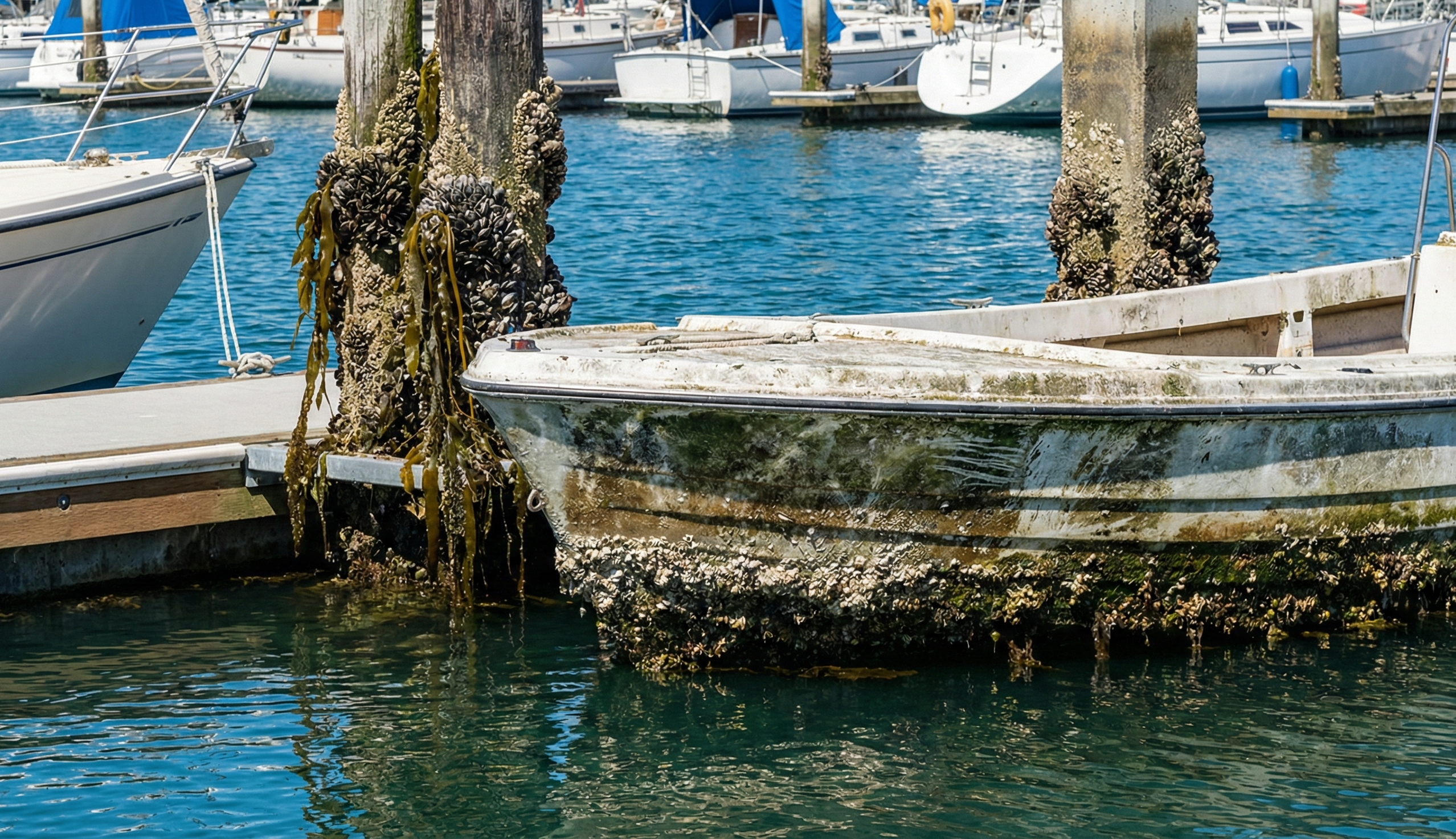
Marine growth, also known as biofouling, poses a significant challenge for boat owners and marina operators. The impact of marine growth on dock equipment and boats can lead to reduced performance, increased maintenance costs, and potential structural damage. From barnacles and algae attaching to hulls and propellers to heavy accumulations on dock pilings, this natural process affects efficiency and longevity in marine environments.
Understanding these effects is crucial for anyone who owns a vessel or manages docking facilities. In this comprehensive guide, we’ll explore how marine growth develops, its specific consequences for boats and docks, prevention strategies, and why regular maintenance matters.
What Is Marine Growth and Why Does It Occur?
Marine growth refers to the accumulation of organisms such as algae, barnacles, mussels, tube worms, and slime on submerged surfaces. This process, called biofouling, begins almost immediately when a surface enters the water. Microfouling (slime layers) forms first, followed by macrofouling (larger organisms like barnacles).
Factors influencing growth include water temperature, salinity, nutrient levels, and inactivity of the vessel or structure. Warmer waters accelerate fouling, while boats that remain stationary for long periods experience faster buildup. Dock pilings, being permanently submerged, are particularly vulnerable year-round.
The Impact of Marine Growth on Boats
The impact of marine growth on boats is primarily felt through hydrodynamic changes and mechanical stress. A fouled hull increases drag, forcing engines to work harder.
Reduced Performance and Increased Fuel Consumption
Even light slime can reduce efficiency by 10-16%, while heavy barnacle coverage can cut speed dramatically and raise fuel use by up to 40%. This translates to higher operating costs and poorer handling.
Damage to Underwater Components
Props, shafts, rudders, and through-hulls suffer when fouled. Barnacles create turbulence, leading to vibration, misalignment, and accelerated wear on bearings and seals. Clogged intakes restrict cooling water flow, risking engine overheating.
Corrosion and Hull Integrity Issues
Organisms promote microbially influenced corrosion, especially on metal parts. Hard shells penetrate coatings, exposing surfaces to saltwater and accelerating degradation. Over time, this shortens the boat’s lifespan and increases repair expenses.
Lower Resale Value
A history of heavy fouling signals poor maintenance to buyers, reducing resale value significantly.
How Marine Growth Affects Dock Equipment
Dock equipment faces constant exposure, making the impact of marine growth on dock pilings and structures particularly severe. Unlike boats, docks cannot easily be removed for cleaning.
Added Weight and Structural Stress
Heavy accumulations on pilings increase load, stressing materials and potentially causing premature failure. This weight strains mooring lines, cleats, and floating components.
Increased Wear on Hardware
Growth accelerates wear on fenders, bumpers, and lines due to abrasion. Slippery surfaces from algae create safety hazards for users.
Reduced Functionality
Fouled rollers or moving parts on boat lifts and floating docks hinder operation. Restricted water flow around slips affects circulation and can contribute to localized environmental issues.
Comparison of Impacts: Boats vs. Dock Equipment
| Aspect | Impact on Boats | Impact on Dock Equipment |
|---|---|---|
| Primary Effect | Increased drag and fuel consumption | Added weight and structural stress |
| Performance Hit | Reduced speed and maneuverability (up to 40% more fuel) | Slippery surfaces and hindered mechanics |
| Maintenance Needs | Regular hull cleaning and antifouling | Piling cleaning and protective coatings |
| Long-term Damage | Corrosion, component wear | Material degradation, safety risks |
| Cost Implications | Higher fuel and repair bills | Structural repairs and replacement |
Prevention and Management Strategies
Preventing marine growth requires proactive measures tailored to boats and docks.
For Boats
- Apply high-quality antifouling paint regularly.
- Use propeller coatings or propspeed treatments.
- Schedule frequent haul-outs and cleanings.
- Operate the boat regularly to disrupt growth.
For Dock Equipment
- Install sacrificial anodes to combat corrosion.
- Use marine-grade protective wraps on pilings.
- Perform periodic professional cleanings.
- Choose growth-resistant materials for new installations.
For more on effective antifouling solutions, check the International Maritime Organization’s biofouling guidelines.
Advanced options like ultrasonic systems or eco-friendly coatings offer long-term protection. Regular inspections catch issues early, saving money.
FAQs About Marine Growth
What causes the fastest marine growth on boats and docks?
Warm, nutrient-rich waters with low vessel movement accelerate fouling. Stationary boats and permanent structures like pilings see the heaviest buildup.
How much can marine growth increase fuel consumption?
Light fouling adds 10-20%, while heavy barnacle coverage can raise fuel use by 30-40% or more, depending on conditions.
Is marine growth harmful to the environment?
Yes, it can transport invasive species and increase emissions from higher fuel use. Proper management reduces these risks.
How often should dock pilings be cleaned?
Annually or biannually, depending on location and growth rate. Professional services ensure safe, effective removal without damage.
Conclusion
The impact of marine growth on dock equipment and boats is far-reaching, affecting performance, safety, costs, and longevity. By understanding these effects and implementing preventive strategies, owners can protect their investments and enjoy hassle-free boating. Proactive maintenance is the key to minimizing damage from biofouling.
Don’t let marine growth compromise your boat or dock—contact us today for professional cleaning, antifouling, and maintenance services.
