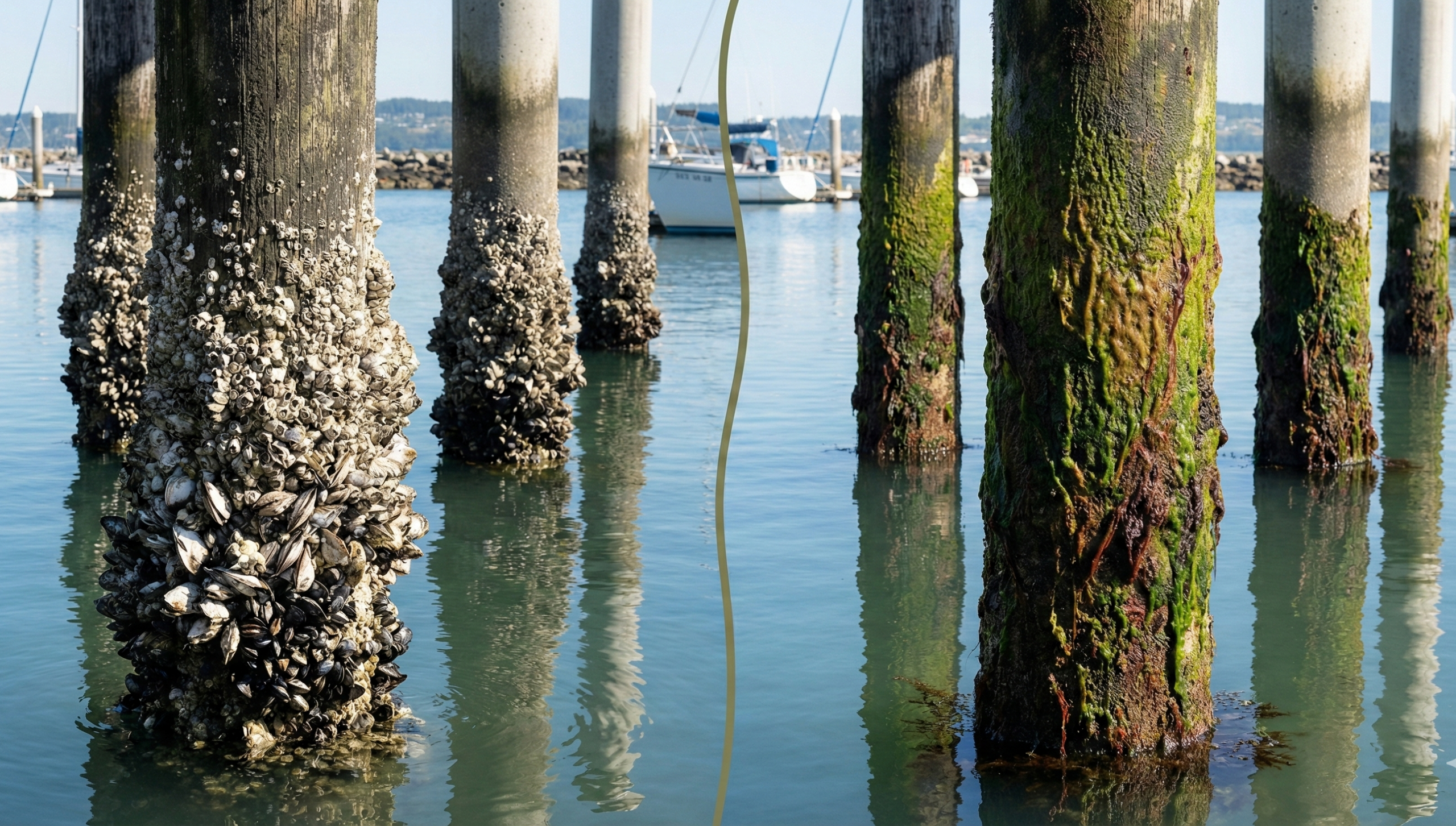
Barnacles and algae represent two of the most common types of marine fouling on piers, but they require distinctly different barnacles vs algae removal approaches due to their biology, attachment strength, and surface impact. Barnacles form hard, calcium-based shells that bond aggressively to substrates, while algae create soft, slimy layers that are easier to dislodge but can return quickly. Choosing the right method prevents damage to pier materials, reduces recurring growth, and maintains structural integrity and safety.
In this guide, we break down the key differences between barnacles and algae on piers, compare effective removal techniques, recommend tools and best practices, and explain how to choose the right strategy for your dock or pier maintenance needs.
Understanding Barnacles and Algae on Piers
Barnacles: Hard, Permanent Fouling
Barnacles are crustaceans that cement themselves permanently using a strong adhesive protein. Their calcareous shells create rough, heavy clusters that add significant weight, increase hydrodynamic drag, and promote corrosion or abrasion on pier pilings and cross-members.
Algae: Soft, Rapid Surface Growth
Algae (including green, brown, and red varieties) form biofilm or filamentous layers. They attach loosely via holdfasts or mucus and thrive in nutrient-rich, sunlit waters. While less structurally damaging than barnacles, heavy algae makes surfaces slippery, unsightly, and can trap moisture leading to accelerated wood decay or concrete staining.
Barnacles vs Algae: Key Differences Affecting Removal
| Characteristic | Barnacles | Algae |
|---|---|---|
| Attachment Strength | Extremely strong (permanent cement) | Weak to moderate (mucus/holdfasts) |
| Surface Impact | Rough, heavy, abrasive | Smooth/slippery, staining |
| Removal Difficulty | High – requires mechanical force | Low to medium – pressure or brushing |
| Regrowth Speed | Slower (after full removal) | Very fast (days to weeks) |
| Primary Risk if Left | Structural stress, corrosion | Slippery surfaces, aesthetic issues |
| Best Prevention | Antifouling wraps/coatings | Regular cleaning, UV blockers |
Effective Removal Methods for Barnacles on Piers
Barnacle removal demands mechanical disruption to break the cement bond without harming the piling substrate.
Mechanical Scraping
Use stainless steel or plastic scrapers, putty knives, or specialized barnacle knives with rounded edges. Work in sections, starting from the top and moving downward to avoid pushing growth into cracks.
High-Pressure Water Jetting
Professional-grade pressure washers (3000–5000 PSI) with rotating nozzles effectively blast away barnacles. Use wide fan tips on wood to prevent gouging; narrower streams work better on concrete.
Power Tools
Rotary wire brushes, needle guns, or hydraulic scrapers speed up removal on large piers. Always use low-RPM settings to minimize surface damage and operator fatigue.
Chemical Assistance (Limited Use)
Acidic cleaners (e.g., mild muriatic acid solutions) soften shells for easier scraping but require strict environmental controls and neutralization to avoid harming aquatic life.
Effective Removal Methods for Algae on Piers
Algae responds well to gentler, less invasive techniques since it lacks a hard shell.
Low to Medium Pressure Washing
1000–2500 PSI with a wide fan nozzle quickly removes slime and filaments without excessive force. Hot water (if equipment allows) enhances effectiveness on stubborn green algae.
Brushing and Scrubbing
Long-handled stiff nylon or brass brushes work well for manual removal above and below waterline. Soft pads prevent scratching on painted or sealed surfaces.
Biodegradable Algaecides and Cleaners
Environmentally approved, non-toxic algaecides or oxygen-based cleaners loosen algae for easy rinsing. Apply, let dwell, then brush or wash off—ideal for frequent light maintenance.
Vapor or Steam Cleaning
High-temperature steam effectively kills and removes algae without chemicals, particularly useful in sensitive ecological areas.
Combined Approach: When Piers Have Both Barnacles and Algae
Many piers develop layered fouling—algae over barnacles or vice versa. The recommended sequence is:
- Remove soft algae first with pressure washing or brushing to expose barnacles.
- Mechanically scrape or jet away barnacles.
- Final rinse and apply preventive treatment or coating.
This two-stage process prevents pushing soft growth into cracks and ensures thorough cleaning.
Safety and Environmental Considerations
- Wear cut-resistant gloves, eye protection, and non-slip boots.
- Use fall protection when working at height on piers.
- Contain and properly dispose of removed fouling to prevent spreading invasive species.
- Follow local regulations on chemical use and discharge in waterways.
- Schedule cleanings during low tide for better access and reduced water pressure.
For best practices in marine structure maintenance, see guidelines from the U.S. Environmental Protection Agency on aquatic invasive species management.
FAQs About Barnacles vs Algae Removal on Piers
Can the same tool remove both barnacles and algae effectively?
Not ideally. High-pressure jetting works for both, but barnacles often require dedicated mechanical scraping or higher PSI, while algae can be managed with gentler brushing or lower pressure to avoid unnecessary wear on the pier.
How often should piers be cleaned to control barnacles and algae?
Biannually to annually for moderate fouling areas; every 6 months in high-growth warm waters. Regular light cleaning prevents heavy buildup and makes removal easier.
Are chemical removers safe for use near water?
Only EPA-approved, biodegradable, and low-toxicity products should be used. Many professionals prefer mechanical methods to minimize environmental impact.
Do protective coatings help after removal?
Yes—antifouling wraps, epoxy coatings, or silicone-based paints significantly reduce future attachment of both barnacles and algae, extending time between cleanings.
Conclusion
Understanding barnacles vs algae removal is essential for efficient pier maintenance. Barnacles demand aggressive mechanical methods to break their tenacious bond, while algae yield to gentler pressure, brushing, and preventive cleaning. Combining the right techniques, tools, and timing protects pier longevity, enhances safety, and reduces long-term costs. Consistent, professional care keeps your marine structures clean and functional year-round.
Keep your piers free of stubborn fouling—contact us today for expert assessment, safe removal, and long-lasting preventive solutions.
