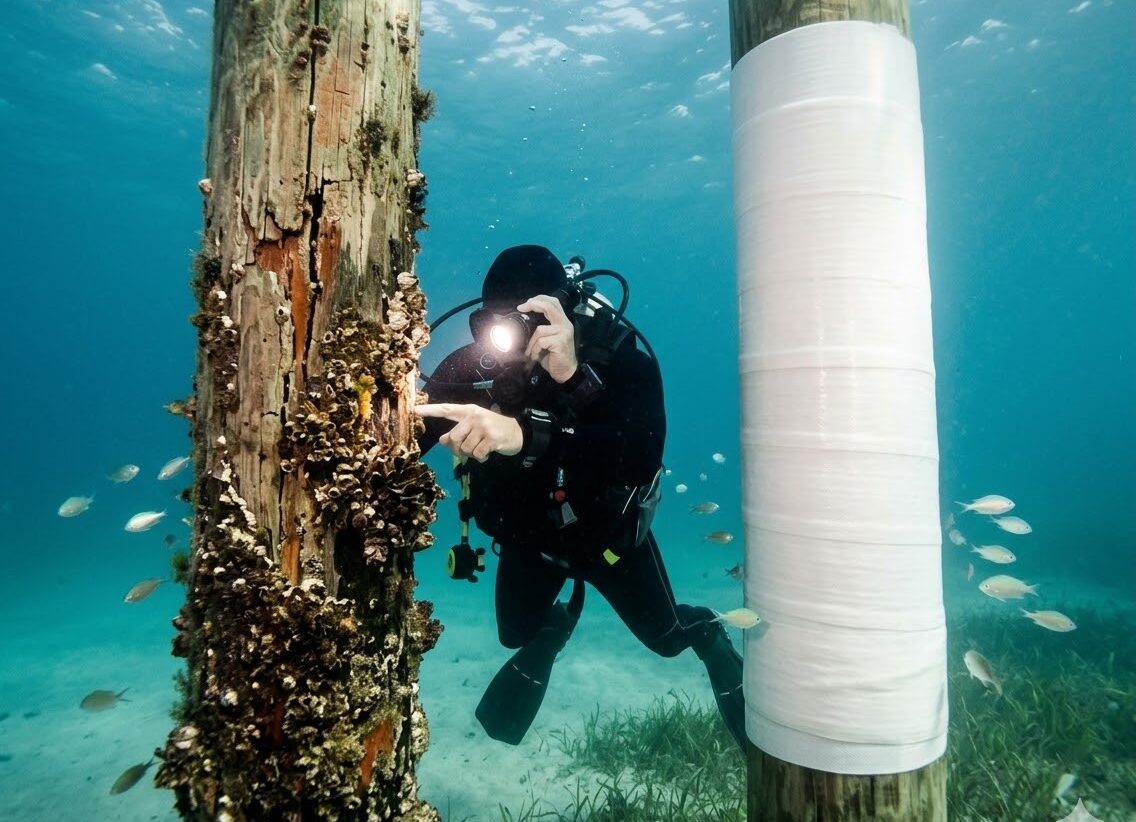
Maintaining dock pilings is essential for safety and longevity, and many dock owners consider handling some of the work themselves. DIY dock piling cleaning can be effective for light maintenance, but it comes with clear limitations—especially when dealing with underwater structures. Knowing what you can safely do yourself and where to stop is critical to avoid damage, injury, or costly mistakes.
This guide explains what DIY dock piling cleaning involves, which tasks are safe for homeowners, where risks increase, and when professional services are the better choice.
What DIY Dock Piling Cleaning Involves
DIY dock piling cleaning typically focuses on removing visible marine growth from accessible areas of the dock, especially above or near the waterline.
- Cleaning algae and slime from exposed surfaces
- Removing light barnacle buildup near the waterline
- Inspecting visible sections of pilings
- Maintaining dock appearance
While helpful, DIY cleaning only addresses a portion of the problem.
What You Can Safely Do Yourself
Some dock maintenance tasks are well within the capabilities of most dock owners.
Above-Water Cleaning
Using brushes and mild cleaning tools to remove algae and debris from visible piling sections is safe and effective.
Light Growth Removal
Small amounts of soft marine growth near the surface can be handled without specialized equipment.
Basic Visual Inspection
Checking for cracks, leaning pilings, or visible damage helps identify early warning signs.
| Task | DIY Suitability |
| Surface algae cleaning | Safe |
| Light barnacle removal (above water) | Safe |
| Visual inspection | Recommended |
| Deep underwater cleaning | Not recommended |
Where DIY Dock Piling Cleaning Falls Short
Most serious piling issues occur below the waterline, where DIY methods are limited.
- Heavy marine growth cannot be fully removed
- Hidden structural damage remains undetected
- Cleaning is often uneven and incomplete
- Improper tools can damage piling surfaces
DIY cleaning is only a partial solution and should not replace professional maintenance.
Risks of DIY Underwater Dock Cleaning
Attempting to clean dock pilings underwater introduces serious safety concerns.
- Limited visibility in murky water
- Sharp barnacles and marine debris
- Slip, fall, and entanglement hazards
- Lack of proper diving equipment
According to the Environmental Protection Agency, improper cleaning methods can also impact marine ecosystems.
Common DIY Mistakes to Avoid
Even well-intentioned efforts can cause damage if done incorrectly.
- Using metal tools that scratch or weaken surfaces
- Applying excessive pressure during cleaning
- Ignoring underwater sections of pilings
- Skipping regular inspections
Avoiding these mistakes helps preserve piling condition.
When to Stop DIY Dock Piling Cleaning
Knowing when to stop is just as important as knowing what you can do.
Heavy Marine Growth
Thick barnacles and layered buildup require professional tools and techniques.
Below-Waterline Cleaning
Cleaning below the waterline should be handled by trained professionals with proper equipment.
Visible Structural Damage
Cracks, corrosion, or leaning pilings should always be inspected by experts.
Safety Concerns
If conditions are unsafe or unclear, it’s time to call professionals.
DIY vs Professional Dock Piling Cleaning
| Factor | DIY Cleaning | Professional Cleaning |
| Coverage | Limited | Full underwater access |
| Effectiveness | Partial | Thorough |
| Safety | Moderate risk | High safety standards |
| Inspection ability | Surface only | Detailed assessment |
How Often Should DIY Cleaning Be Done?
DIY maintenance can help between professional cleanings.
- Above-water cleaning: monthly or as needed
- Visual inspections: every 1–2 months
- Professional cleaning: every 3–6 months in saltwater
The BoatUS Foundation recommends combining routine maintenance with professional inspections.
FAQs About DIY Dock Piling Cleaning
Is DIY dock piling cleaning enough?
It helps with surface maintenance but does not replace professional cleaning.
Can I clean below the waterline myself?
It is not recommended due to safety risks and limited effectiveness.
What tools should I use for DIY cleaning?
Use soft brushes and non-damaging tools designed for marine use.
How do I know when to call a professional?
If growth is heavy or damage is visible, professional service is needed.
Conclusion
DIY dock piling cleaning can be a useful part of regular dock maintenance, especially for light surface cleaning and routine inspections. However, it has clear limits—particularly below the waterline where most damage occurs. Knowing where to stop helps protect both your dock and your safety.
For safe and effective dock piling cleaning, contact us today. We provide Hull Cleaning, Cavitation Cleaning, Zinc Replacement, Underwater Inspections, and Wash & Detailing to keep your dock and marine assets in top condition year-round.
