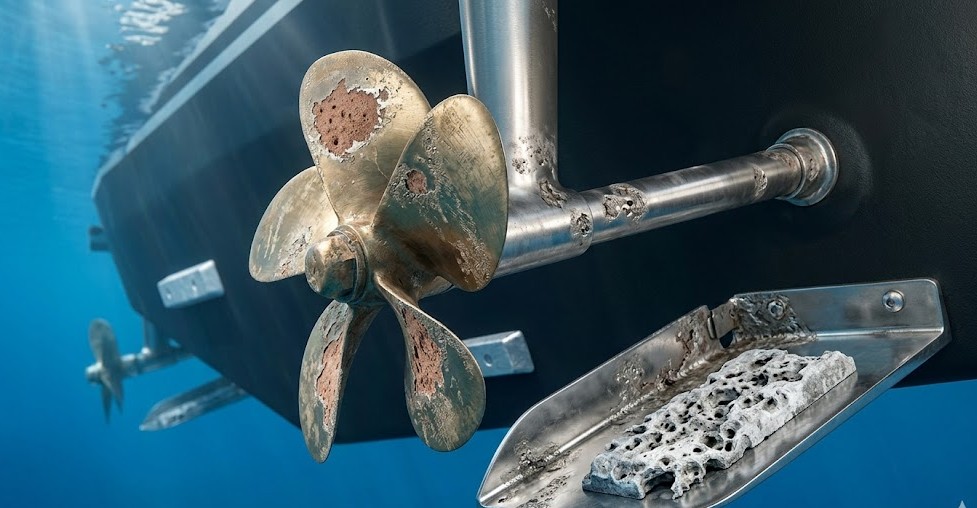
Many yacht owners focus heavily on engines, electronics, hull maintenance, and cosmetic appearance, yet one of the most destructive threats to a vessel often develops silently beneath the waterline. Unlike storm damage or mechanical failures, corrosion can progress unnoticed for months or even years until expensive components begin to fail.
Saltwater galvanic corrosion yacht problems are among the leading causes of premature underwater metal damage in recreational and commercial vessels. Propellers, shafts, rudders, trim tabs, through-hulls, and other submerged components are constantly exposed to an environment that naturally promotes electrochemical reactions.
Without adequate protection from sacrificial zinc anodes and a properly maintained bonding system, metal loss can accelerate rapidly. What starts as minor pitting may eventually result in costly repairs, performance issues, or even safety concerns.
Understanding how galvanic corrosion works is one of the most valuable steps yacht owners can take to protect their investment and avoid preventable underwater damage.
What Is Saltwater Galvanic Corrosion?
Saltwater galvanic corrosion yacht damage occurs when two dissimilar metals are electrically connected while immersed in an electrolyte such as seawater.
Saltwater is highly conductive due to its dissolved mineral content. When different metals are connected through a vessel’s underwater systems, a natural electrical current can develop.
In this electrochemical reaction:
- One metal becomes the anode
- Another becomes the cathode
- Electrical current flows between them
- The anodic metal gradually deteriorates
The metal acting as the anode sacrifices itself by releasing ions into the surrounding water.
This process may seem slow, but over time it can remove significant amounts of material from critical underwater components.
Why Saltwater Accelerates Corrosion
Freshwater can support corrosion, but saltwater dramatically increases the rate of electrochemical activity.
Seawater contains dissolved salts that enhance conductivity and allow electrical currents to flow more easily between metals.
As a result, underwater components face constant exposure to conditions that encourage:
- Galvanic corrosion
- Electrolytic corrosion
- Surface pitting
- Material degradation
- Structural weakening
The Association for Materials Protection and Performance (AMPP), formerly NACE International, identifies seawater as one of the most aggressive environments for exposed metals.
The Difference Between Galvanic Corrosion and Marine Electrolysis Metal Loss
Many boat owners use the terms interchangeably, but they describe different mechanisms.
| Condition | Primary Cause | Typical Damage Rate |
|---|---|---|
| Galvanic Corrosion | Dissimilar metals in seawater | Gradual to moderate |
| Electrolysis | Stray electrical current | Potentially very rapid |
| Galvanic + Electrolysis | Combined electrical activity | Severe accelerated damage |
Marine electrolysis metal loss occurs when stray electrical current enters the water from faulty wiring, marina electrical systems, damaged shore power connections, or onboard electrical problems.
Unlike normal galvanic corrosion, electrolysis can destroy underwater metals surprisingly quickly.
How Sacrificial Zincs Protect Yacht Metals
Sacrificial zinc anodes are specifically designed to corrode before more valuable underwater components.
The principle is simple.
Zinc is intentionally installed as the most electrically active metal within the system. As electrochemical reactions occur, the zinc deteriorates first, protecting:
- Propellers
- Shafts
- Struts
- Rudders
- Trim tabs
- Through-hulls
- Bow thrusters
Without functioning sacrificial anodes, those components may become the next available source of metal for corrosion reactions.
The BoatUS Foundation emphasizes the importance of routine anode inspection as part of regular vessel maintenance.
Common Signs of Saltwater Galvanic Corrosion Yacht Owners Should Watch For
Corrosion often develops gradually, making early detection essential.
Warning signs include:
- Pitting on metal surfaces
- Discoloration around fittings
- Uneven metal erosion
- Rapid zinc consumption
- Surface roughness
- Small cavities in propellers
- Metal flaking
- Unexpected vibration
Regular underwater inspections can identify these issues before major component damage occurs.
Propeller Shaft Deterioration: A Hidden Risk Beneath the Waterline
One of the most expensive consequences of corrosion involves propeller shaft deterioration.
The shaft serves as a critical link between the engine and propulsion system. Even minor metal loss can affect:
- Balance
- Strength
- Alignment
- Performance
- Safety
Corrosion damage may initially appear as small pits or localized wear. Over time, these defects can create stress concentrations that weaken the shaft.
Because shafts are often partially hidden from view, deterioration can progress unnoticed without professional underwater inspection.
Underwater Metal Decay and Its Impact on Vessel Performance
Underwater metal decay affects more than just appearance.
As components lose material, vessel performance can suffer in several ways.
- Increased vibration
- Reduced propulsion efficiency
- Poor fuel economy
- Steering issues
- Higher maintenance costs
- Unexpected repairs
In severe cases, critical components may require complete replacement rather than repair.
Components Most Vulnerable to Corrosion
While any submerged metal can experience corrosion, certain parts are especially vulnerable.
Propellers
Bronze and other propeller alloys face constant exposure to seawater and electrical activity.
Shafts
Even stainless steel shafts can suffer damage under unfavorable electrochemical conditions.
Trim Tabs
Because trim tabs combine multiple metals and moving parts, corrosion frequently develops if protection is inadequate.
Through-Hulls
These fittings are essential for vessel operation and safety, making corrosion particularly concerning.
Rudders and Struts
Structural underwater hardware must maintain integrity under significant operating loads.
Factors That Accelerate Marine Electrolysis Metal Loss
Several conditions can increase the likelihood of corrosion-related damage.
- Missing zinc anodes
- Worn-out anodes
- Improper bonding systems
- Faulty shore power connections
- Stray marina currents
- Poor electrical maintenance
- Extended saltwater exposure
- Mixed-metal installations
When multiple risk factors exist simultaneously, corrosion rates can increase dramatically.
Why Routine Underwater Inspections Matter
Many corrosion issues begin below the waterline where owners rarely have direct visibility.
Professional underwater inspections help identify:
- Anode wear
- Metal pitting
- Corrosion hotspots
- Bonding concerns
- Propeller damage
- Shaft condition
- Through-hull deterioration
Early detection often allows repairs to remain relatively simple and affordable.
Best Practices for Corrosion Prevention
Although corrosion cannot be completely eliminated, proper maintenance significantly reduces risk.
| Maintenance Practice | Benefit |
|---|---|
| Inspect zincs regularly | Maintains corrosion protection |
| Replace worn anodes promptly | Prevents component exposure |
| Check bonding systems | Reduces electrical imbalances |
| Perform underwater inspections | Detects early damage |
| Test shore power systems | Reduces stray current risks |
| Monitor underwater hardware | Improves long-term reliability |
The American Boat and Yacht Council (ABYC) provides standards and best practices for marine electrical systems and corrosion prevention.
Common Misconceptions About Yacht Corrosion
Stainless Steel Cannot Corrode
While highly corrosion resistant, stainless steel is not corrosion-proof and can deteriorate under certain conditions.
Zincs Last Until They Completely Disappear
Anodes should typically be replaced before they are fully consumed to maintain reliable protection.
Only Older Boats Have Corrosion Problems
New vessels can experience corrosion if electrical systems, bonding, or anode protection are inadequate.
Corrosion Is Purely Cosmetic
Left untreated, corrosion can compromise critical underwater systems and structural components.
Frequently Asked Questions
What causes saltwater galvanic corrosion on yachts?
Galvanic corrosion occurs when dissimilar metals are electrically connected in seawater, creating an electrochemical reaction that causes one metal to deteriorate.
What is marine electrolysis metal loss?
Marine electrolysis metal loss results from stray electrical currents that accelerate corrosion and remove metal from underwater components.
How do sacrificial zincs work?
Sacrificial zinc anodes intentionally corrode before more valuable underwater metals, protecting propellers, shafts, rudders, and other components.
What are the signs of propeller shaft deterioration?
Common indicators include pitting, corrosion, unusual vibration, metal discoloration, and visible material loss during inspections.
How often should zinc anodes be inspected?
Most vessels should have zincs checked during routine maintenance and underwater inspections, particularly in saltwater environments.
Can underwater metal decay be prevented completely?
No. However, proper anode maintenance, electrical system care, bonding system inspections, and regular underwater evaluations can greatly reduce corrosion rates.
Conclusion
Saltwater galvanic corrosion yacht owners encounter is often invisible until significant damage has already occurred. The combination of seawater, dissimilar metals, and electrical activity creates ideal conditions for corrosion, making sacrificial zincs one of the most important protective systems aboard any vessel.
By understanding the risks of marine electrolysis metal loss, monitoring for propeller shaft deterioration, and addressing early signs of underwater metal decay, boat owners can significantly extend the lifespan of critical underwater components. Regular inspections and proactive maintenance remain the most effective defense against costly corrosion-related repairs.
Protect Your Yacht’s Underwater Metals Before Damage Occurs
Corrosion issues are often easiest to solve when detected early. Professional underwater inspections can identify zinc depletion, propeller damage, shaft deterioration, and hidden corrosion before they become major repair projects. Contact an experienced marine inspection and diving specialist today to schedule an underwater assessment and ensure your vessel’s critical underwater systems remain protected year-round.
