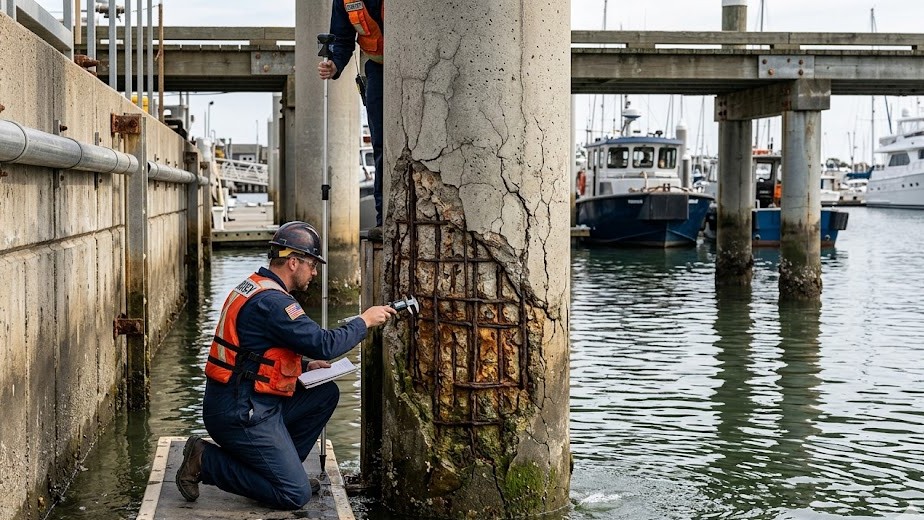
Concrete dock pilings and waterfront structures are designed to withstand years of exposure to harsh marine environments. At first glance, a piling may appear structurally sound, showing only minor surface cracks or small areas of missing concrete. However, beneath the surface, a much more serious problem may be developing.
One of the most common forms of marine infrastructure deterioration is concrete spalling. This process often begins when saltwater penetrates the concrete and reaches the embedded steel reinforcement. As corrosion develops, expanding rust exerts tremendous pressure from within, eventually causing sections of concrete to crack, separate, and break away.
Understanding the causes of spalling is essential for property owners, marina operators, engineers, and facility managers responsible for maintaining waterfront assets. Early detection and timely concrete piling spalling repair can prevent extensive structural damage and significantly extend the service life of docks, piers, seawalls, and marine support systems.
What Is Concrete Spalling?
Concrete spalling occurs when portions of concrete crack, flake, chip, or break away from the main structure. In marine environments, this deterioration is frequently linked to corrosion of the steel reinforcement embedded within the concrete.
While concrete itself performs well under compression, steel rebar is added to provide tensile strength. Together, they create a durable structural system. However, when corrosion develops inside the concrete, the expanding steel creates internal stresses that the surrounding concrete cannot withstand.
The result is:
- Surface cracking
- Delamination
- Concrete fragmentation
- Exposed reinforcing steel
- Progressive structural weakening
What begins as a small crack can eventually evolve into significant structural deterioration if left untreated.
Why Saltwater Creates the Perfect Conditions for Damage
Marine structures face constant exposure to one of the most aggressive environments for reinforced concrete.
Saltwater contains chlorides that can penetrate concrete over time. Once chlorides reach the embedded steel reinforcement, they disrupt the protective layer that normally helps prevent corrosion.
This process accelerates when structures experience:
- Tidal cycling
- Wave action
- Constant moisture exposure
- Oxygen availability
- Temperature fluctuations
The Federal Highway Administration recognizes chloride-induced corrosion as one of the leading causes of reinforced concrete deterioration in marine and coastal environments.
The Science Behind Steel Rebar Expansion Marine Damage
The primary force driving spalling is steel rebar expansion marine structures experience when corrosion develops inside the concrete.
When steel rusts, it occupies significantly more volume than the original metal.
As corrosion products accumulate, the expanding rust creates intense outward pressure against the surrounding concrete.
This pressure can generate:
- Internal cracking
- Concrete separation
- Delamination layers
- Surface fractures
- Large-scale spalling
Eventually, entire sections of concrete may detach from the structure, exposing additional steel to seawater and accelerating the deterioration cycle.
How Concrete Dock Support Cracking Begins
Many property owners first notice damage through concrete dock support cracking.
These cracks often appear harmless initially, but they frequently serve as early warning signs of deeper structural issues.
Common crack patterns include:
- Vertical cracking
- Horizontal cracking
- Rust-stained cracks
- Circumferential cracking around pilings
- Diagonal stress cracks
As cracks widen, they allow additional moisture and chlorides to enter the structure, further accelerating reinforcement corrosion.
Signs That a Marine Structure May Be Spalling
Early identification is one of the most effective ways to reduce repair costs and prevent major structural failures.
Common warning signs include:
- Rust stains on concrete surfaces
- Exposed reinforcing steel
- Loose concrete fragments
- Surface scaling
- Visible cracking
- Bulging concrete areas
- Hollow sounding sections
- Concrete pieces falling away
Any of these indicators warrant further evaluation by qualified marine inspection professionals.
Why Concrete Piling Spalling Repair Should Never Be Delayed
Spalling rarely remains isolated.
Once reinforcing steel becomes exposed, corrosion rates often increase dramatically because the steel now has direct contact with seawater and oxygen.
Delaying concrete piling spalling repair may result in:
- Larger repair areas
- Reduced load capacity
- Accelerated corrosion
- Higher restoration costs
- Potential structural instability
Addressing damage during its early stages typically requires less extensive intervention than waiting until major deterioration develops.
Common Areas Where Marine Spalling Occurs
Spalling can affect a variety of waterfront structures.
| Structure Type | Common Damage Areas |
|---|---|
| Dock Pilings | Tidal and splash zones |
| Piers | Support columns and beams |
| Seawalls | Waterline exposure zones |
| Marina Structures | Load-bearing supports |
| Bulkheads | Reinforced concrete panels |
| Bridge Supports | Submerged and splash areas |
The splash zone is often particularly vulnerable because it experiences repeated wetting and drying cycles that encourage corrosion activity.
Understanding Seawall Spalling Underwater Damage
While above-water deterioration is often easy to spot, seawall spalling underwater damage frequently goes unnoticed until significant deterioration has occurred.
Submerged sections may develop:
- Hidden cracking
- Concrete loss
- Exposed reinforcement
- Voids around steel
- Structural weakening
Because these areas remain out of sight, underwater inspections play a critical role in identifying problems before they escalate.
How Marine Inspections Identify Hidden Structural Damage
Professional inspections provide valuable insight into the condition of waterfront infrastructure.
Inspectors may evaluate:
- Concrete integrity
- Crack severity
- Rebar exposure
- Corrosion activity
- Spalling extent
- Load-bearing components
Underwater assessments are especially important for structures with submerged supports, where deterioration may not be visible from the surface.
The American Society of Civil Engineers emphasizes routine inspection and maintenance as essential practices for extending the service life of marine infrastructure.
The Typical Concrete Piling Spalling Repair Process
The repair approach depends on the severity of deterioration, structural requirements, and environmental conditions.
A typical concrete piling spalling repair project may include:
- Structural assessment
- Damage mapping
- Removal of deteriorated concrete
- Cleaning exposed reinforcement
- Corrosion mitigation measures
- Reinforcement replacement if necessary
- Application of repair materials
- Protective coating installation
Proper repair design is critical to ensuring long-term performance in marine environments.
Preventing Future Concrete Deterioration
While no marine structure is immune to aging, proactive maintenance can significantly reduce deterioration rates.
Best practices include:
- Routine inspections
- Early crack repairs
- Protective coating maintenance
- Corrosion monitoring
- Prompt spall repair
- Underwater evaluations
- Structural condition assessments
Regular maintenance often costs far less than major reconstruction projects.
Common Misconceptions About Concrete Spalling
Small Cracks Are Only Cosmetic
Even minor cracks can allow chlorides and moisture to reach reinforcing steel.
Concrete Is Waterproof
Concrete is porous and can absorb water over time, especially in marine environments.
Spalling Stops Once Concrete Falls Away
Exposed steel typically corrodes faster after concrete loss occurs.
Only Older Structures Experience Spalling
While age is a factor, design, materials, environmental exposure, and maintenance practices all influence deterioration rates.
Benefits of Early Detection and Repair
| Benefit | Impact |
|---|---|
| Lower repair costs | Smaller damage areas |
| Improved safety | Reduced structural risk |
| Longer service life | Delayed replacement needs |
| Asset protection | Preserved infrastructure value |
| Better planning | Reduced emergency repairs |
Frequently Asked Questions
What causes concrete spalling in marine environments?
The most common cause is corrosion of embedded reinforcing steel after chlorides from saltwater penetrate the concrete and reach the rebar.
Why does steel rebar expansion damage concrete?
Rust occupies more volume than the original steel. As corrosion products expand, they create pressure that causes the surrounding concrete to crack and break apart.
What are the signs of concrete dock support cracking?
Visible cracks, rust stains, loose concrete, exposed rebar, and bulging concrete surfaces are common warning signs.
Can seawall spalling underwater be detected without diving inspections?
Not always. Many submerged defects remain hidden from surface view, making underwater inspections valuable for identifying early-stage deterioration.
How often should marine concrete structures be inspected?
Inspection frequency depends on age, exposure conditions, usage, and structural importance, but regular evaluations are generally recommended.
Is concrete piling spalling repair expensive?
Costs vary depending on the severity of damage. Early intervention is typically far less expensive than major structural rehabilitation or replacement.
Conclusion
Saltwater exposure creates a challenging environment for reinforced concrete structures. As chlorides penetrate concrete and trigger steel rebar expansion marine deterioration, the resulting pressure can lead to extensive cracking, concrete loss, and structural weakening. What may appear to be minor concrete dock support cracking can actually signal deeper corrosion-related damage developing beneath the surface.
Timely concrete piling spalling repair is essential for protecting waterfront infrastructure, maintaining safety, and avoiding costly structural failures. Whether addressing dock pilings, piers, marina supports, or seawall spalling underwater damage, early detection and proactive maintenance remain the most effective strategies for preserving long-term structural integrity.
Schedule a Professional Marine Structural Inspection
If you’ve noticed cracking, exposed rebar, rust staining, or deteriorating concrete on your dock, seawall, or waterfront structure, don’t wait for the damage to worsen. Professional marine inspections can identify hidden corrosion, evaluate structural integrity, and recommend effective repair solutions. Contact an experienced marine inspection and repair specialist today to assess your structure and develop a proactive maintenance plan.
