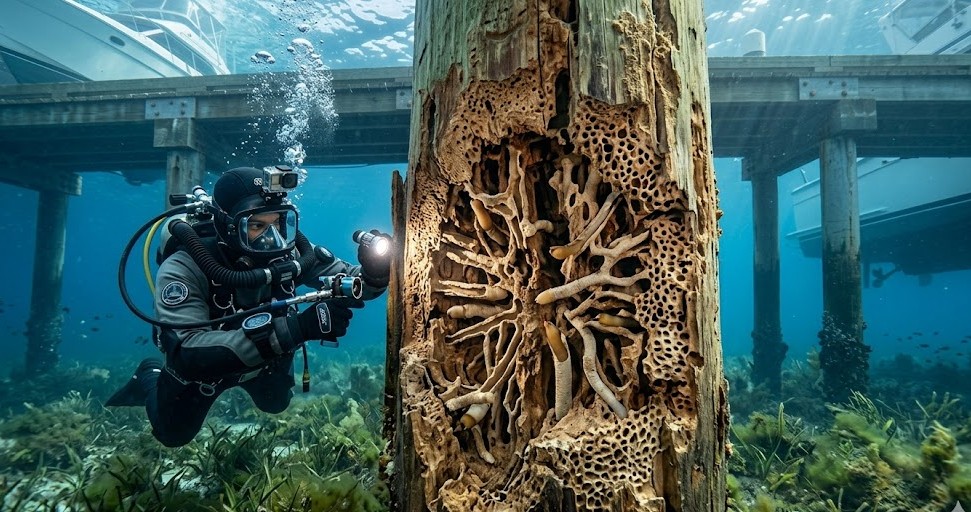
Wood pilings have supported docks, piers, marinas, bulkheads, and waterfront structures for centuries. Even today, timber remains a common construction material in many marine environments due to its availability, strength, and cost-effectiveness. However, beneath the waterline, a hidden threat is constantly at work.
Unlike storm damage, impact events, or visible rot, marine wood borers attack timber from the inside out. By the time obvious signs of deterioration appear, substantial structural damage may already exist. In severe cases, seemingly sound pilings can lose much of their load-bearing capacity without any clear warning from the surface.
Understanding marine wood borer damage pilings experience is essential for marina owners, waterfront property managers, engineers, and anyone responsible for maintaining timber marine infrastructure.
Early detection and proactive maintenance can help prevent costly repairs, unexpected failures, and potentially dangerous structural collapses.
What Are Marine Wood Borers?
Marine wood borers are organisms that feed on submerged timber in saltwater and brackish-water environments.
While they are often grouped together, marine borers actually include several different species with unique feeding behaviors.
The most common wood-destroying marine organisms include:
- Shipworms
- Gribbles
- Limnoria species
- Various crustacean borers
Although relatively small, these organisms can cause extensive structural damage over time.
The National Oceanic and Atmospheric Administration (NOAA) recognizes marine borers as a significant threat to timber structures in coastal environments.
The Hidden Nature of Marine Wood Borer Damage Pilings
One reason marine wood borer damage pilings can be so dangerous is that deterioration often remains hidden beneath the surface.
Many marine borers consume internal wood fibers while leaving a relatively intact exterior shell.
As a result:
- Pilings may appear structurally sound
- Damage remains concealed
- Load capacity gradually decreases
- Failure risks increase over time
Without regular inspections, extensive deterioration may go unnoticed until significant repairs become necessary.
Understanding Shipworm Wood Piling Rot
Among the most destructive marine borers are shipworms.
Despite their name, shipworms are not actually worms. They are marine mollusks related to clams.
Shipworm wood piling rot occurs when these organisms bore deep tunnels through submerged timber while feeding on the wood.
Over time, shipworms create extensive internal networks of galleries that can dramatically weaken structural members.
Characteristics of shipworm activity include:
- Internal tunneling
- Hidden structural damage
- Reduced timber strength
- Large internal voids
- Accelerated deterioration in warm waters
Because damage is often concealed, visual surface inspections alone may not reveal the true condition of affected pilings.
How Gribbles Structural Wood Decay Differs
Unlike shipworms, gribbles are small crustaceans that attack timber from the outside inward.
Gribbles structural wood decay typically produces a different pattern of deterioration.
These organisms feed along exposed wood surfaces, gradually removing material layer by layer.
Common signs include:
- Surface erosion
- Textured wood appearance
- Progressive dimensional loss
- Weakened outer layers
- Visible surface degradation
Although individual gribbles are tiny, large populations can cause substantial structural damage over time.
Why Marine Borers Thrive in Waterfront Structures
Marine environments provide ideal conditions for wood-boring organisms.
Factors that encourage infestation include:
- Constant water exposure
- Abundant timber food sources
- Moderate temperatures
- Suitable salinity levels
- Limited disturbance
Structures particularly vulnerable to infestation include:
- Dock pilings
- Pier supports
- Marina infrastructure
- Bulkheads
- Timber seawalls
- Waterfront retaining systems
Signs of Marine Wood Borer Damage Pilings Owners Should Watch For
Although much of the damage occurs internally, certain warning signs may indicate infestation.
- Surface holes in timber
- Soft or weakened wood
- Excessive timber erosion
- Unusual structural movement
- Cracking and splitting
- Visible tunnels or galleries
- Reduced piling diameter
Any of these indicators warrant further evaluation by marine structural professionals.
The Structural Consequences of Hidden Timber Damage
The most serious concern associated with marine borers is structural failure.
As timber loses strength, structures may become vulnerable to:
- Load-bearing failures
- Dock settlement
- Pier instability
- Storm-related damage
- Unexpected collapses
Because deterioration often progresses gradually, the danger may not become apparent until significant weakening has already occurred.
How Professional Inspections Identify Hidden Damage
Routine inspections are one of the most effective tools for managing marine borer risks.
Marine inspectors may evaluate:
- Timber condition
- Structural integrity
- Visible infestation signs
- Pile diameter changes
- Surface deterioration
- Underwater damage
Underwater inspections are particularly valuable because much of the damage occurs below the waterline.
The American Society of Civil Engineers emphasizes the importance of routine inspection programs for aging marine infrastructure.
Methods Used to Treat Wood Dock Piles
Preventing infestation is generally easier and less expensive than repairing severe structural damage.
Several strategies are commonly used to treat wood dock piles and reduce vulnerability to marine borers.
| Protection Method | Primary Purpose |
|---|---|
| Pressure-Treated Timber | Improves resistance to infestation |
| Pile Wrap Systems | Creates physical barriers |
| Protective Jackets | Limits borer access |
| Routine Inspections | Supports early detection |
| Targeted Repairs | Addresses localized damage |
The appropriate solution depends on environmental conditions, structure type, and infestation severity.
Why Early Intervention Saves Money
Once marine borers establish themselves within timber structures, damage tends to worsen over time.
Early detection often provides several advantages:
- Lower repair costs
- Extended service life
- Improved safety
- Reduced structural risk
- Better maintenance planning
Waiting until visible failure occurs frequently results in larger, more expensive rehabilitation projects.
Comparing Shipworm and Gribble Damage
| Characteristic | Shipworms | Gribbles |
|---|---|---|
| Damage Location | Internal | External |
| Visibility | Often hidden | More visible |
| Damage Pattern | Tunnels and galleries | Surface erosion |
| Structural Impact | Can be severe before detection | Progressive material loss |
| Inspection Difficulty | Higher | Moderate |
Both organisms can significantly compromise structural integrity if left unchecked.
Common Misconceptions About Marine Timber Structures
Wood Looks Fine Above Water, So It Must Be Sound
Many infestations occur entirely below the waterline and remain invisible from the surface.
Pressure-Treated Wood Is Completely Immune
While treatment improves resistance, no protection system lasts forever.
Only Old Structures Are Affected
Newer structures can also become vulnerable depending on local environmental conditions.
Damage Will Be Obvious Before Failure
Shipworm infestations frequently cause extensive hidden deterioration before visible warning signs appear.
Frequently Asked Questions
What causes marine wood borer damage pilings?
Marine borers such as shipworms and gribbles feed on submerged timber, gradually weakening wood structures over time.
What is shipworm wood piling rot?
Shipworm wood piling rot refers to internal tunneling and wood consumption caused by shipworms, which can significantly reduce structural strength.
How does gribbles structural wood decay differ from shipworm damage?
Gribbles primarily attack wood from the outside inward, while shipworms create internal tunnels that may remain hidden for long periods.
How can I treat wood dock piles to prevent infestation?
Common strategies include pressure-treated timber, pile wraps, protective jackets, routine inspections, and timely repairs.
Why are underwater inspections important?
Most marine borer activity occurs below the waterline, where damage may not be visible during routine surface inspections.
Can marine borer damage be repaired?
Depending on severity, damaged components may be repaired, reinforced, or replaced. Early detection generally improves repair options.
Conclusion
Marine wood borer damage pilings experience is often one of the most overlooked threats facing waterfront infrastructure. Whether caused by hidden shipworm wood piling rot or progressive gribbles structural wood decay, these organisms can silently weaken timber supports for years before visible signs emerge.
Regular inspections, proactive maintenance, and appropriate strategies to treat wood dock piles are essential for protecting docks, piers, marinas, and seawalls from unexpected structural failures. By identifying damage early and addressing vulnerabilities before they escalate, property owners can extend the lifespan of their marine infrastructure while improving safety and reducing long-term repair costs.
Schedule a Professional Marine Timber Inspection
If your dock, pier, marina, or waterfront structure relies on timber pilings, professional underwater inspections can help identify hidden marine borer activity before significant structural damage occurs. Contact an experienced marine inspection specialist today to assess piling condition, evaluate infestation risks, and develop a maintenance plan that protects your waterfront investment.
