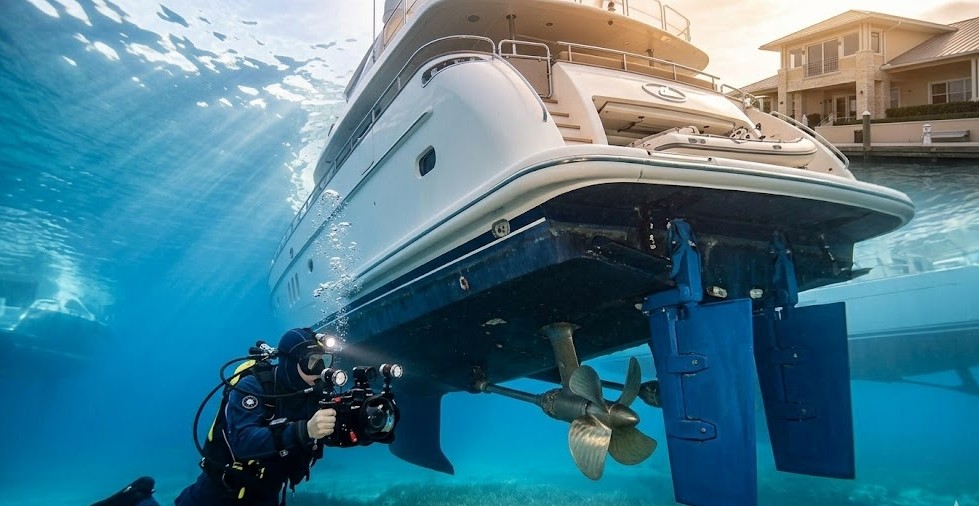
When damage occurs below the waterline, boat owners often face a difficult challenge: proving exactly what happened, when it happened, and how extensive the damage actually is. Unlike topside issues that are easily visible and documented, underwater problems frequently remain hidden until a haul-out, inspection, or repair becomes necessary.
In many marine insurance disputes, the outcome can depend heavily on the quality of the evidence presented. Detailed photographs taken by professional divers can provide objective documentation of a vessel’s condition and help eliminate uncertainty surrounding damage claims.
As a result, underwater hull photography insurance documentation has become an increasingly valuable tool for boat owners, marina operators, surveyors, and insurance adjusters. High-quality underwater images can establish timelines, verify maintenance history, support repair estimates, and provide critical evidence when disagreements arise.
Whether the issue involves impact damage, grounding incidents, corrosion, propeller damage, or bottom paint concerns, underwater photography often provides the visual proof needed to support a claim.
Why Underwater Damage Is Difficult to Document
The underwater portion of a vessel is constantly exposed to conditions that make inspection challenging.
Owners typically cannot see:
- Hull damage
- Propeller impacts
- Corrosion
- Rudder deterioration
- Bottom paint failures
- Marine growth accumulation
- Running gear damage
As a result, disputes sometimes arise regarding whether damage was recent, pre-existing, accidental, or maintenance-related.
Without visual evidence, determining the true condition of the vessel at a specific point in time can become difficult.
What Is Underwater Hull Photography Insurance Documentation?
Underwater hull photography insurance documentation involves capturing detailed images of a vessel’s submerged components to create a verifiable visual record.
Professional underwater inspections may photograph:
- Hull surfaces
- Keels
- Rudders
- Propellers
- Shafts
- Trim tabs
- Through-hulls
- Bottom paint systems
These images can serve as valuable evidence during insurance claims, pre-purchase evaluations, maintenance reviews, and legal disputes.
Why Insurance Companies Value Visual Evidence
Insurance claims often require objective documentation.
Adjusters must evaluate:
- Cause of damage
- Extent of damage
- Repair requirements
- Maintenance history
- Coverage applicability
Photographic evidence provides an unbiased record that can support accurate claim assessments.
Clear images frequently reduce uncertainty and help streamline the claims process.
How Underwater Photography Helps Document Boat Hull Damage
One of the most important uses of underwater imaging is to document boat hull damage before repairs begin.
Once repairs are performed, the original condition may no longer be visible.
Photographs captured immediately after an incident can preserve evidence of:
- Grounding impacts
- Collision damage
- Hull cracks
- Delamination
- Blistering
- Corrosion
- Structural defects
This documentation can help establish both the nature and severity of the damage.
Common Insurance Disputes Where Underwater Photos Matter
Several types of claims frequently benefit from underwater photographic evidence.
| Claim Type | How Photography Helps |
|---|---|
| Grounding Damage | Shows impact locations and severity |
| Collision Claims | Documents structural damage |
| Corrosion Disputes | Records underwater metal condition |
| Propeller Damage | Provides visual confirmation |
| Bottom Paint Claims | Documents coating condition |
| Maintenance Disputes | Establishes vessel condition |
In many situations, photographic records help reduce disagreements regarding the condition of underwater components.
The Importance of Marine Insurance Claim Photos
High-quality marine insurance claim photos can strengthen a claim by providing clear, date-specific documentation.
Effective claim photographs typically:
- Show the full area of concern
- Capture close-up details
- Document multiple angles
- Highlight damage progression
- Provide context for adjusters
The more comprehensive the documentation, the easier it becomes for decision-makers to evaluate the claim accurately.
How Photography Establishes a Maintenance History
Insurance disputes are not always caused by accidents.
Questions sometimes arise regarding maintenance practices and vessel care.
Routine underwater photography creates a visual timeline that can demonstrate:
- Regular inspections
- Hull condition trends
- Bottom paint maintenance
- Corrosion management
- Anode replacement history
This information may help support an owner’s position when maintenance-related questions arise.
Using Visual Proof Bottom Paint Documentation
Bottom paint condition can become an important factor in insurance and maintenance discussions.
Professional underwater inspections often provide visual proof bottom paint documentation that shows:
- Paint coverage
- Coating wear
- Marine growth accumulation
- Paint failure areas
- Maintenance requirements
These records help establish the condition of the vessel before and after maintenance activities.
Why Timing Matters When Capturing Evidence
One of the most important principles in claim documentation is acting quickly.
Conditions can change rapidly due to:
- Marine growth
- Corrosion progression
- Repair activities
- Weather exposure
- Operational use
Prompt photography preserves evidence before changes occur.
In many cases, early documentation becomes the strongest evidence available during a dispute.
Professional Underwater Photography vs Smartphone Images
While casual photographs may provide some value, professional underwater imaging typically offers greater clarity and credibility.
| Feature | Smartphone Images | Professional Underwater Photography |
|---|---|---|
| Image Quality | Variable | High |
| Lighting Control | Limited | Advanced |
| Coverage Area | Restricted | Comprehensive |
| Documentation Consistency | Variable | Professional |
| Inspection Expertise | Limited | Specialized |
Professional divers often understand which areas require documentation and how to capture images that support inspection and insurance needs.
Additional Benefits Beyond Insurance Claims
Although claims support is a major advantage, underwater photography serves several other purposes.
- Pre-purchase inspections
- Maintenance planning
- Corrosion monitoring
- Hull cleaning evaluations
- Survey support
- Asset management records
Many owners maintain photographic archives to track vessel condition over time.
Best Practices for Marine Insurance Claim Photos
To maximize the value of underwater documentation:
- Photograph damage promptly
- Capture wide and close-up views
- Document all affected areas
- Maintain organized records
- Preserve original image files
- Schedule professional inspections when appropriate
Comprehensive records often improve communication among owners, surveyors, contractors, and insurers.
Common Mistakes Boat Owners Make
Waiting Too Long to Document Damage
Delays can allow conditions to change and evidence to disappear.
Photographing Only Obvious Damage
Related issues may exist elsewhere on the vessel.
Beginning Repairs Before Documentation
Repair work may eliminate critical evidence.
Failing to Record Bottom Paint Condition
Coating condition can become relevant during claims and maintenance disputes.
Relying Solely on Written Descriptions
Visual evidence often provides greater clarity than written observations alone.
Frequently Asked Questions
What is underwater hull photography insurance documentation?
It is the process of capturing professional underwater images of a vessel’s submerged components to support insurance claims, inspections, and maintenance records.
Why should I document boat hull damage with photographs?
Photographs provide objective evidence of damage severity, location, and condition before repairs or environmental changes occur.
How do marine insurance claim photos help during disputes?
They give adjusters and insurers visual evidence that can support claim evaluations and reduce uncertainty.
Can underwater photos help with bottom paint issues?
Yes. Visual proof bottom paint documentation can show coating wear, damage, growth accumulation, and maintenance conditions.
When should underwater photography be performed?
Ideally, photographs should be captured immediately after damage occurs and during routine inspections to establish maintenance records.
Is professional underwater photography worth the investment?
For many owners, professional documentation provides valuable evidence that may support claims, maintenance planning, and asset protection.
Conclusion
When insurance disputes involve underwater damage, visual evidence often becomes one of the most powerful tools available to vessel owners. Professional underwater hull photography insurance documentation helps establish condition, verify maintenance history, and preserve critical evidence before repairs or environmental changes occur.
Whether the goal is to document boat hull damage, provide comprehensive marine insurance claim photos, or create visual proof bottom paint records, underwater imaging delivers objective information that can strengthen a claim and support informed decision-making. In an industry where what lies beneath the waterline is often out of sight, quality photography provides the visibility owners need to protect their interests.
Schedule Professional Underwater Hull Photography Services
If your vessel has experienced damage, requires insurance documentation, or needs a comprehensive underwater condition assessment, professional underwater photography can provide the visual evidence you need. Contact an experienced marine inspection and diving specialist today to schedule underwater imaging services and create a detailed record of your vessel’s condition below the waterline.
