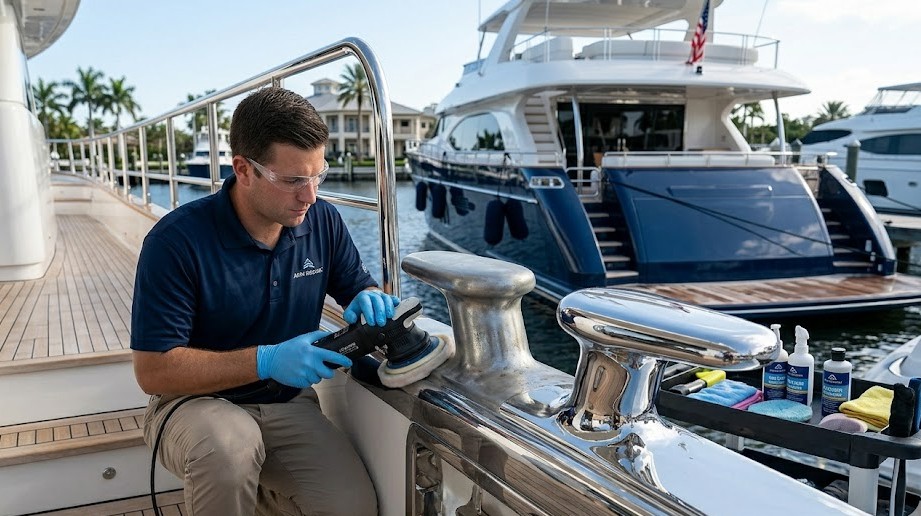
Walk through any marina and you’ll see stainless steel everywhere. Railings, cleats, stanchions, bow rails, anchors, davits, ladders, and countless pieces of deck hardware rely on stainless steel for both appearance and corrosion resistance. Yet many yacht owners are surprised when “stainless” steel develops rust stains, discoloration, pitting, and surface deterioration.
The reality is that stainless steel is not stain-proof, rust-proof, or maintenance-free. In harsh marine environments, constant exposure to salt spray, moisture, ultraviolet radiation, and airborne contaminants can gradually damage even high-quality marine-grade metals.
This is why professional marine stainless steel polishing has become an essential part of yacht maintenance. Beyond restoring shine, proper polishing and passivation help preserve corrosion resistance, improve appearance, and extend the lifespan of expensive marine hardware.
Understanding how saltwater environments affect stainless steel can help boat owners prevent costly deterioration before permanent damage occurs.
Why Stainless Steel Is Vulnerable in Marine Environments
Stainless steel earns its corrosion resistance from a thin protective oxide layer that forms naturally on the metal’s surface. This invisible barrier helps shield the underlying metal from environmental attack.
However, marine conditions continuously challenge that protection.
Common environmental stressors include:
- Salt spray
- Salt deposits
- Humidity
- Airborne chlorides
- Standing water
- Pollution
- UV exposure
Over time, these factors can weaken the protective oxide layer and create conditions that allow corrosion to begin.
How Salt Spray Damages Stainless Steel
Salt spray is one of the most aggressive corrosion contributors found in coastal environments.
When salt-laden moisture settles on metal surfaces, chlorides can accumulate in microscopic imperfections and crevices.
As moisture evaporates, concentrated salt deposits remain behind.
This process can promote:
- Surface staining
- Pitting corrosion
- Crevice corrosion
- Oxide layer breakdown
- Localized metal deterioration
The Association for Materials Protection and Performance (AMPP) identifies chloride exposure as one of the primary corrosion threats facing stainless steel in marine environments.
What Boat Owners Mean When They See “Rust” on Stainless Steel
Many owners assume rust on stainless steel means the metal has failed completely.
In reality, visible rust can originate from several sources.
- Surface contamination
- Iron particle deposits
- Corrosion of nearby metals
- Breakdown of protective oxide layers
- Localized pitting corrosion
Regardless of the cause, visible staining should be addressed promptly before deeper deterioration develops.
Why Marine Stainless Steel Polishing Is More Than Cosmetic
Many people view marine stainless steel polishing as purely aesthetic maintenance.
While polishing certainly improves appearance, it also serves several protective functions.
Proper polishing helps:
- Remove contaminants
- Reduce surface roughness
- Restore reflectivity
- Minimize corrosion initiation sites
- Prepare surfaces for passivation
Smooth, clean surfaces are generally less likely to trap contaminants that contribute to corrosion.
The Difference Between Polishing and Passivation
Although often discussed together, polishing and passivation are not the same process.
| Process | Primary Purpose | Result |
|---|---|---|
| Polishing | Surface refinement | Improved appearance and cleanliness |
| Cleaning | Contaminant removal | Reduced corrosion risk |
| Passivation | Oxide layer enhancement | Improved corrosion resistance |
For optimal protection, polishing and passivation often work together as part of a comprehensive maintenance program.
Understanding Metal Passivation Yacht Owners Depend On
Metal passivation yacht maintenance programs often include is a process that enhances the natural protective oxide layer on stainless steel surfaces.
The objective is to improve the metal’s ability to resist future corrosion.
Passivation helps:
- Remove surface contaminants
- Improve corrosion resistance
- Support long-term durability
- Reduce staining risks
- Protect marine hardware
The ASTM International standards organization provides guidance regarding passivation processes for stainless steel components.
Common Areas Where Corrosion Develops First
Not all hardware experiences the same level of exposure.
Areas frequently affected include:
- Bow rails
- Stanchions
- Cleats
- Anchor systems
- Hinges
- Fasteners
- Swim ladders
- Radar arches
Crevices, joints, and poorly ventilated areas often experience accelerated corrosion due to trapped moisture and salt accumulation.
Boat Chrome Rust Removal and Stainless Restoration
Many yacht owners seek professional assistance for boat chrome rust removal and stainless steel restoration.
Common restoration goals include:
- Removing rust stains
- Restoring shine
- Reducing oxidation
- Eliminating surface contamination
- Improving appearance
Early intervention typically produces better results than waiting until corrosion becomes severe.
Signs Your Stainless Steel Needs Attention
Several warning signs indicate it may be time for professional maintenance.
- Brown staining
- Orange rust spots
- Dull finishes
- Pitting marks
- Surface discoloration
- Water spotting
- Reduced shine
Addressing these issues early can help prevent more extensive restoration requirements later.
The Role of Marine Hardware Detailing
Professional marine hardware detailing goes beyond simple cleaning.
A comprehensive detailing service may include:
- Surface cleaning
- Corrosion removal
- Polishing
- Passivation preparation
- Protective treatments
- Hardware inspections
Routine detailing helps maintain both appearance and functionality across a vessel’s exposed metal surfaces.
Comparing Neglected and Maintained Stainless Steel
| Condition Factor | Regularly Maintained | Neglected |
|---|---|---|
| Appearance | Bright and reflective | Dull and stained |
| Corrosion Resistance | Higher | Reduced |
| Pitting Risk | Lower | Higher |
| Service Life | Extended | Shortened |
| Restoration Costs | Lower | Potentially higher |
Routine maintenance often costs significantly less than major restoration or replacement projects.
Best Practices for Stainless Steel Maintenance
Preventive care remains the most effective approach.
- Rinse hardware regularly
- Remove salt deposits promptly
- Inspect for early corrosion signs
- Schedule periodic polishing
- Maintain protective finishes
- Address rust stains immediately
Consistent maintenance helps preserve both appearance and corrosion resistance.
Common Mistakes Boat Owners Make
Assuming Stainless Steel Cannot Rust
Marine-grade stainless steel is highly corrosion resistant but not immune to corrosion.
Ignoring Small Rust Spots
Minor staining can develop into more serious corrosion if left untreated.
Using Abrasive Cleaning Methods Improperly
Aggressive cleaning can damage protective surfaces and increase corrosion risks.
Skipping Routine Washing
Salt deposits should not be allowed to accumulate on exposed hardware.
Waiting Until Hardware Looks Severely Damaged
Preventive maintenance is generally far more cost-effective than major restoration work.
Frequently Asked Questions
Why does stainless steel rust on boats?
Salt spray, chloride deposits, moisture, and environmental contaminants can compromise the protective oxide layer and contribute to corrosion.
What is marine stainless steel polishing?
Marine stainless steel polishing is a maintenance process that removes contaminants, improves appearance, and helps preserve corrosion resistance.
How does boat chrome rust removal work?
Rust removal typically involves specialized cleaning and restoration techniques designed to eliminate staining while protecting the underlying metal.
What is metal passivation yacht owners use?
Passivation is a treatment process that enhances the protective oxide layer on stainless steel, improving corrosion resistance.
Why is marine hardware detailing important?
Regular detailing helps remove contaminants, reduce corrosion risks, maintain appearance, and extend hardware lifespan.
How often should marine stainless steel be maintained?
Maintenance frequency depends on environmental exposure, vessel usage, and local conditions, but regular inspections and cleaning are recommended.
Conclusion
Marine environments are uniquely challenging for exposed metals. Constant salt spray, humidity, and chloride exposure can gradually compromise even premium marine-grade hardware. Professional marine stainless steel polishing helps restore appearance while supporting long-term corrosion resistance.
Whether addressing boat chrome rust removal concerns, implementing a metal passivation yacht maintenance program, or investing in comprehensive marine hardware detailing, proactive care remains the most effective strategy for preserving stainless steel components. By maintaining clean, protected surfaces, yacht owners can reduce corrosion risks, improve appearance, and extend the service life of valuable marine hardware.
Schedule Professional Marine Metal Restoration Services
If your yacht’s stainless steel hardware is showing signs of rust, staining, oxidation, or corrosion, professional polishing and restoration services can help restore its appearance and protection. Contact an experienced marine detailing specialist today to schedule a metal assessment and keep your vessel’s hardware looking and performing at its best.
