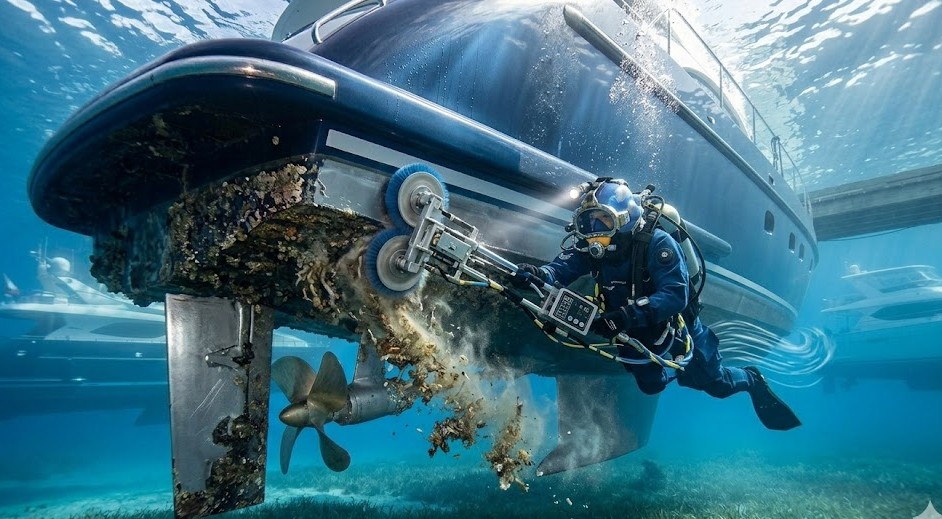
Many yacht owners understand the importance of keeping their vessel clean below the waterline. However, not all hull cleaning approaches deliver the same results. One of the most common mistakes boat owners make is focusing only on visible fouling or heavily affected areas while ignoring the rest of the hull.
At first glance, a quick cleaning around the waterline, propellers, or obvious growth zones may seem like a cost-effective solution. Yet marine growth rarely impacts only isolated sections of a vessel. Even thin layers of slime and light biofouling can create drag, reduce efficiency, and increase operating costs.
This is why experienced marine maintenance professionals recommend full yacht hull cleaning rather than selective cleaning methods. A comprehensive approach ensures that every submerged surface contributes to optimal performance, fuel efficiency, and long-term hull protection.
When viewed over the course of a boating season, incomplete cleaning often leaves more money underwater than many owners realize.
What Is Full Yacht Hull Cleaning?
Full yacht hull cleaning involves the systematic cleaning of all submerged surfaces from the keel to the waterline, including critical underwater components that affect vessel performance.
A complete cleaning typically addresses:
- Hull surfaces
- Keels
- Rudders
- Propellers
- Shafts
- Trim tabs
- Through-hulls
- Bow thrusters
- Running gear
The goal is to remove marine growth, slime, algae, and other fouling organisms before they significantly affect efficiency and operating costs.
Why Marine Growth Is More Expensive Than It Looks
Many boat owners associate marine growth primarily with appearance. While a fouled hull may look unattractive, the financial consequences extend far beyond aesthetics.
Biofouling increases hydrodynamic drag, forcing engines to work harder to achieve the same speed.
As drag increases, vessels may experience:
- Higher fuel consumption
- Reduced top speed
- Slower acceleration
- Greater engine workload
- Increased maintenance costs
The International Maritime Organization (IMO) recognizes biofouling management as an important factor in vessel efficiency and environmental performance.
The Problem with Spot Bottom Scrub Services
A spot bottom scrub typically focuses on localized areas where marine growth is most visible.
While this may improve appearance in targeted locations, it often leaves substantial fouling elsewhere on the vessel.
Common areas frequently cleaned during spot treatments include:
- Waterline sections
- Propellers
- Visible barnacle clusters
- Easily accessible surfaces
Unfortunately, drag does not care whether fouling is concentrated or dispersed. Even light growth across large sections of the hull can significantly affect performance.
How Slime Creates Hidden Performance Losses
Owners often focus on barnacles because they are easy to see. However, microscopic slime layers can also have a meaningful impact.
Slime develops early in the biofouling process and creates surface roughness that disrupts water flow.
Even when a hull appears relatively clean, slime can increase:
- Frictional resistance
- Fuel consumption
- Operating costs
- Engine loading
This is one reason why full yacht hull cleaning often produces performance improvements that exceed owner expectations.
Why Keel Scraping Matters More Than Many Owners Realize
The keel is one of the most important hydrodynamic surfaces on many vessels, particularly sailing yachts.
Yet it is frequently overlooked during partial cleaning programs.
Proper keel scraping removes growth that can negatively affect:
- Lift generation
- Tracking ability
- Sailing efficiency
- Handling performance
- Hydrodynamic drag
Even modest fouling on the keel can influence vessel behavior and reduce overall performance.
Comparing Spot Cleaning and Full Yacht Hull Cleaning
| Cleaning Approach | Coverage | Performance Benefit | Long-Term Value |
|---|---|---|---|
| Spot Bottom Scrub | Limited | Partial | Moderate |
| Propeller Only Cleaning | Very Limited | Localized | Limited |
| Keel Scraping Only | Single Component | Partial | Moderate |
| Full Yacht Hull Cleaning | Comprehensive | Maximum | Highest |
While partial cleaning may address visible issues, comprehensive cleaning typically delivers superior overall results.
The Role of Underwater Diver Cleaning
Professional underwater diver cleaning services allow vessels to be maintained without requiring haul-outs in many situations.
Experienced divers can inspect and clean:
- Hull surfaces
- Running gear
- Keels
- Propellers
- Rudders
- Through-hulls
Routine underwater maintenance often helps owners stay ahead of heavy fouling accumulation.
The BoatUS Foundation recommends regular inspection and maintenance of underwater surfaces to preserve vessel performance.
Why Partial Cleaning Can Increase Long-Term Costs
At first glance, spot cleaning may appear less expensive.
However, incomplete cleaning often creates hidden costs.
These may include:
- Additional fuel usage
- More frequent cleanings
- Accelerated fouling growth
- Reduced coating effectiveness
- Performance losses
When these factors are considered collectively, comprehensive maintenance often provides better long-term value.
Areas Most Commonly Missed During Partial Cleaning
Several critical surfaces frequently escape attention during limited-service cleanings.
- Inside keel surfaces
- Rudder edges
- Trim tabs
- Bow thrusters
- Through-hull fittings
- Hull transition zones
- Running gear supports
Although small individually, these areas collectively contribute to overall drag and performance.
How Full Yacht Hull Cleaning Supports Bottom Paint Longevity
Marine growth does more than create drag.
Heavy fouling can also affect antifouling coating performance.
Routine full yacht hull cleaning helps:
- Reduce excessive fouling loads
- Preserve coating effectiveness
- Support inspection efforts
- Identify early paint failures
- Extend maintenance intervals
Maintaining clean surfaces often improves the overall effectiveness of bottom protection systems.
Signs Your Hull Needs Comprehensive Cleaning
Several indicators suggest that a vessel may benefit from a complete underwater cleaning.
- Reduced top speed
- Increased fuel consumption
- Visible slime accumulation
- Barnacle growth
- Poor handling response
- Long intervals since last cleaning
- Declining sailing performance
If multiple symptoms are present, a full inspection may be warranted.
Best Practices for Maintaining a Clean Hull
- Schedule regular underwater inspections
- Address growth early
- Clean the entire hull surface
- Monitor keel condition
- Inspect running gear routinely
- Maintain antifouling coatings
- Document maintenance history
Proactive maintenance generally produces better results than reactive cleaning after heavy fouling develops.
Common Mistakes Yacht Owners Make
Cleaning Only Visible Growth
Performance losses often originate from widespread light fouling rather than isolated heavy growth.
Ignoring Keel Maintenance
Keel fouling can affect handling, efficiency, and sailing characteristics.
Waiting Until Performance Declines Significantly
By the time speed losses become obvious, substantial biofouling may already be present.
Overlooking Running Gear
Propellers, shafts, and rudders contribute significantly to overall efficiency.
Choosing Convenience Over Coverage
Short-term savings may lead to higher long-term operating costs.
Frequently Asked Questions
What is full yacht hull cleaning?
Full yacht hull cleaning is a comprehensive underwater cleaning service that removes marine growth from the entire hull, keel, rudders, propellers, and other submerged components.
Is a spot bottom scrub enough for most boats?
While spot cleaning may address visible fouling, it often leaves growth elsewhere on the hull that continues to affect performance and efficiency.
Why is keel scraping important?
Keel scraping removes marine growth that can increase drag, reduce lift, and negatively impact vessel handling and sailing performance.
What are the benefits of underwater diver cleaning?
Professional underwater diver cleaning allows routine maintenance to be performed while the vessel remains in the water, helping control fouling and preserve performance.
Can a clean hull improve fuel efficiency?
Yes. Removing marine growth reduces drag, allowing the vessel to move through the water more efficiently.
How often should a yacht hull be cleaned?
Cleaning frequency depends on water conditions, vessel usage, and fouling rates, but regular inspections help determine appropriate maintenance intervals.
Conclusion
While spot cleaning may appear to save time and money, it often leaves significant performance gains untapped beneath the waterline. A comprehensive full yacht hull cleaning addresses the entire underwater profile, ensuring that every surface contributes to optimal efficiency and performance.
Whether eliminating slime through routine underwater diver cleaning, performing targeted keel scraping, or moving beyond a limited spot bottom scrub, complete hull maintenance helps reduce drag, improve fuel economy, and protect long-term vessel value. For yacht owners focused on performance and operating efficiency, comprehensive cleaning remains one of the smartest investments available.
Schedule Professional Full Yacht Hull Cleaning Services
If your vessel has accumulated marine growth or has not received a complete underwater cleaning recently, professional diving services can help restore efficiency and performance. Contact an experienced underwater maintenance specialist today to schedule a full hull inspection and cleaning program designed to keep your yacht operating at its best.
