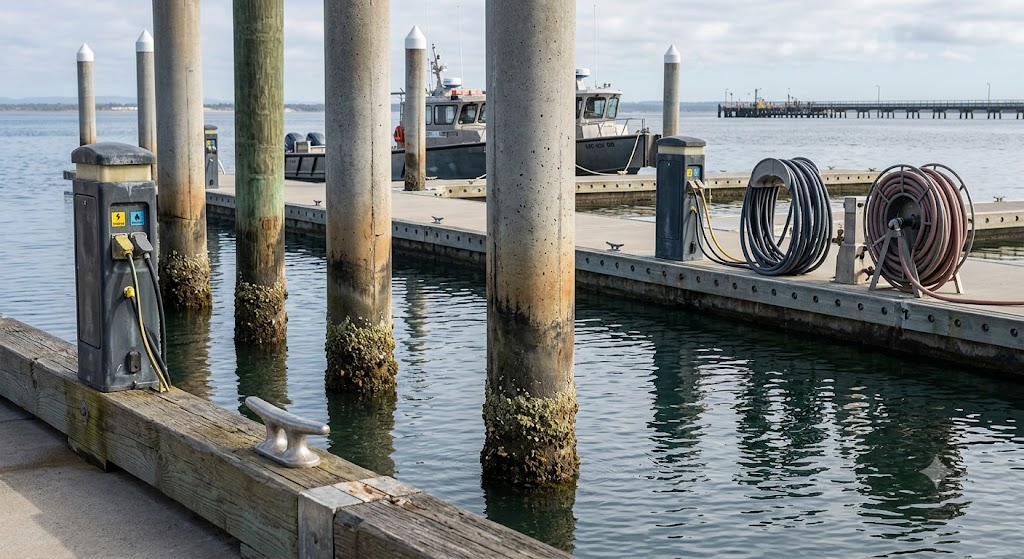
Marina owners and waterfront property managers often focus on immediate repair needs, but the most successful facilities take a much longer view. Every piling, whether constructed from timber, concrete, steel, or composite materials, follows a predictable cycle of wear caused by saltwater exposure, marine growth, vessel impacts, tidal movement, and environmental conditions.
Understanding the full commercial marina piling maintenance life cycle allows marina operators to budget more accurately, reduce emergency repairs, and extend the service life of their waterfront infrastructure. Rather than reacting to unexpected failures, proactive maintenance creates predictable costs while protecting valuable assets and minimizing operational disruptions.
This guide explains how marina pilings age, what maintenance is typically required over a 20-year period, and why preventive inspections usually provide a far better return on investment than waiting for structural damage to become visible.
Why Marina Pilings Require Long-Term Planning
Unlike many marina assets that can be replaced relatively quickly, piling systems form the structural foundation of docks, piers, floating pontoons, and waterfront facilities.
Once deterioration begins below the waterline, repairs often become more expensive because marine growth, corrosion, or hidden structural damage may conceal the true condition of the piling.
A long-term maintenance strategy helps marina operators:
- Reduce emergency repair costs
- Extend piling service life
- Improve budgeting accuracy
- Maintain safer dock facilities
- Reduce business interruptions
- Protect long-term property value
What Affects the Lifespan of Marina Pilings?
No two marinas experience identical aging conditions. Several environmental and operational factors influence how quickly piling systems deteriorate.
- Saltwater exposure
- Water temperature
- Tidal movement
- Wave action
- Marine growth accumulation
- Boat traffic
- Storm activity
- Water quality
Facilities located in warm coastal environments generally experience faster biological growth, while areas with heavy vessel traffic often see greater impact-related wear.
Common Types of Marina Pilings
Different piling materials have unique maintenance requirements.
| Piling Type | Common Challenges | Typical Maintenance Focus |
|---|---|---|
| Timber | Marine borers, rot, impact damage | Inspections, wraps, repairs |
| Concrete | Spalling, rebar corrosion, cracking | Cleaning, structural repair, jackets |
| Steel | Corrosion, coating failure | Corrosion control, protective coatings |
| Composite | Surface wear, impact damage | Routine inspections and cleaning |
Understanding the material is the first step in building an effective maintenance schedule.
The First Five Years: Preventive Maintenance
New piling systems generally require only routine maintenance.
Recommended activities include:
- Annual underwater inspections
- Marine growth removal
- Photographic documentation
- Minor hardware inspections
- Routine cleaning
These early inspections establish a valuable baseline that makes future deterioration easier to identify.
Years 5 to 10: Monitoring Early Wear
As the structure ages, maintenance shifts toward identifying developing issues before they become structural problems.
Common observations include:
- Localized corrosion
- Minor concrete cracking
- Protective coating wear
- Increased marine growth
- Small impact damage
Addressing these issues early often prevents more expensive restoration work later.
Years 10 to 15: Targeted Repairs
Many marinas begin scheduling selective repairs during this period.
Typical maintenance may include:
- Concrete patch repairs
- Pile jacket installation
- Protective coating renewal
- Timber reinforcement
- Corrosion mitigation
Strategic repairs are usually less disruptive and less expensive than replacing entire piling systems.
Years 15 to 20: Major Asset Management
As piling systems mature, more comprehensive evaluations become increasingly important.
Operators may need to assess:
- Structural capacity
- Remaining service life
- Replacement priorities
- Capital improvement planning
- Long-term budgeting
Not every piling will require replacement, but detailed inspections help determine where investment should be focused.
The Value of Routine Underwater Inspections
Professional underwater inspections remain one of the most valuable components of commercial marina piling maintenance.
Divers can identify:
- Hidden cracking
- Concrete spalling
- Marine borer activity
- Corrosion
- Pile movement
- Marine growth levels
Because much of a piling remains below the waterline, surface inspections alone rarely provide a complete picture.
How Marine Growth Increases Maintenance Costs
Heavy marine growth affects more than appearance.
Excessive fouling can:
- Hide structural defects
- Delay inspections
- Increase cleaning costs
- Accelerate localized deterioration
- Complicate repair work
Routine underwater cleaning allows inspections to be completed more accurately while helping preserve structural components.
Reactive vs Preventive Maintenance
| Maintenance Strategy | Typical Outcome |
|---|---|
| Reactive repairs | Higher emergency costs and greater operational disruption |
| Scheduled inspections | Earlier problem detection and predictable maintenance planning |
| Routine underwater cleaning | Improved inspection visibility and easier maintenance |
| Planned restoration | Extended asset life and reduced long-term repair costs |
Although every marina is different, preventive maintenance generally results in lower lifetime ownership costs than emergency repairs.
Building a 20-Year Maintenance Budget
A long-term maintenance plan should include both routine operating expenses and anticipated capital improvements.
Items commonly included are:
- Annual underwater inspections
- Marine growth removal
- Minor structural repairs
- Protective coating maintenance
- Pile jacket installations where needed
- Engineering assessments
- Selective piling replacement
Planning these expenses over multiple years helps reduce financial surprises.
Common Mistakes Marina Owners Make
Waiting for Visible Damage
Most deterioration begins below the waterline long before it becomes obvious above the surface.
Skipping Underwater Inspections
Hidden damage often remains undetected until repairs become significantly more expensive.
Ignoring Marine Growth
Heavy fouling makes inspections more difficult and can conceal developing structural problems.
Delaying Minor Repairs
Small issues are generally easier and less expensive to correct than major structural failures.
Planning One Year at a Time
Long-term budgeting allows maintenance to be scheduled more efficiently and reduces unexpected capital expenditures.
Best Practices for Commercial Marina Piling Maintenance
- Schedule annual underwater inspections.
- Document piling conditions with underwater photographs.
- Remove marine growth before it becomes excessive.
- Address minor deterioration promptly.
- Maintain accurate maintenance records.
- Update long-term capital plans based on inspection findings.
The American Society of Civil Engineers (ASCE) emphasizes the importance of routine inspection and proactive maintenance for extending the service life of marine infrastructure.
Frequently Asked Questions
How long do commercial marina pilings typically last?
The lifespan varies depending on the piling material, environmental conditions, maintenance practices, and vessel traffic. Regular inspections help determine the remaining service life of individual pilings.
Why are underwater inspections so important?
Most structural deterioration occurs below the waterline, where it cannot be seen during routine visual inspections from the dock.
How often should marina pilings be inspected?
Many facilities benefit from annual underwater inspections, although higher-risk environments may require more frequent evaluations.
Can marine growth shorten piling life?
Marine growth can conceal structural damage, complicate inspections, and increase maintenance costs if left unmanaged.
Is preventive maintenance more cost-effective than emergency repairs?
In most cases, identifying and addressing small issues early reduces long-term repair costs and minimizes operational disruptions.
Conclusion
Successful commercial marina piling maintenance is built on long-term planning rather than short-term repairs. Understanding how piling systems age over a 20-year period allows marina owners to schedule inspections, budget for maintenance, and prioritize repairs before structural problems become costly emergencies.
By combining routine underwater inspections, marine growth removal, timely repairs, and strategic capital planning, marina operators can extend the service life of their infrastructure, improve safety, and protect one of their facility’s most valuable assets.
Schedule a Professional Marina Piling Inspection
If your marina or waterfront facility is developing a long-term maintenance plan, our professional underwater inspection and commercial diving services can help. We provide detailed piling inspections, underwater photography, marine growth removal, and structural condition assessments that support informed maintenance decisions. Contact us today to schedule a comprehensive marina infrastructure evaluation.
