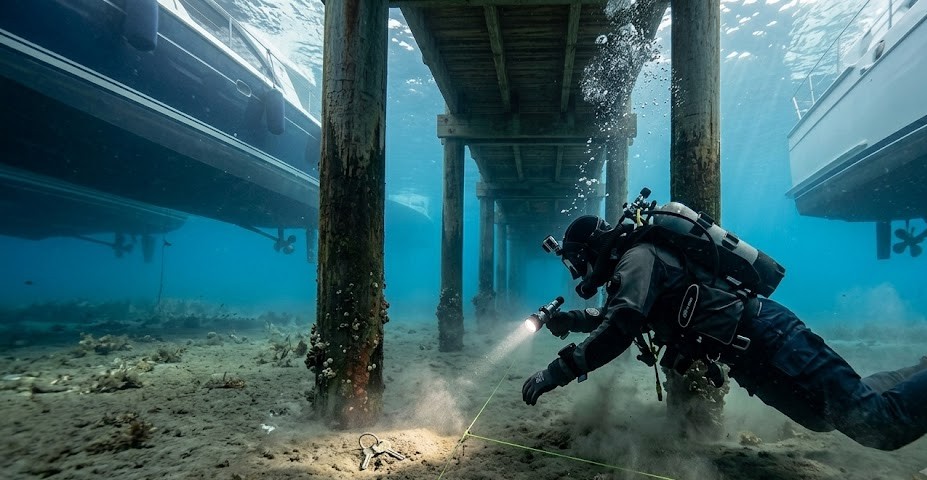
Few things ruin a day at the marina faster than watching an expensive item disappear beneath the water. Whether it’s a smartphone, wedding ring, boat keys, wallet, fishing reel, drone, tool, or even a propeller component, objects dropped overboard often sink quickly into murky water where visibility is limited and the bottom is covered with mud, silt, rocks, or marine growth.
Professional search and recovery diving gives boat owners the best chance of recovering valuable items safely and efficiently. Instead of relying on guesswork or dangerous DIY attempts, trained commercial divers use systematic underwater search techniques, specialized equipment, and years of experience to locate objects that would otherwise remain lost.
This guide explains how professional search and recovery operations work, what affects recovery success, and why acting quickly significantly improves the chances of finding lost valuables.
What Is Search and Recovery Diving?
Search and recovery diving is a specialized underwater service focused on locating and retrieving lost objects from lakes, rivers, marinas, canals, docks, and coastal waters.
Unlike recreational diving, recovery diving follows structured search patterns that maximize coverage while minimizing unnecessary time underwater.
Professional recovery services are commonly used for:
- Boat keys
- Mobile phones
- Wedding rings
- Jewelry
- Wallets
- Fishing equipment
- Boat parts
- Dropped tools
- Anchors
Why Items Are Difficult to Recover
Many people assume a dropped item will remain exactly where it entered the water. In reality, currents, tides, propeller wash, bottom composition, and water depth can all influence where an object ultimately comes to rest.
Additional challenges include:
- Poor underwater visibility
- Soft mud or silt
- Heavy marine growth
- Floating debris
- Changing tides
- Dock shadows
Even in relatively calm marinas, a small object can quickly become difficult to locate without a systematic search.
Why Time Is Critical
The sooner a recovery team is contacted, the greater the likelihood of success.
Early response helps because:
- The drop location is easier to identify.
- Currents have had less time to move the object.
- Silt has not fully buried smaller items.
- Boat traffic is less likely to disturb the bottom.
Delaying a search can make recovery significantly more challenging, particularly in busy marinas or tidal environments.
How Professional Search and Recovery Diving Works
Professional divers rarely rely on random searching. Instead, they use proven search methods based on the environment, object size, and available information.
A typical recovery operation includes:
- Interviewing the owner about the drop location.
- Evaluating water depth and visibility.
- Selecting the most appropriate search pattern.
- Conducting a systematic underwater search.
- Safely retrieving the object if located.
- Inspecting the surrounding area before concluding the search.
This structured approach improves efficiency and reduces the chances of overlooking the target item.
Common Search Techniques
| Search Method | Best Used For | Typical Environment |
|---|---|---|
| Circular Search | Known drop location | Marinas and docks |
| Jackstay Search | Larger search areas | Low visibility water |
| Grid Search | High-value recoveries | Open underwater areas |
| Natural Landmark Search | Objects near structures | Pilings and slips |
The search pattern is selected according to the conditions rather than using the same method for every recovery.
Equipment Used by Recovery Divers
Professional divers use specialized equipment designed for underwater search operations.
- Surface-supplied or scuba diving equipment
- High-intensity underwater lights
- Lift bags when necessary
- Recovery bags
- Underwater communication systems
- Measuring lines and markers
- Underwater cameras
The equipment used depends on water conditions, object size, and recovery complexity.
Items Commonly Recovered
Professional recovery divers regularly retrieve:
- Wedding and engagement rings
- Boat keys
- Cell phones
- Smartwatches
- Sunglasses
- Fishing rods and reels
- Anchors
- Boat hardware
- Propellers
- Construction tools
Some objects remain surprisingly close to where they entered the water, while others may shift depending on bottom conditions.
Challenges That Affect Recovery Success
Several factors influence whether a lost item can be located.
- Water clarity
- Depth
- Current strength
- Bottom composition
- Object size
- Time since the loss occurred
- Accuracy of the reported drop location
Providing divers with as much information as possible greatly improves search efficiency.
Why DIY Recovery Attempts Can Make Things Worse
It’s tempting to jump into the water immediately, but unplanned recovery attempts often reduce the chances of success.
Common problems include:
- Disturbing bottom sediment
- Burying small objects deeper in the mud
- Losing the original drop location
- Creating safety risks
- Damaging nearby boats or structures
Professional divers use controlled techniques that minimize disturbance while maintaining safety.
How to Improve Recovery Chances
- Mark the location immediately.
- Do not move the boat unless necessary.
- Avoid stirring the bottom.
- Note nearby dock numbers or landmarks.
- Contact a recovery diver as soon as possible.
- Provide accurate details about the lost item.
Quick action often makes the difference between a successful recovery and a permanent loss.
Common Mistakes After Dropping a Valuable
Waiting Too Long
The longer an object remains underwater, the more difficult recovery may become.
Guessing the Drop Location
Even a few feet of error can significantly increase search time.
Moving the Boat Immediately
Propeller wash can disturb the bottom and move lightweight objects.
Searching Randomly
Systematic search patterns are generally far more effective than random swimming.
Ignoring Safety
Marina waters often contain poor visibility, underwater hazards, and active boat traffic that require professional safety procedures.
Frequently Asked Questions
Can professional divers recover jewelry dropped at a marina?
Yes. Wedding rings, watches, necklaces, and other valuables are among the most commonly recovered items, although recovery depends on conditions and the accuracy of the reported location.
How soon should I call a recovery diver?
As soon as possible. Prompt action usually improves the chances of locating the item before it becomes buried or displaced.
Can recovery divers work in murky water?
Yes. Professional search techniques are specifically designed for environments where visibility is limited or even zero.
What information should I provide before a search?
Helpful details include the exact location, estimated depth, time of the loss, description of the item, and any nearby landmarks.
Are all lost items recoverable?
Unfortunately, no. Recovery success depends on numerous factors including water conditions, bottom composition, object size, and how much time has passed since the item was lost.
Conclusion
Professional search and recovery diving offers the safest and most effective way to retrieve valuables lost beneath the water. By using systematic search methods, specialized equipment, and extensive underwater experience, commercial divers can often recover items that would be nearly impossible to locate from the surface.
If something valuable goes overboard, acting quickly, marking the location, and contacting an experienced recovery team can dramatically improve the chances of a successful outcome while avoiding unnecessary risks.
Need Professional Search and Recovery Diving?
If you’ve dropped a valuable item at your marina, dock, boat slip, or waterfront property, our experienced commercial diving team is ready to help. We provide professional underwater search and recovery services for boats, marinas, and waterfront facilities using proven search techniques and specialized equipment. Contact us today to schedule a rapid-response recovery dive.
