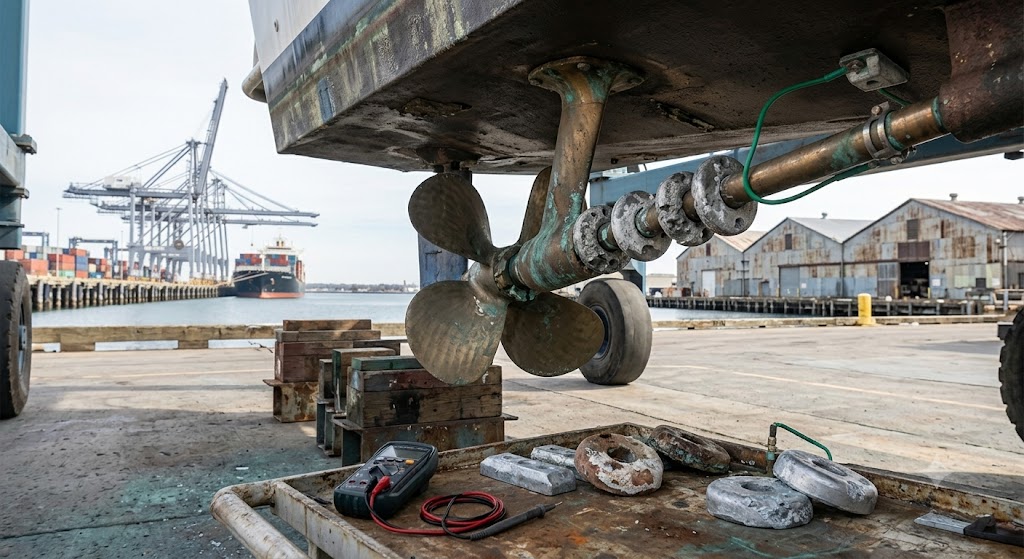
Not all marinas and commercial ports expose boats to the same corrosion risks. A vessel moored in a quiet recreational marina may experience relatively predictable zinc anode wear, while the same boat tied up in a busy commercial port could consume sacrificial anodes much faster.
The difference often comes down to electrical activity. Commercial ports contain large shore power systems, industrial equipment, cranes, commercial vessels, and complex electrical infrastructure that can increase the likelihood of stray electrical currents entering the water. These conditions make commercial port zinc anodes even more important for protecting underwater metals from accelerated corrosion.
Although every port is different and excessive anode consumption should always be investigated, vessels operating in electrically active environments often require more frequent inspections and zinc replacement than boats kept in lower-risk marinas.
What Is Stray Current Corrosion?
Stray current corrosion occurs when unintended electrical current travels through the water and leaves a boat through its underwater metal components.
Unlike normal galvanic corrosion, which develops naturally between dissimilar metals, stray current corrosion can cause metal loss much more rapidly when electrical faults are present.
Components that may be affected include:
- Propellers
- Propeller shafts
- Struts
- Rudders
- Through-hulls
- Trim tabs
- Bow thrusters
Sacrificial anodes help reduce corrosion damage, but unusually rapid zinc consumption may indicate electrical conditions that require further investigation.
Why Commercial Ports Present Greater Corrosion Risks
Commercial ports typically contain far more electrical infrastructure than recreational marinas.
Common sources include:
- High-capacity shore power systems
- Cargo cranes
- Industrial lighting
- Commercial vessel electrical systems
- Dockside machinery
- Large generators
- Pump stations
While these systems are designed to operate safely, faults or improper grounding anywhere within a marina or vessel can contribute to stray electrical current entering the water.
Why Commercial Port Zinc Anodes Wear Faster
In electrically active environments, sacrificial anodes may be consumed more quickly because they continue protecting underwater metals from electrochemical attack.
Factors influencing zinc consumption include:
- Water salinity
- Water temperature
- Bonding system condition
- Nearby electrical activity
- Shore power usage
- Time spent in the marina
Although faster wear does not automatically indicate stray current corrosion, consistently high zinc consumption deserves professional evaluation.
Galvanic Corrosion vs. Stray Current Corrosion
| Condition | Galvanic Corrosion | Stray Current Corrosion |
|---|---|---|
| Primary Cause | Natural electrochemical reaction | Electrical current leakage |
| Corrosion Rate | Generally gradual | Can be significantly faster |
| Affected Components | Underwater metals | Underwater metals |
| Anode Consumption | Expected | May increase significantly |
| Recommended Response | Routine maintenance | Electrical system investigation |
Signs Your Zinc Anodes Are Wearing Too Quickly
Routine underwater inspections can identify unusual zinc consumption before corrosion affects valuable components.
Watch for:
- Rapid anode depletion
- Uneven zinc wear
- Loose anodes
- Deep pitting
- Frequent replacement requirements
- Visible corrosion on underwater hardware
If zinc anodes are disappearing much faster than expected, both the boat’s electrical system and surrounding dock environment should be evaluated.
How Bonding Systems Help Protect Underwater Metals
A properly maintained bonding system helps connect underwater metals to the vessel’s sacrificial anodes.
This allows corrosion protection to be distributed throughout the underwater hardware.
Regular inspections should include:
- Bonding wires
- Electrical connections
- Sacrificial anodes
- Shaft grounding systems
- Propeller hardware
A damaged bonding system can reduce the effectiveness of sacrificial anodes.
Why Routine Underwater Inspections Matter
Most underwater corrosion develops gradually and remains hidden below the surface.
Professional divers can inspect:
- Zinc anodes
- Propellers
- Shafts
- Running gear
- Hull condition
- Signs of corrosion
Combining underwater inspections with electrical system maintenance helps identify problems before significant damage occurs.
Should Boats in Commercial Ports Budget for More Zinc Anodes?
Many commercial operators plan for more frequent anode inspections because of the demanding environments in which their vessels operate.
Rather than assuming all boats require the same replacement schedule, maintenance should be based on:
- Actual inspection findings
- Anode wear rates
- Operating location
- Electrical system condition
- Manufacturer recommendations
Routine monitoring provides a much more reliable maintenance schedule than relying on fixed replacement intervals alone.
How to Reduce Corrosion Risks in Commercial Ports
- Inspect zinc anodes regularly.
- Replace heavily worn anodes promptly.
- Inspect the vessel’s bonding system.
- Maintain shore power equipment.
- Schedule underwater inspections.
- Investigate unusually rapid zinc consumption.
These practices help reduce the likelihood of corrosion-related damage in electrically active environments.
Common Mistakes Boat Owners Make
Assuming Every Marina Has the Same Corrosion Risk
Electrical activity and water conditions vary considerably between facilities.
Ignoring Rapid Zinc Consumption
Unexpectedly fast anode wear should always be investigated rather than simply replacing zincs repeatedly.
Skipping Bonding System Inspections
A properly functioning bonding system is essential for effective corrosion protection.
Waiting Until Metal Damage Appears
Routine inspections usually detect corrosion long before structural damage becomes obvious.
Using Incorrect Anode Materials
The appropriate sacrificial anode depends on whether the vessel operates in saltwater, brackish water, or freshwater.
Best Practices for Commercial Port Zinc Anodes
- Inspect sacrificial anodes several times each year.
- Monitor wear trends over time.
- Document underwater inspections with photographs.
- Maintain the vessel’s bonding system.
- Investigate abnormal corrosion immediately.
- Work with qualified marine electrical professionals when electrical issues are suspected.
The American Boat & Yacht Council (ABYC) provides standards and guidance covering marine electrical systems and corrosion protection, while the BoatUS Foundation recommends routine underwater inspections and sacrificial anode maintenance as part of comprehensive boat care.
Frequently Asked Questions
Why do commercial port zinc anodes wear faster?
Commercial ports often have greater electrical activity than recreational marinas. Water conditions, bonding systems, and nearby electrical equipment can all influence sacrificial anode consumption.
Does fast zinc wear always mean stray current corrosion?
No. Higher salinity, increased vessel activity, poor bonding, and normal operating conditions can also affect wear rates. However, unusually rapid zinc loss should be professionally investigated.
How often should zinc anodes be inspected in commercial ports?
Inspection frequency depends on the vessel, operating environment, and previous wear history. Boats operating in demanding environments generally benefit from more frequent underwater inspections.
Can stray current damage a propeller?
Yes. If stray electrical current is present, underwater metals such as propellers, shafts, and through-hulls can experience accelerated corrosion.
Should I replace zinc anodes every time they show wear?
Replacement decisions should be based on the amount of material remaining, wear patterns, manufacturer guidance, and professional inspection findings rather than appearance alone.
Conclusion
Operating in a commercial port places unique demands on a vessel’s corrosion protection system. While sacrificial anodes are designed to wear over time, unusually rapid consumption may indicate conditions that deserve closer attention. Properly maintained commercial port zinc anodes, combined with routine underwater inspections and electrical system maintenance, help protect valuable underwater hardware from costly corrosion damage.
Monitoring anode wear trends instead of simply replacing depleted zincs allows boat owners and commercial operators to identify developing problems early and maintain reliable protection throughout the vessel’s service life.
Schedule a Professional Underwater Zinc Inspection
If your vessel operates in a commercial port or busy marina, regular underwater inspections are one of the best ways to monitor sacrificial anodes and identify early signs of corrosion. Our commercial diving team inspects zinc anodes, running gear, propellers, shafts, and underwater hardware while documenting wear with detailed photographs. Contact us today to schedule a professional corrosion protection inspection and keep your vessel operating safely.
