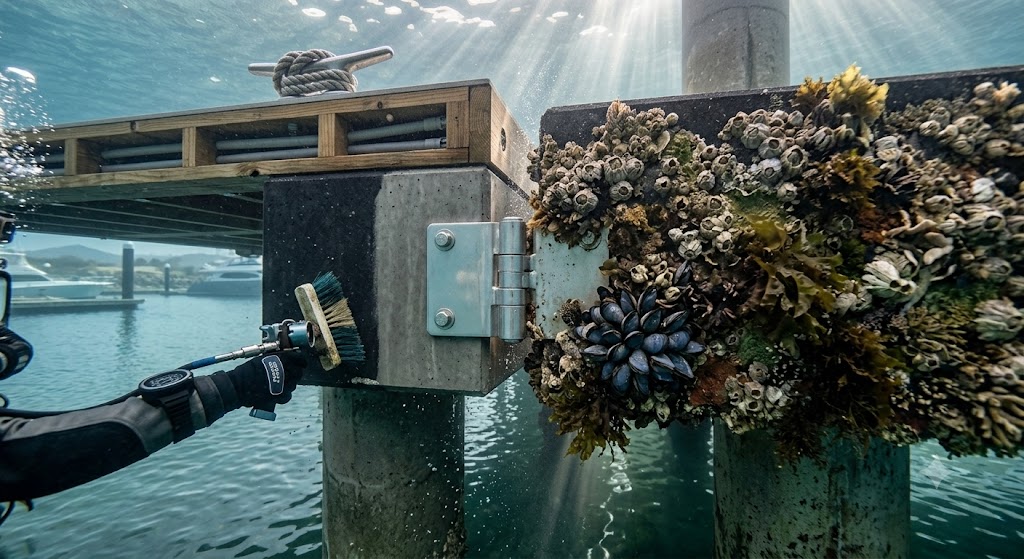
Floating docks are engineered to support people, vessels, and equipment while maintaining proper freeboard and structural alignment. However, one hidden factor steadily reduces their performance below the waterline—marine growth. Barnacles, mussels, algae, oysters, tunicates, and other biofouling organisms continuously accumulate on floats, pilings, hinge brackets, and underwater framing, adding substantial weight over time.
Professional floating dock biofouling removal is more than a cosmetic maintenance service. Regular underwater cleaning helps reduce unnecessary loading on dock structures, improves inspections, and supports the long-term integrity of hinges, flotation systems, and structural connections. While the amount of added weight varies depending on local water conditions and the extent of fouling, allowing marine growth to accumulate unchecked can contribute to increased maintenance demands and accelerated wear.
This guide explains how biofouling affects floating docks, why underwater cleaning is essential, and how preventive maintenance helps marina owners avoid costly structural repairs.
How Floating Docks Support Weight
Floating docks rely on buoyancy to support their own structure along with boats, pedestrians, utilities, and equipment. The flotation system is carefully designed to maintain a safe operating height above the water while distributing loads evenly across hinges and connecting hardware.
Additional weight below the waterline reduces available buoyancy and places greater stress on structural components.
Sources of permanent loading include:
- Dock framing
- Utility conduits
- Electrical equipment
- Water systems
- Marine growth
What Is Biofouling?
Biofouling refers to the accumulation of marine organisms on submerged surfaces.
Common examples include:
- Barnacles
- Mussels
- Algae
- Marine slime
- Tubeworms
- Sea squirts
- Oysters
These organisms attach to nearly every submerged surface, including flotation pontoons, steel brackets, hinges, concrete floats, and dock pilings.
Why Floating Dock Biofouling Removal Matters
Routine floating dock biofouling removal helps prevent excessive marine growth from placing unnecessary loads on dock structures.
Benefits include:
- Reduced structural loading
- Improved flotation performance
- Better inspection visibility
- Longer component life
- Improved dock appearance
- Lower long-term maintenance costs
Cleaning also allows inspectors to identify early signs of corrosion, cracking, and mechanical wear that would otherwise remain hidden.
How Marine Growth Increases Structural Stress
Marine organisms may seem lightweight individually, but over months and years they can accumulate into thick layers covering every underwater surface.
As biofouling builds, it can:
- Increase overall dock weight
- Reduce available buoyancy
- Create uneven loading between dock sections
- Increase stress on hinge assemblies
- Accelerate wear on floating connections
The amount of additional loading depends on local fouling conditions, maintenance frequency, and dock design.
Why Dock Hinges Experience Heavy Wear
Floating dock hinges constantly accommodate movement caused by waves, tides, changing water levels, and boat traffic.
When additional weight from marine growth is introduced, hinge assemblies may experience:
- Higher operating loads
- Increased movement resistance
- Accelerated hardware wear
- Greater stress on bolts and pins
- Misalignment between dock sections
Routine cleaning helps reduce one source of unnecessary loading on these critical structural connections.
Can Biofouling Contribute to Dock Sinkage?
Floating docks are designed with a specific amount of reserve buoyancy. Heavy marine growth gradually consumes part of that reserve by increasing the submerged weight of the structure.
Possible consequences include:
- Reduced freeboard
- Lower dock elevation
- Uneven flotation
- Water collecting on low sections
- Increased stress on flotation systems
While marine growth is rarely the only cause of dock sinkage, excessive fouling can become one contributing factor when combined with aging flotation systems or structural deterioration.
Areas Most Affected by Marine Growth
Professional underwater inspections typically focus on:
- Dock floats
- Hinge assemblies
- Steel brackets
- Cross members
- Pilings
- Guide sleeves
- Utility supports
- Anchor systems
Cleaning these areas improves visibility for maintenance planning and structural assessments.
Routine Cleaning vs Deferred Maintenance
| Maintenance Strategy | Typical Outcome |
|---|---|
| Routine underwater cleaning | Reduced marine growth and improved inspections |
| Scheduled structural inspections | Earlier identification of wear and corrosion |
| Deferred maintenance | Heavier fouling and more complex cleaning projects |
| Reactive repairs | Higher repair costs and greater operational disruption |
Preventive maintenance is generally more cost-effective than responding after significant deterioration develops.
The Importance of Underwater Inspections
Many structural issues develop below the waterline where they cannot be seen from the dock.
Professional divers can inspect:
- Concrete cracking
- Steel corrosion
- Loose hardware
- Pile movement
- Marine growth accumulation
- Float condition
Combining inspections with underwater cleaning provides a comprehensive view of the dock’s condition.
Best Practices for Floating Dock Maintenance
- Schedule routine underwater inspections.
- Remove heavy marine growth before it becomes excessive.
- Inspect hinges and connection hardware regularly.
- Monitor dock freeboard throughout the year.
- Document underwater conditions with photographs.
- Repair minor defects before they become structural issues.
The American Society of Civil Engineers (ASCE) emphasizes the value of routine inspection and preventive maintenance for extending the service life of marine infrastructure.
Common Mistakes Marina Owners Make
Ignoring Underwater Growth
Marine growth often remains unnoticed until inspections become difficult or structural problems appear.
Cleaning Only Visible Areas
The most significant buildup usually occurs below the waterline where it cannot be seen from the dock.
Skipping Annual Inspections
Routine inspections allow maintenance teams to detect developing problems before repairs become more extensive.
Delaying Minor Repairs
Addressing worn hinges, loose hardware, and small cracks early is generally less expensive than major structural restoration.
Waiting for Dock Settlement
Reduced freeboard often indicates that maintenance should have been performed much earlier.
Frequently Asked Questions
Why is floating dock biofouling removal important?
Removing marine growth helps reduce unnecessary weight on floating dock systems, improves structural inspections, and supports long-term maintenance.
Can barnacles make a floating dock sink?
Heavy marine growth alone is not usually the sole cause of sinkage, but it can add significant weight that reduces available buoyancy and contributes to other structural issues.
How often should floating docks be cleaned underwater?
The appropriate schedule depends on local fouling conditions, water temperature, and marina usage. Facilities in warm coastal waters generally require more frequent maintenance.
Why are dock hinges inspected during underwater cleaning?
Hinges experience constant movement and loading. Cleaning improves visibility, allowing technicians to identify wear, corrosion, or alignment issues.
Can underwater cleaning reduce maintenance costs?
Routine cleaning supports preventive maintenance by exposing hidden structural components before problems become more extensive and expensive to repair.
Conclusion
Professional floating dock biofouling removal plays an important role in preserving marina infrastructure. Removing marine growth improves flotation performance, supports structural inspections, reduces unnecessary loading on hinges and connection hardware, and helps marina owners identify developing problems before they require major repairs.
By combining scheduled underwater cleaning with regular structural inspections, marina operators can extend the life of floating docks, improve safety, and better manage long-term maintenance costs.
Schedule a Professional Floating Dock Inspection
If your marina or waterfront facility has heavy marine growth below the waterline, our commercial diving team can help. We provide underwater dock cleaning, biofouling removal, structural inspections, underwater photography, and preventive maintenance services that keep floating dock systems operating safely and efficiently. Contact us today to schedule a comprehensive underwater dock assessment.
