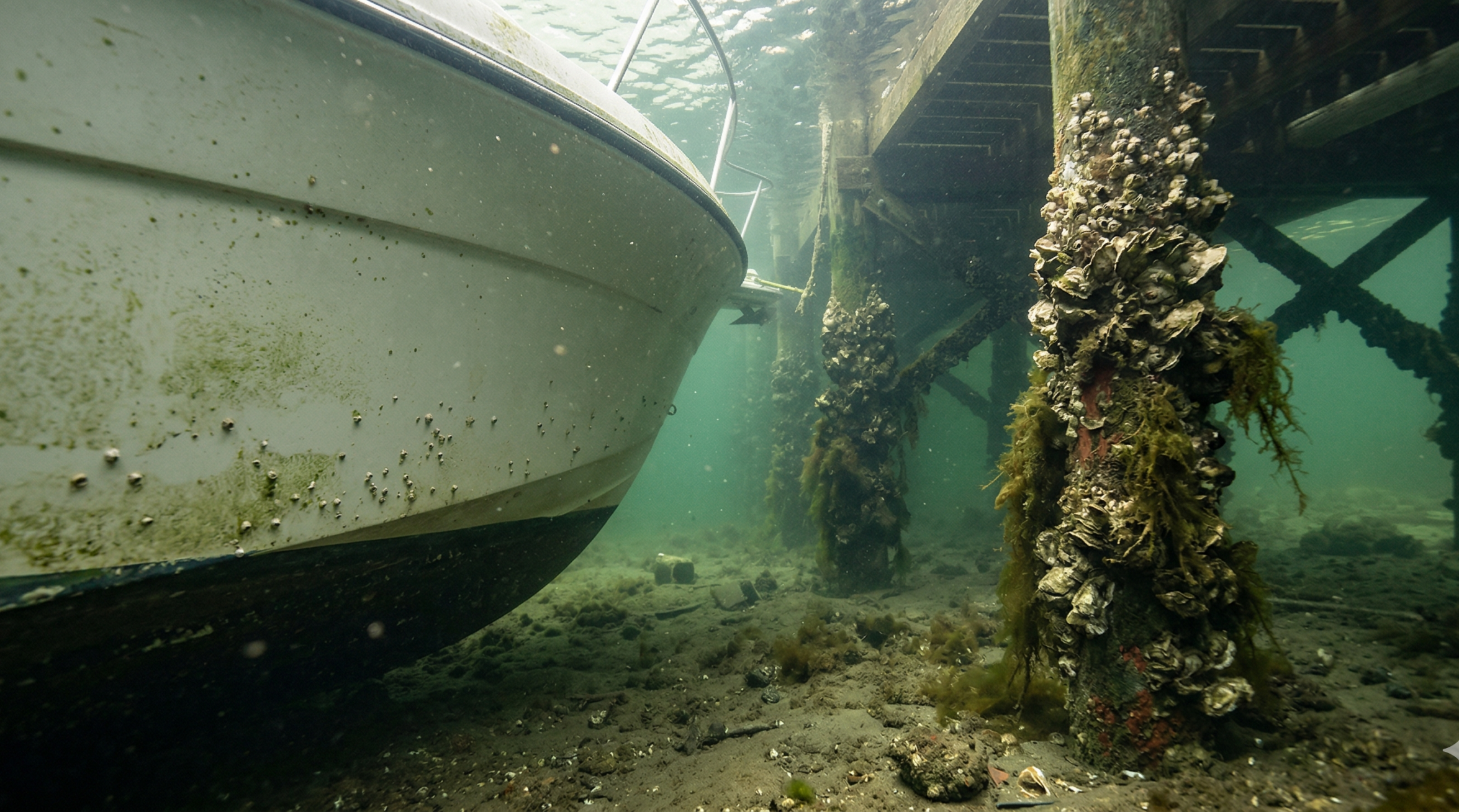
Marine maintenance is essential for both boats and dock structures, yet many people confuse the roles of hull cleaning and dock piling cleaning. Understanding hull cleaning vs dock piling cleaning is critical for protecting your vessel, maintaining dock safety, and preventing costly long-term damage. While both services deal with marine growth removal, they serve completely different purposes and require different techniques.
This guide breaks down the key differences between hull cleaning and dock piling cleaning, explains why both are necessary, and helps boaters and dock owners make informed maintenance decisions.
What Is Hull Cleaning?
Hull cleaning focuses on maintaining the underwater surface of a boat. Marine growth such as algae, barnacles, and slime attaches quickly to hulls, affecting performance and efficiency.
Purpose of Hull Cleaning
- Improve boat speed and fuel efficiency
- Prevent long-term hull damage
- Maintain smooth hydrodynamic performance
- Extend the lifespan of anti-fouling coatings
How Hull Cleaning Is Performed
Professional divers use soft brushes, specialized tools, and environmentally safe methods to remove growth without damaging hull coatings.
What Is Dock Piling Cleaning?
Dock piling cleaning focuses on removing marine growth from the structural supports of docks and marinas. Unlike boats, dock pilings remain submerged constantly, making them more vulnerable to buildup.
Purpose of Dock Piling Cleaning
- Preserve structural integrity of pilings
- Prevent rot, corrosion, and deterioration
- Reduce excess weight from marine growth
- Allow inspections to detect hidden damage
How Dock Piling Cleaning Is Performed
Cleaning is done using manual tools, cavitation systems, or other marine-safe techniques designed to remove heavy growth without damaging piling materials.
Hull Cleaning vs Dock Piling Cleaning: Key Differences
Although both involve underwater cleaning, their objectives and impact are very different.
| Category | Hull Cleaning | Dock Piling Cleaning |
| Main focus | Boat performance | Dock structure safety |
| Primary benefit | Improved speed and efficiency | Extended piling lifespan |
| Cleaning frequency | Every 4–8 weeks | Every 3–6 months |
| Type of growth removed | Light to moderate | Often heavy and layered |
| Risk of neglect | Reduced performance | Structural failure |
Why Both Services Are Important
Ignoring either hull cleaning or dock piling cleaning can lead to serious consequences.
- Dirty hulls increase fuel costs and reduce performance
- Unclean pilings weaken dock structures
- Marine growth spreads between boats and docks
- Safety risks increase for both vessels and people
Maintaining both ensures a safer and more efficient marine environment.
How Marine Growth Affects Boats vs Dock Pilings
Marine growth behaves differently depending on where it attaches.
- On hulls: increases drag and reduces speed
- On pilings: adds constant structural stress
- On both: accelerates corrosion and material wear
The Environmental Protection Agency highlights the importance of responsible marine maintenance to protect both infrastructure and ecosystems.
DIY vs Professional Cleaning for Hulls and Pilings
While some boat owners attempt DIY cleaning, professional services provide better results.
DIY Cleaning
- Suitable for light surface cleaning
- Limited effectiveness below waterline
- Higher risk of damage or incomplete cleaning
Professional Cleaning
- Thorough underwater cleaning
- Safe and environmentally compliant
- Includes inspection and damage detection
When Should You Schedule Each Service?
Timing depends on water conditions and usage.
- Hull cleaning: every 4–8 weeks in saltwater
- Dock piling cleaning: every 3–6 months
- After storms: inspect both immediately
The BoatUS Foundation recommends regular cleaning to maintain marine equipment performance and safety.
Cost Differences Between Hull and Dock Cleaning
| Factor | Hull Cleaning | Dock Piling Cleaning |
| Frequency | Higher | Lower |
| Complexity | Moderate | Higher |
| Long-term value | Performance savings | Structural protection |
FAQs About Hull Cleaning vs Dock Piling Cleaning
Can I skip dock cleaning if I clean my boat?
No. Dock pilings require separate maintenance to prevent structural damage.
Is hull cleaning more frequent than dock cleaning?
Yes. Hull cleaning is needed more often due to performance impact.
Do both services require divers?
Yes. Most effective cleaning methods involve professional underwater work.
Which service is more important?
Both are important, but dock piling cleaning is critical for safety and structural integrity.
Conclusion
Understanding hull cleaning vs dock piling cleaning helps boaters and dock owners maintain both performance and safety. Hull cleaning keeps vessels efficient and fuel-friendly, while dock piling cleaning protects the structural backbone of your dock. Neglecting either can lead to unnecessary costs and risks.
For professional marine cleaning services, contact us today. We provide Hull Cleaning, Cavitation Cleaning, Zinc Replacement, Underwater Inspections, and Wash & Detailing to keep your boat and dock in top condition year-round.
