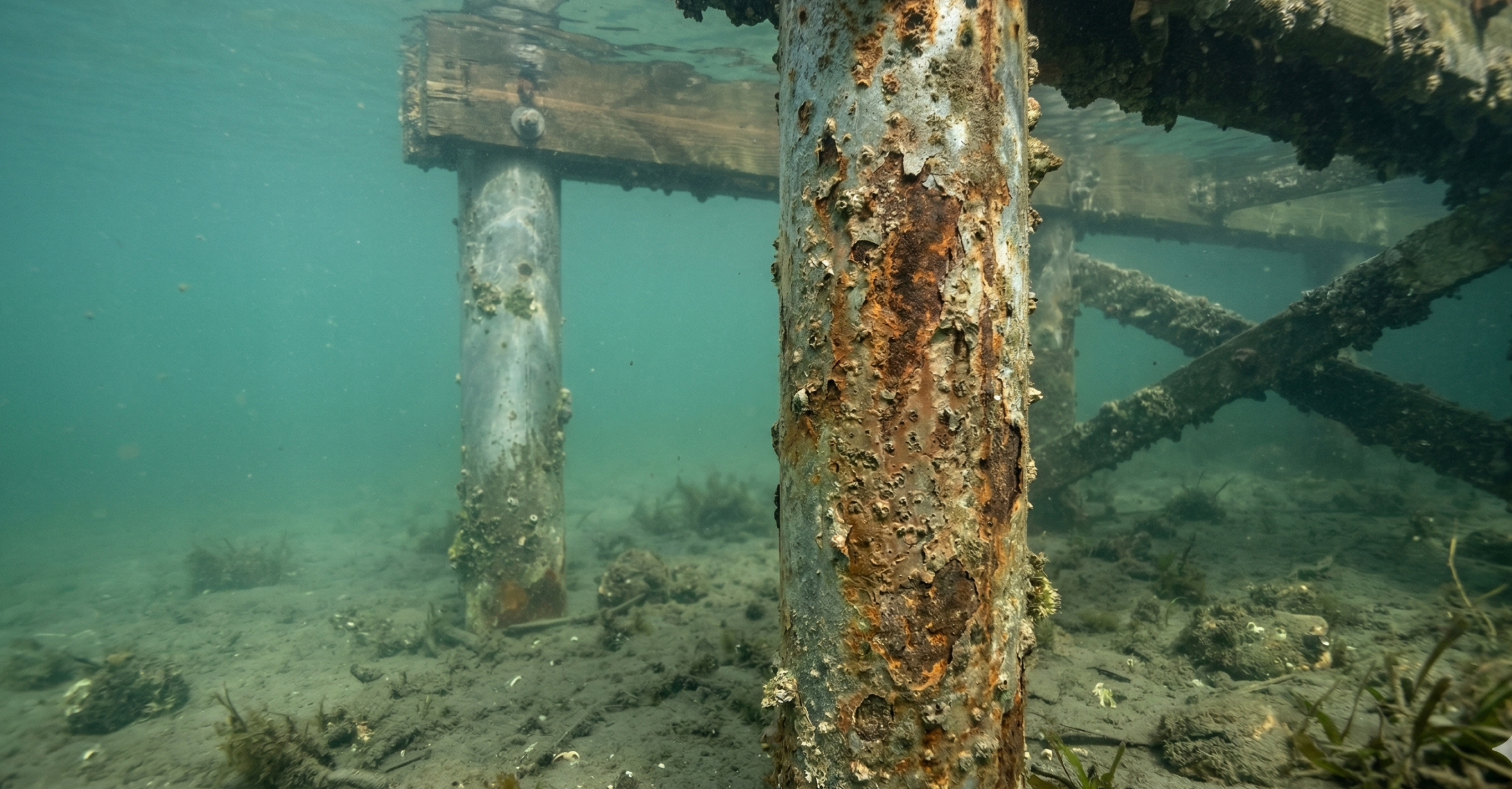
Saltwater environments are extremely harsh on marine structures, especially dock pilings that remain submerged year-round. Saltwater corrosion dock pilings is a major concern for waterfront property owners, marina operators, and boaters because it weakens structural integrity, increases maintenance costs, and can lead to sudden failure if left untreated.
This guide explains how saltwater corrosion affects dock pilings, why it happens, the warning signs to watch for, and the most effective methods to stop and prevent corrosion before it causes serious damage.
What Causes Saltwater Corrosion in Dock Pilings?
Saltwater corrosion dock pilings occurs due to chemical and electrochemical reactions between metal, water, and oxygen. Saltwater accelerates these reactions because it is highly conductive.
Electrochemical Reaction
When metal is exposed to saltwater, an electrical current forms, causing metal ions to break down and dissolve over time.
Presence of Oxygen
Oxygen in water reacts with metal surfaces, leading to oxidation and rust formation.
Salt as a Catalyst
Salt increases conductivity, speeding up corrosion compared to freshwater environments.
Types of Corrosion Affecting Dock Pilings
Different forms of corrosion can damage dock pilings depending on material and conditions.
| Type | Description | Impact |
| Uniform corrosion | Even metal loss across surface | Gradual weakening |
| Pitting corrosion | Localized holes in metal | Rapid structural failure risk |
| Galvanic corrosion | Occurs between dissimilar metals | Accelerated damage |
| Crevice corrosion | Occurs in joints and gaps | Hidden deterioration |
Which Dock Pilings Are Most Affected?
Saltwater corrosion impacts different materials in different ways.
Steel Pilings
Highly vulnerable to rust and thinning, especially without protective coatings or anodes.
Concrete Pilings
Saltwater can penetrate concrete and corrode internal steel reinforcement.
Wood Pilings
While not subject to rust, saltwater promotes rot and marine borer damage.
Signs of Saltwater Corrosion on Dock Pilings
Early detection is critical to prevent major structural issues.
- Visible rust or discoloration
- Pitting or holes in metal surfaces
- Flaking or peeling coatings
- Loose or weakened hardware
- Cracks in concrete pilings
According to the Environmental Protection Agency, corrosion control is essential for maintaining safe marine infrastructure.
How Saltwater Corrosion Damages Dock Structures
Corrosion doesn’t just affect appearance—it compromises structural integrity.
- Reduces load-bearing capacity
- Weakens connections and fasteners
- Increases risk of dock instability
- Leads to costly repairs or replacement
Unchecked corrosion can result in complete piling failure.
What Stops Saltwater Corrosion in Dock Pilings?
Preventing saltwater corrosion dock pilings requires a combination of protective methods.
Zinc Anodes (Sacrificial Protection)
Zinc anodes absorb corrosion instead of the metal piling, significantly reducing damage.
Protective Coatings
Marine-grade coatings create a barrier between metal and saltwater.
Piling Wraps and Jackets
Wrap systems physically isolate pilings from water and marine growth.
Regular Cleaning
Removing marine growth reduces moisture retention and corrosion acceleration.
Routine Inspections
Professional underwater inspections detect early corrosion before it becomes severe.
Best Corrosion Prevention Strategy
No single solution is enough. The most effective approach combines multiple methods.
| Method | Role |
| Zinc anodes | Stops electrochemical corrosion |
| Coatings | Blocks water contact |
| Wraps/jackets | Provides physical protection |
| Cleaning | Removes corrosive buildup |
| Inspections | Detects early damage |
How Often Should Corrosion Be Checked?
Monitoring corrosion regularly prevents unexpected damage.
- Saltwater docks: every 3–6 months
- After storms: immediate inspection
- High-traffic marinas: frequent checks
FAQs About Saltwater Corrosion Dock Pilings
Can saltwater corrosion be completely stopped?
No, but it can be significantly slowed with proper protection and maintenance.
Are zinc anodes enough to prevent corrosion?
They are highly effective but work best when combined with coatings and inspections.
Does cleaning reduce corrosion?
Yes. Removing marine growth helps reduce moisture retention and damage.
Is corrosion worse in saltwater than freshwater?
Yes. Saltwater accelerates corrosion due to higher conductivity.
Conclusion
Saltwater corrosion dock pilings is an unavoidable challenge in marine environments, but it can be effectively managed with the right strategies. Understanding how corrosion works and taking proactive steps—such as installing zinc anodes, applying protective coatings, and scheduling regular inspections—can significantly extend the life of your dock.
For professional corrosion prevention and dock maintenance, contact us today. We provide Hull Cleaning, Cavitation Cleaning, Zinc Replacement, Underwater Inspections, and Wash & Detailing to keep your dock and marine assets protected and performing at their best.
