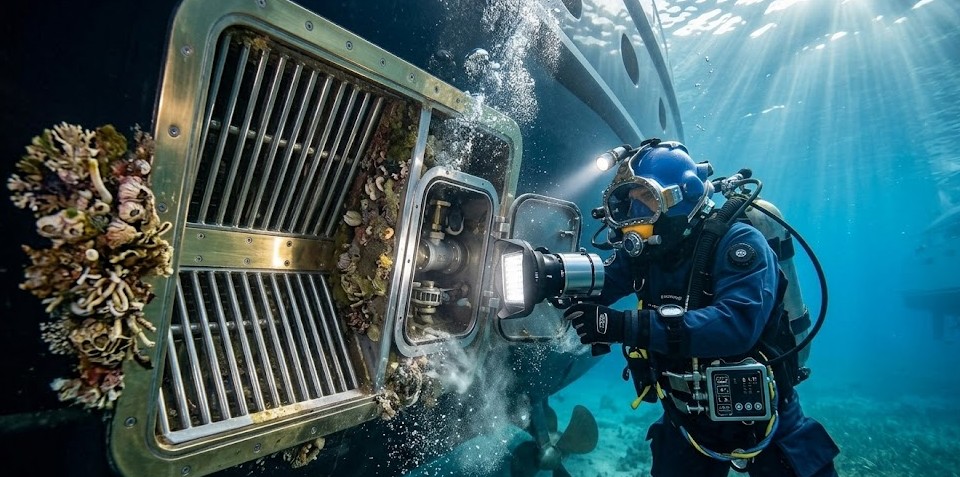
Modern yachts, commercial vessels, sportfishing boats, and workboats rely on a continuous supply of seawater for critical onboard systems. Engines, generators, air conditioning units, refrigeration equipment, fire suppression systems, and other machinery depend on unrestricted water flow to operate safely and efficiently.
Yet one of the most overlooked areas of underwater maintenance is the sea chest. Hidden below the waterline and largely out of sight, sea chests can gradually accumulate marine growth, debris, shells, and sediment that restrict water flow long before operators notice a problem.
A professional sea chest underwater inspection helps identify obstructions before they lead to overheating, equipment failures, reduced system performance, or costly repairs. Regular inspections are especially important in warm-water environments where biofouling develops rapidly.
Understanding how sea chests function and why routine inspections matter can help vessel owners protect critical systems and avoid unexpected downtime.
What Is a Sea Chest?
A sea chest is an enclosed chamber built into a vessel’s hull that collects seawater before distributing it to onboard systems.
Rather than requiring multiple individual intake openings for every system, a sea chest allows several systems to draw water from a common source.
Sea chests are commonly found on:
- Motor yachts
- Commercial vessels
- Tugboats
- Research vessels
- Fishing vessels
- Offshore support vessels
The design helps simplify intake arrangements while reducing the number of hull penetrations.
Why Sea Chests Are Vulnerable to Marine Growth
Sea chests operate in a unique underwater environment that naturally attracts fouling organisms.
Unlike exterior hull surfaces that experience significant water flow during vessel movement, sea chest interiors often contain areas of reduced circulation.
These conditions can encourage:
- Slime accumulation
- Algae growth
- Barnacle attachment
- Mussel colonization
- Shell buildup
- Sediment deposits
Over time, these materials can significantly reduce available water flow.
Why Sea Chest Underwater Inspection Matters
A routine sea chest underwater inspection provides a direct assessment of intake conditions below the waterline.
Because many sea chest problems develop gradually, operators may not notice issues until equipment performance begins to decline.
Inspections help identify:
- Marine growth accumulation
- Blocked intake screens
- Damaged grates
- Restricted flow paths
- Corrosion concerns
- Valve access issues
Early detection often prevents more serious maintenance problems later.
How Internal Sea Chest Marine Growth Develops
One of the most common issues discovered during inspections is internal sea chest marine growth.
Biofouling typically develops in stages.
- Biofilm formation
- Slime accumulation
- Algae attachment
- Barnacle settlement
- Heavy fouling colonization
As growth progresses, intake capacity can decline substantially.
Even relatively small accumulations may affect water flow to sensitive systems.
The Consequences of Intake Restrictions
Restricted seawater flow can affect numerous onboard systems.
Potential consequences include:
- Engine overheating
- Generator cooling issues
- Air conditioning failures
- Reduced heat exchanger efficiency
- Increased equipment wear
- Unexpected shutdowns
These problems often originate from seemingly minor intake restrictions that develop over time.
The Importance of a Raw Water Intake Check Diver Inspection
A professional raw water intake check diver inspection provides direct access to intake openings and sea chest structures without requiring haul-out in many situations.
Experienced divers can evaluate:
- Intake grates
- External openings
- Marine growth levels
- Structural condition
- Blockage risks
- Cleaning requirements
Routine underwater inspections help maintain proper flow and reduce the risk of system interruptions.
How Intake Valve Blockage Occurs
Another significant concern involves intake valve blockage.
Marine growth, debris, shells, and sediment can interfere with the operation of valves connected to sea chest systems.
Potential issues include:
- Restricted valve movement
- Reduced water flow
- Operational difficulties
- Maintenance complications
- Emergency shutdown challenges
Maintaining clear pathways between intake openings and valves is essential for reliable system operation.
Common Signs of Sea Chest Problems
Several symptoms may indicate the need for inspection.
- Rising engine temperatures
- Generator cooling alarms
- Reduced air conditioning performance
- Frequent strainer cleaning
- Decreased system efficiency
- Unusual cooling system behavior
Although these symptoms can originate from various causes, intake restrictions should always be considered.
What Divers Look for During a Sea Chest Inspection
A comprehensive underwater inspection often includes evaluation of:
| Inspection Area | Purpose |
|---|---|
| Intake Grates | Identify blockages and damage |
| Sea Chest Openings | Assess water flow access |
| Marine Growth Levels | Evaluate fouling severity |
| Structural Components | Check condition and integrity |
| Valve Access Areas | Verify operational clearance |
| Surrounding Hull Surfaces | Assess overall fouling conditions |
These observations help owners determine whether cleaning or additional maintenance is required.
Why Warm Water Environments Increase Fouling Risks
Vessels operating in tropical and subtropical waters often experience accelerated biofouling growth.
Warm temperatures can encourage:
- Faster barnacle settlement
- Rapid algae growth
- Increased slime formation
- More aggressive colonization
As a result, inspection intervals may need to be adjusted based on local environmental conditions.
How Sea Chest Cleaning Supports Vessel Reliability
Removing marine growth from intake systems helps preserve operational reliability.
Benefits include:
- Improved cooling performance
- Reduced overheating risks
- Better equipment efficiency
- Lower maintenance costs
- Improved system longevity
The International Maritime Organization recognizes biofouling management as an important factor in vessel performance and maintenance planning.
Best Practices for Sea Chest Maintenance
- Schedule routine underwater inspections
- Monitor cooling system performance
- Remove marine growth promptly
- Inspect intake screens regularly
- Check valve accessibility
- Document maintenance history
- Address restrictions before failures occur
Preventive maintenance is typically far less expensive than emergency repairs resulting from cooling system failures.
Common Mistakes Vessel Owners Make
Ignoring Hidden Intake Areas
Sea chests are easy to overlook because they remain out of sight during normal operations.
Waiting for Cooling Problems to Develop
By the time overheating occurs, significant fouling may already be present.
Inspecting Only External Intakes
Internal sea chest marine growth may exist even when exterior openings appear relatively clean.
Assuming Strainers Catch Everything
Strainers cannot compensate for severe fouling or restrictions upstream of the system.
Neglecting Valve Clearance Checks
Intake valve blockage can affect system operation even when water flow appears adequate.
Frequently Asked Questions
What is a sea chest underwater inspection?
A sea chest underwater inspection evaluates underwater intake structures, marine growth levels, and flow conditions to ensure cooling systems receive adequate seawater.
Why is a raw water intake check diver inspection important?
Divers can directly assess intake openings, identify fouling, and detect blockages that may not be visible from inside the vessel.
What causes internal sea chest marine growth?
Reduced water circulation, warm temperatures, and nutrient-rich marine environments create ideal conditions for biofouling inside sea chests.
How does intake valve blockage occur?
Marine growth, debris, shells, and sediment can restrict valve operation and reduce water flow through cooling systems.
How often should sea chests be inspected?
Inspection frequency depends on vessel usage, operating environment, and fouling conditions, but routine inspections are strongly recommended.
Can sea chest fouling cause engine overheating?
Yes. Significant intake restrictions can reduce cooling water flow and contribute to overheating and equipment performance issues.
Conclusion
A properly functioning cooling system depends on unrestricted access to seawater, and that begins at the intake. A professional sea chest underwater inspection helps identify hidden restrictions before they compromise engines, generators, air conditioning systems, and other critical equipment.
Whether addressing a routine raw water intake check diver evaluation, monitoring internal sea chest marine growth, or preventing intake valve blockage, proactive inspections remain one of the most effective ways to protect vessel reliability. By keeping intake pathways clear and ensuring proper valve clearances, owners can reduce downtime, improve system efficiency, and avoid costly repairs.
Schedule a Professional Sea Chest Inspection
If your vessel has not had its cooling water intakes inspected recently, now is the ideal time to evaluate their condition. Professional underwater divers can inspect sea chests, assess marine growth levels, identify restrictions, and help ensure that your cooling systems continue operating efficiently. Contact a qualified underwater inspection specialist today to schedule a comprehensive sea chest evaluation and protect your vessel’s critical systems.
