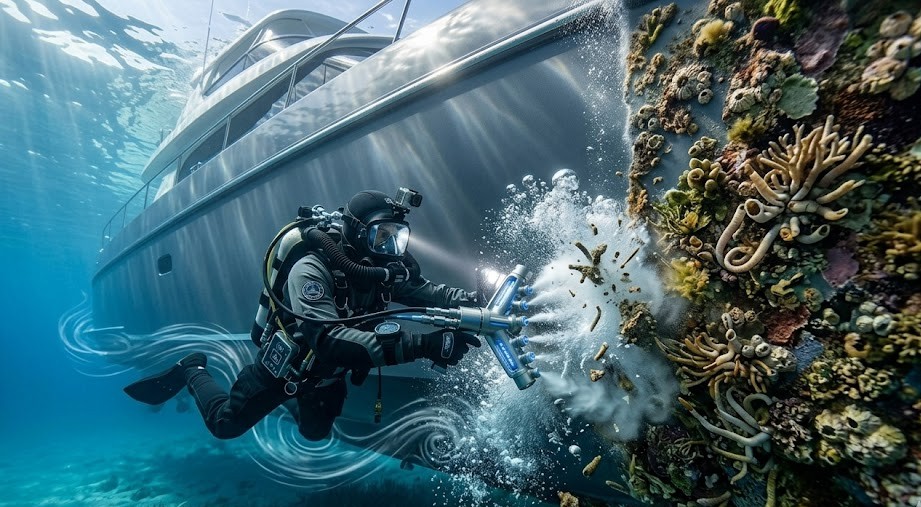
Modern antifouling systems represent a significant investment for boat owners. Whether a vessel uses traditional ablative paint, hard antifouling coatings, or advanced silicone-based foul-release systems, protecting those coatings is essential for maintaining performance, reducing maintenance costs, and extending haul-out intervals.
Unfortunately, many hull cleaning methods can be as damaging as the marine growth they are intended to remove. Aggressive scraping, abrasive pads, and improper brushing techniques may strip protective coatings, shorten paint life, and increase future maintenance expenses.
As a result, vessel owners are increasingly exploring cleaning technologies designed to preserve bottom paint cavitation methods help protect. Cavitation jetting has emerged as a popular solution because it can remove biofouling while minimizing physical contact with the hull surface.
Understanding how cavitation cleaning works can help owners make informed decisions about maintaining antifouling coatings without sacrificing cleaning effectiveness.
Why Antifouling Paint Matters
Antifouling coatings serve as the vessel’s first line of defense against marine growth.
These coatings help reduce the accumulation of:
- Slime
- Algae
- Barnacles
- Mussels
- Tubeworms
- Other fouling organisms
When antifouling systems remain intact and effective, vessels typically experience:
- Improved fuel efficiency
- Reduced drag
- Better performance
- Lower maintenance costs
- Longer coating service life
Protecting these coatings during cleaning is therefore just as important as removing the fouling itself.
The Problem with Traditional Scrubbing Methods
Many underwater cleaning methods rely on direct physical contact to remove marine growth.
Common techniques include:
- Hand scraping
- Wire brushing
- Abrasive pads
- Rotary brush systems
- Mechanical scrubbing devices
While effective at removing fouling, these approaches can also wear away antifouling coatings.
Repeated abrasion may lead to:
- Premature paint loss
- Reduced coating thickness
- Shorter repaint cycles
- Higher maintenance costs
This challenge has fueled interest in less aggressive cleaning alternatives.
What Is Cavitation Jetting?
Cavitation cleaning relies on controlled hydrodynamic forces rather than abrasive contact.
The process creates microscopic vapor bubbles within moving water.
As these bubbles collapse, they release concentrated energy that helps break the bond between marine growth and the hull surface.
Unlike conventional scrubbing, cavitation cleaning focuses on disrupting fouling attachment mechanisms rather than grinding away material.
This distinction is central to why many owners choose methods designed to preserve bottom paint cavitation cleaning supports.
How Cavitation Differs from Physical Scrubbing
One of the most important comparisons vessel owners make is cavitation vs scrub brush cleaning.
| Cleaning Method | Growth Removal | Physical Contact | Coating Preservation |
|---|---|---|---|
| Scrub Brush | High | Direct | Variable |
| Abrasive Pad | High | Direct | Lower |
| Metal Scraper | High | Aggressive | Lower |
| Cavitation Jetting | High | Minimal | Higher |
While both methods can remove fouling effectively, cavitation generally reduces the risk of unnecessary coating wear when properly applied.
Why Non Abrasive Underwater Wash Methods Are Growing in Popularity
Boat owners increasingly seek maintenance solutions that protect expensive hull coatings.
A non abrasive underwater wash approach offers several advantages.
- Reduced coating wear
- Lower risk of scratching
- Extended paint lifespan
- Improved surface preservation
- Consistent cleaning results
For vessels with premium antifouling systems, preserving coating integrity can produce significant long-term savings.
The Challenge of Cleaning Slick Silicone Coatings
One area where cleaning techniques matter especially is slick silicone coating cleaning.
Silicone foul-release coatings differ significantly from conventional antifouling paints.
Rather than actively preventing growth through biocides, these systems create extremely smooth surfaces that make it difficult for organisms to remain attached.
However, silicone coatings can be sensitive to aggressive cleaning methods.
Improper tools may:
- Scratch the surface
- Reduce slickness
- Compromise performance
- Shorten coating lifespan
This makes gentle cleaning approaches particularly valuable for vessels using foul-release technologies.
How Cavitation Helps Preserve Bottom Paint
The effectiveness of preserve bottom paint cavitation cleaning strategies comes from the way energy is delivered.
Rather than relying on hard physical contact, cavitation uses microscopic bubble collapse to target marine growth.
Benefits may include:
- Reduced abrasive wear
- Lower coating removal rates
- Improved paint longevity
- Protection of sensitive surfaces
- Effective biofouling management
The goal is to remove unwanted growth while leaving the coating system largely intact.
Applications Across Different Coating Types
Cavitation cleaning may be suitable for a variety of hull coating systems.
| Coating Type | Cleaning Considerations |
|---|---|
| Ablative Antifouling Paint | Requires careful cleaning |
| Hard Antifouling Paint | More abrasion resistant |
| Hybrid Coatings | Manufacturer recommendations apply |
| Silicone Foul-Release Systems | Gentle cleaning preferred |
| Fluoropolymer Coatings | Surface preservation important |
Owners should always follow coating manufacturer guidance when selecting cleaning methods.
Why Hull Surface Smoothness Matters
Even minor surface damage can affect vessel performance.
Surface roughness contributes to:
- Increased drag
- Reduced speed
- Higher fuel consumption
- Lower efficiency
The International Maritime Organization (IMO) recognizes hull cleanliness and biofouling management as important factors influencing vessel efficiency and emissions.
Maintaining smooth coatings helps preserve hydrodynamic performance.
Environmental Benefits of Coating Preservation
Extending coating life offers environmental advantages as well.
Longer-lasting coatings may reduce:
- Paint consumption
- Maintenance waste
- Haul-out frequency
- Material replacement needs
Reducing unnecessary coating removal aligns with broader sustainability goals within the marine industry.
Common Misconceptions About Cavitation Cleaning
Cavitation Is Just High-Pressure Washing
Cavitation relies on controlled vapor bubble collapse rather than pressure alone.
It Cannot Remove Heavy Fouling
Modern cavitation systems can effectively address many forms of biofouling when used correctly.
All Scrubbing Methods Damage Paint Equally
The degree of coating wear varies significantly depending on the cleaning method and operator technique.
Silicone Coatings Require No Cleaning
Even foul-release coatings benefit from routine maintenance and inspection.
Best Practices for Protecting Hull Coatings
- Inspect hulls regularly
- Remove growth early
- Use coating-appropriate cleaning methods
- Follow manufacturer recommendations
- Monitor coating condition
- Schedule professional inspections
Preventive maintenance often helps avoid aggressive cleaning later.
The BoatUS Foundation encourages regular vessel maintenance to preserve both performance and long-term asset value.
Frequently Asked Questions
How does preserve bottom paint cavitation cleaning work?
Cavitation cleaning uses microscopic vapor bubble collapse to remove marine growth while minimizing abrasive contact with the hull coating.
What is a non abrasive underwater wash?
A non abrasive underwater wash removes fouling without relying on aggressive scraping, grinding, or abrasive brushing techniques.
How does cavitation vs scrub brush cleaning compare?
Cavitation generally uses less physical contact than scrub brushes, which may help reduce coating wear while still removing marine growth.
Is cavitation suitable for slick silicone coating cleaning?
Many vessel owners favor gentle cleaning methods for silicone coatings because preserving surface smoothness is critical to performance.
Can cavitation extend bottom paint life?
By reducing abrasive wear, cavitation cleaning may help preserve coating integrity and extend maintenance intervals.
Does cavitation remove all types of marine growth?
Effectiveness depends on growth type, severity, equipment design, and operating conditions, but cavitation systems are widely used for biofouling management.
Conclusion
Protecting antifouling coatings requires more than simply removing marine growth. The cleaning process itself plays a major role in determining how long a coating system will continue to perform effectively. By helping to preserve bottom paint cavitation cleaning methods offer an attractive alternative to more abrasive approaches.
Whether evaluating a non abrasive underwater wash strategy, comparing cavitation vs scrub brush techniques, or selecting the best approach for slick silicone coating cleaning, vessel owners increasingly recognize the value of cleaning methods that balance effectiveness with coating preservation. In many cases, protecting the paint is just as important as removing the fouling.
Schedule Professional Cavitation Hull Cleaning Services
If your vessel relies on premium antifouling coatings or advanced foul-release systems, professional cavitation cleaning can help remove marine growth while supporting long-term coating protection. Contact an experienced underwater maintenance specialist today to schedule a hull inspection and learn whether cavitation cleaning is the right solution for your vessel.
