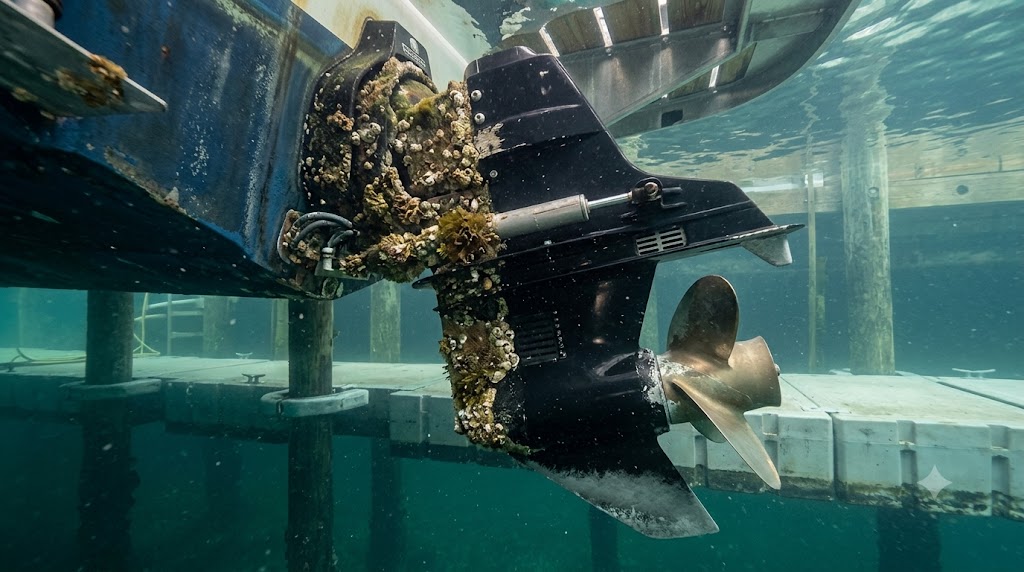
Commercial vessels equipped with sterndrives rely on clean, well-maintained outdrives to deliver reliable performance, fuel efficiency, and dependable maneuverability. However, because aluminum lower units remain submerged for extended periods, they quickly become prime surfaces for barnacles, algae, slime, and other marine growth.
Ignoring fouling doesn’t just reduce efficiency—it can increase drag, restrict cooling water intakes, interfere with steering performance, and create conditions that may accelerate corrosion if protective coatings become damaged. Professional commercial outdrive maintenance removes marine growth using cleaning methods designed specifically for sensitive aluminum components, helping preserve both performance and the integrity of factory coatings.
This guide explains why aluminum outdrives require specialized care, how barnacles affect performance, and why routine underwater maintenance is essential for commercial vessels.
Why Aluminum Outdrives Need Special Attention
Unlike bronze propellers or stainless-steel shafts, sterndrive lower units are primarily constructed from marine-grade aluminum alloys. Although engineered for harsh marine environments, aluminum requires proper coatings and sacrificial anodes to resist corrosion.
Aggressive cleaning methods can damage these protective systems, making proper maintenance especially important.
Outdrive components include:
- Lower gear housing
- Gearcase skeg
- Anti-ventilation plate
- Water intake grates
- Trim cylinders
- Propeller hub
- Exhaust outlet
Why Commercial Outdrive Maintenance Is Essential
Routine commercial outdrive maintenance helps prevent marine growth from reducing efficiency while protecting vulnerable aluminum surfaces.
Regular maintenance helps:
- Maintain vessel performance.
- Improve fuel efficiency.
- Protect protective coatings.
- Reduce unnecessary drag.
- Maintain cooling water flow.
- Support long-term equipment reliability.
Cleaning marine growth before it becomes heavily established is generally safer and more efficient than removing thick barnacle colonies later.
How Barnacles Affect Aluminum Lower Units
Barnacles attach using an extremely strong natural adhesive that bonds tightly to underwater surfaces.
As colonies expand, they can:
- Increase hydrodynamic drag.
- Restrict water intake openings.
- Reduce acceleration.
- Lower top speed.
- Increase fuel consumption.
- Hide coating damage.
Heavy marine growth also makes routine inspections more difficult because important components become concealed beneath fouling.
Why Aggressive Scraping Can Cause Problems
Aluminum lower units are typically protected by specialized primers and marine coatings.
Using hard metal tools or excessive abrasion may:
- Scratch protective coatings.
- Expose bare aluminum.
- Increase corrosion risk.
- Shorten coating life.
- Create unnecessary repair work.
For this reason, professional divers select cleaning methods that remove marine growth while minimizing unnecessary contact with coated surfaces.
How Cavitation Cleaning Helps
Controlled hydrodynamic cavitation has become an increasingly popular solution for removing marine growth from underwater structures.
When used appropriately, cavitation cleaning can:
- Loosen barnacles.
- Remove algae and slime.
- Reduce physical abrasion.
- Help preserve protective coatings.
- Improve cleaning efficiency.
The exact cleaning method should always be selected based on the condition of the outdrive and the manufacturer’s recommendations.
Areas That Require Routine Inspection
Professional underwater maintenance includes more than simply cleaning visible surfaces.
Key inspection areas include:
- Propeller blades.
- Water intake grates.
- Sacrificial anodes.
- Hydraulic trim cylinders.
- Gear housing.
- Propeller shaft.
- Protective paint condition.
Routine inspections help identify developing issues before they become costly repairs.
Signs Your Outdrive Needs Cleaning
Performance often declines gradually as marine growth accumulates.
Watch for:
- Reduced boat speed.
- Higher fuel consumption.
- Slow acceleration.
- Engine running warmer than normal.
- Visible barnacles.
- Excessive marine slime.
Addressing fouling early helps maintain both performance and equipment longevity.
Routine Cleaning vs Deferred Maintenance
| Maintenance Approach | Typical Outcome |
|---|---|
| Routine underwater cleaning | Reduced fouling and easier inspections |
| Regular anode inspections | Improved corrosion protection |
| Delayed barnacle removal | Heavier fouling and more difficult cleaning |
| Reactive repairs | Higher maintenance costs and longer downtime |
Preventive maintenance is generally more economical than waiting for performance problems to develop.
Commercial Vessels Benefit Most from Scheduled Maintenance
Workboats, patrol boats, charter vessels, and commercial fishing boats often spend far more time in the water than recreational boats.
Frequent operation increases the importance of:
- Regular hull cleaning.
- Outdrive inspections.
- Marine growth removal.
- Anode replacement.
- Cooling system inspections.
A scheduled maintenance program helps minimize unexpected downtime and supports reliable daily operations.
Common Mistakes Vessel Owners Make
Using Metal Scrapers on Aluminum
Hard tools can damage protective coatings and expose bare metal.
Ignoring Small Barnacle Colonies
Light fouling is significantly easier to remove before heavy colonies become established.
Skipping Zinc Anode Inspections
Sacrificial anodes are essential for protecting aluminum lower units from galvanic corrosion.
Cleaning Only the Propeller
The entire lower unit should be inspected, including intake grates, trim cylinders, and protective coatings.
Waiting Until Performance Drops
Routine maintenance helps maintain efficiency before noticeable performance losses occur.
Best Practices for Commercial Outdrive Maintenance
- Inspect lower units regularly.
- Remove marine growth before heavy buildup develops.
- Inspect sacrificial anodes during every service.
- Protect factory coatings from unnecessary abrasion.
- Document underwater inspections with photographs.
- Follow manufacturer maintenance recommendations.
The BoatUS Foundation recommends regular underwater inspections and marine growth removal to help preserve vessel performance and identify maintenance issues before they become expensive repairs.
Frequently Asked Questions
Why is commercial outdrive maintenance important?
Routine maintenance removes marine growth, maintains cooling water flow, protects aluminum lower units, and helps preserve vessel performance.
Can barnacles damage aluminum outdrives?
Barnacles themselves do not normally damage aluminum directly, but heavy fouling can conceal coating failures, restrict water flow, and make inspections more difficult.
Is cavitation cleaning safe for aluminum lower units?
When performed correctly using appropriate equipment and procedures, cavitation cleaning can remove marine growth while minimizing unnecessary abrasion of coated surfaces.
How often should commercial outdrives be cleaned?
The ideal schedule depends on local fouling conditions, vessel usage, and water temperature. Commercial vessels generally benefit from more frequent underwater maintenance.
Should zinc anodes be inspected during every cleaning?
Yes. Sacrificial anodes play an important role in protecting aluminum outdrives and should be inspected whenever underwater maintenance is performed.
Conclusion
Professional commercial outdrive maintenance is essential for protecting aluminum lower units from the effects of marine growth while preserving factory coatings and corrosion protection systems. Routine underwater cleaning, zinc anode inspections, and careful removal of barnacles help maintain performance, improve cooling efficiency, and reduce long-term repair costs.
By addressing fouling before it becomes excessive, commercial vessel operators can extend equipment life, reduce downtime, and keep their boats operating efficiently throughout the year.
Schedule Professional Outdrive Cleaning
If your commercial vessel has accumulated barnacles or marine growth on its sterndrive, our professional underwater diving team can help. We provide safe outdrive cleaning, cavitation marine growth removal, zinc anode inspections, underwater photography, and complete hull maintenance designed to protect aluminum lower units without unnecessary abrasion. Contact us today to schedule a professional underwater maintenance service.
