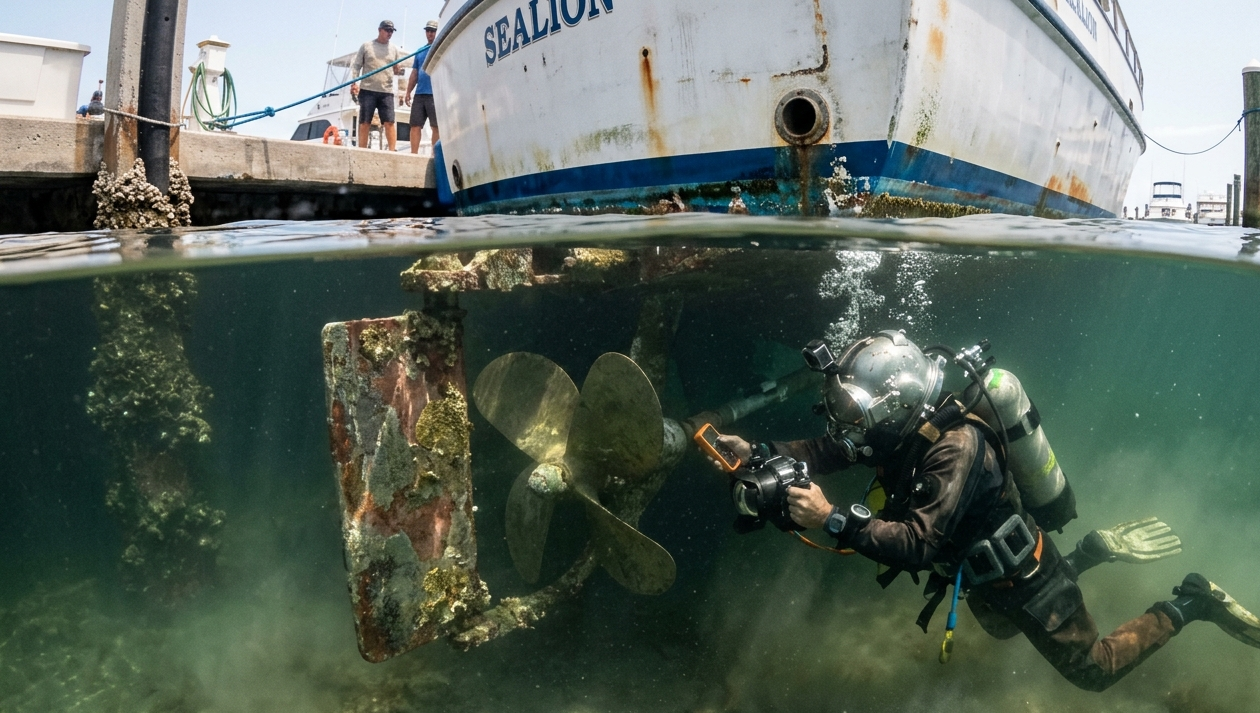
For a commercial charter operator, an underwater inspection is not simply another item on the maintenance calendar. A vessel can look clean at the dock while hidden marine growth, damaged fittings, corroded underwater metal, or propeller and shaft problems create issues that affect safety, performance, and regulatory compliance. A proper commercial charter hull inspection gives operators a closer look below the waterline before those problems become operational surprises.
Whether you operate a passenger vessel, sightseeing boat, fishing charter, water taxi, or another inspected commercial vessel, underwater condition should be part of your maintenance and survey planning. In the United States, the U.S. Coast Guard’s inspection requirements vary by vessel type, service, route, and applicable regulations, so operators should always confirm the specific requirements that apply to their vessel and Certificate of Inspection.
What Is a Commercial Charter Hull Inspection?
A commercial charter hull inspection is a structured examination of the vessel’s underwater hull, appendages, fittings, and other accessible submerged components to identify conditions that may affect vessel safety, regulatory inspections, or continued operation. Depending on the vessel and inspection scope, the examination may support a broader survey, maintenance program, or Coast Guard inspection process.
Unlike a quick visual check from the dock, a professional dive inspection can document the underwater condition of the hull and equipment that cannot be properly assessed from above the waterline.
Why Underwater Inspection Matters for Commercial Charter Vessels
Commercial charter boats often work much harder than privately operated recreational vessels. They may run multiple trips per day, operate from busy marinas, carry passengers regularly, and spend long periods in warm saltwater.
That operating profile creates several underwater maintenance concerns:
- Marine growth on hulls, running gear, and sea chests
- Propeller damage or excessive fouling
- Corrosion around underwater metal components
- Missing or depleted sacrificial anodes
- Damaged rudders, shafts, struts, or brackets
- Condition changes around thru-hulls and other fittings
- Accumulated debris around submerged equipment
A commercial charter hull inspection can identify these issues before a scheduled survey or inspection exposes them at an inconvenient time.
USCG Underwater Inspection and Commercial Vessel Compliance
U.S. Coast Guard requirements are not identical for every commercial charter vessel. Passenger-carrying vessels may fall under different regulatory frameworks depending on their size, passenger capacity, route, construction, and service.
For example, certain small passenger vessels are regulated under Subchapter T of Title 46 of the Code of Federal Regulations. Larger or differently classified passenger vessels can be subject to other regulatory requirements. Operators should therefore use their vessel’s Certificate of Inspection, applicable regulations, and guidance from the local Coast Guard Sector or Marine Safety Unit when determining the required inspection scope.
The Coast Guard provides information on commercial vessel inspections and regulatory requirements through its official marine safety resources. Operators can review U.S. Coast Guard Maritime Safety resources and the applicable 46 CFR regulations when planning compliance work.
What Does a Charter Boat Dive Inspection Look For?
A charter boat dive inspection focuses on accessible underwater areas and components relevant to the agreed inspection scope. The exact checklist should be established before the diver enters the water, especially when the inspection supports a formal survey or regulatory process.
Hull Condition
Divers can inspect accessible portions of the underwater hull for visible damage, excessive fouling, coating deterioration, impact marks, cracks, distortion, or other abnormalities.
For operators, this is where a professional underwater inspection becomes particularly useful. Good documentation can give the vessel owner, manager, surveyor, and maintenance team a common reference point.
Propeller, Shaft, Rudder, and Running Gear
Commercial vessels depend heavily on their propulsion systems. A diver may examine accessible running gear for fouling, visible damage, fishing line, debris, corrosion, or other obvious conditions that warrant further investigation.
Heavy marine growth can also affect propulsion efficiency. When cleaning is appropriate, professional hull cleaning can restore underwater surfaces while reducing unnecessary downtime.
Thru-Hulls and Underwater Fittings
Thru-hulls, strainers, valves, transducers, and related fittings deserve close attention because they form part of the vessel’s underwater systems. A diver may identify fouling, physical damage, corrosion, or blockage that cannot be seen during a normal topside walkaround.
Anodes and Cathodic Protection
Sacrificial anodes are designed to protect compatible underwater metals from galvanic corrosion. A dive inspection can document whether anodes are present, excessively consumed, loose, damaged, or otherwise in need of maintenance.
If replacement is required, our zinc replacement service can address underwater anode maintenance without automatically requiring the vessel to be hauled.
Passenger Vessel Survey Preparation: What Operators Should Document
Good inspection preparation is about more than getting a diver in the water. Commercial operators should know exactly what the surveyor, inspector, or maintenance manager needs documented.
Depending on the scope, useful records can include:
- Vessel identification and inspection date
- Areas inspected and areas that could not be accessed
- Photographs or video of notable underwater conditions
- Observed damage, fouling, corrosion, or missing components
- Anode condition
- Propeller and rudder observations
- Thru-hull and sea chest observations
- Cleaning or repair recommendations
- Previous inspection findings for comparison
When an inspection is being performed specifically for a regulatory or classification purpose, the operator should confirm documentation requirements with the responsible authority or surveyor before the dive. A commercial dive inspection can provide valuable evidence, but it does not automatically replace a required Coast Guard examination, drydock inspection, survey, or other formal inspection.
Common Problems Found During Commercial Boat Maintenance
We regularly see a simple pattern: the underwater components that operators cannot see are often the components that get overlooked.
Excessive Marine Growth
Barnacles, algae, shell growth, and other fouling can increase drag and reduce propulsion efficiency. In severe cases, growth can obstruct underwater openings or interfere with moving equipment.
Depleted Zinc Anodes
Anodes are consumable. Waiting until they are completely gone can leave protected underwater metals vulnerable to corrosion. Their condition should be checked as part of a planned maintenance program rather than only when a problem appears.
Propeller and Shaft Damage
A charter vessel that operates frequently can encounter floating debris, lines, shallow water, or other hazards. Even apparently minor propeller damage can deserve professional attention when vibration, noise, or performance changes are reported.
Damaged or Obstructed Fittings
Marine growth and debris can conceal underwater components. A diver may find conditions that are not apparent from the surface, particularly in turbid water.
Commercial Charter Hull Inspection vs. Routine Hull Cleaning
Inspection and cleaning serve different purposes.
| Service | Primary Purpose |
|---|---|
| Commercial hull inspection | Document underwater condition and identify potential defects or maintenance needs |
| Hull cleaning | Remove marine growth and restore cleaner underwater surfaces |
| Propeller cleaning | Remove fouling from propulsion components and improve surface condition |
| Zinc replacement | Restore sacrificial anode protection when anodes are consumed or damaged |
In practice, these services can work together. An inspection may identify heavy growth, which leads to cleaning. Cleaning may then reveal a damaged component that needs repair or a depleted anode that needs replacement.
DIY vs. Professional Charter Boat Dive Inspection
Owners sometimes ask whether a crew member can simply swim underneath the vessel with a camera. For a casual condition check, that may provide useful information. It should not automatically be treated as equivalent to a documented professional underwater inspection.
Professional divers bring the equipment, underwater experience, communication procedures, documentation practices, and marine knowledge needed to inspect submerged components systematically. They can also recognize when a visible condition requires escalation to a marine engineer, surveyor, shipyard, or other qualified specialist.
For commercial vessels, the stakes are higher because inspection findings can affect maintenance planning, vessel availability, and compliance documentation.
How to Prepare for a Commercial Charter Hull Inspection
Start with the vessel’s current inspection and maintenance records. Review previous underwater findings and note any recurring concerns.
Before the dive, identify:
- The vessel’s regulatory classification and service.
- The purpose of the inspection.
- The exact underwater areas that need examination.
- Any known propulsion, corrosion, or fouling problems.
- Documentation required by the owner, surveyor, or authority.
- Whether cleaning or minor underwater maintenance may be performed during the same visit.
Also make sure the dive team understands the vessel’s operating condition and any hazards associated with the marina, current, visibility, traffic, and underwater equipment.
Common Mistakes Commercial Charter Operators Make
- Waiting for a problem: A vessel does not need to show obvious symptoms before underwater inspection becomes worthwhile.
- Confusing cleaning with inspection: A clean hull is not automatically a documented inspection.
- Ignoring anodes: Anodes should be checked as part of ongoing corrosion-control maintenance.
- Using vague documentation: Photos without location, date, or context can be difficult to use later.
- Assuming every charter vessel follows the same rules: Regulatory requirements depend on vessel classification and service.
- Skipping follow-up: Findings should be tracked until the required repair, cleaning, or replacement is completed.
When Should a Commercial Charter Hull Inspection Be Scheduled?
There is no single inspection interval that applies to every commercial charter vessel. The appropriate schedule depends on the vessel’s regulatory requirements, inspection cycle, operating environment, construction, underwater equipment, and maintenance history.
For vessels operating continuously in warm saltwater, operators may benefit from integrating underwater checks with routine commercial boat maintenance rather than treating them as an isolated annual event.
It is also sensible to consider an underwater inspection after a known grounding, propeller strike, unusual vibration, suspected line entanglement, significant corrosion concern, or other underwater incident.
FAQs About Commercial Charter Hull Inspection
What is included in a commercial charter hull inspection?
A commercial charter hull inspection can include examination of accessible underwater hull surfaces, propulsion components, rudders, shafts, struts, thru-hulls, anodes, transducers, and other submerged equipment. The exact scope should be defined according to the vessel’s needs and the inspection’s purpose.
Does a USCG underwater inspection replace a required Coast Guard inspection?
No. An underwater dive inspection may support maintenance or provide documentation for a broader inspection or survey, but it does not automatically replace a formal Coast Guard examination or any specific inspection required by the vessel’s regulations.
What is a Subchapter T vessel inspection?
Subchapter T contains U.S. Coast Guard regulations applicable to certain small passenger vessels. Requirements vary by vessel characteristics and service, so operators should review the applicable regulations and their vessel’s Certificate of Inspection.
Can a charter boat be inspected underwater without hauling it out?
Some underwater conditions can be examined by qualified divers while a vessel remains afloat. However, certain inspections, repairs, or regulatory requirements may require drydock or haul-out access. The responsible surveyor or authority should determine what examination method is acceptable for the specific requirement.
How often should commercial charter boats receive underwater inspections?
The appropriate interval depends on the vessel, operating environment, maintenance history, regulatory requirements, and purpose of the inspection. Operators should follow their required inspection schedule while using additional underwater checks when operating conditions or known defects justify them.
What should I do if an underwater inspection finds damage?
Document the condition, assess its significance with the appropriate marine professional, and determine whether cleaning, repair, replacement, haul-out, or further technical inspection is required. For regulatory matters, coordinate with the responsible surveyor or Coast Guard authority before assuming the vessel is cleared to operate.
Read More: Explore more practical marine maintenance guidance and underwater service insights in our marine industry articles and stories.
Conclusion
A professional commercial charter hull inspection gives vessel operators a clearer picture of what is happening below the waterline. For passenger vessels and other commercial charter boats, that information can support preventive maintenance, survey preparation, corrosion control, propulsion reliability, and safer vessel management.
The key is to treat underwater condition as part of the vessel’s overall maintenance program rather than something to investigate only after a problem occurs. With accurate documentation, qualified divers, and coordination with the applicable regulatory or survey requirements, operators can address underwater issues before they become larger operational concerns.
Ready to protect your vessel?
If you need expert help with this, our team of certified divers and marine technicians is ready to step in. Learn more about our specific services here.
Prefer to speak with an expert immediately? Contact us today to schedule a service or get a free quote!
