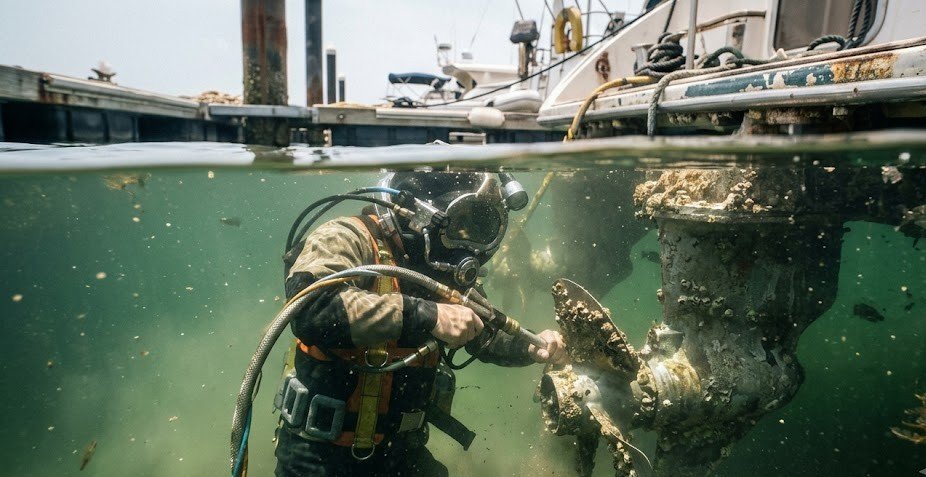
Volvo Penta IPS drives have transformed modern boating by improving fuel efficiency, maneuverability, and onboard comfort. However, because pod drives remain continuously submerged, they are highly susceptible to marine growth. Barnacles, algae, slime, and shell organisms can quickly accumulate on propellers, cooling intakes, and pod housings, reducing performance and increasing maintenance costs. Understanding IPS drive marine fouling is essential for protecting these advanced propulsion systems and maintaining peak vessel efficiency.
Routine underwater cleaning, inspections, and corrosion prevention help ensure IPS-equipped yachts continue delivering the smooth handling and fuel economy they were designed to provide.
What Is IPS Drive Marine Fouling?
IPS drive marine fouling refers to the accumulation of marine organisms such as algae, barnacles, slime, mussels, and shell growth on Volvo Penta IPS pod drives and their underwater components. Left untreated, fouling increases hydrodynamic drag, restricts cooling water flow, reduces propulsion efficiency, and may accelerate corrosion.
Unlike conventional shaft systems, IPS pods contain multiple precision-engineered components that require careful underwater maintenance to avoid damaging seals, propellers, or protective coatings.
According to the International Maritime Organization (IMO), effective biofouling management improves vessel efficiency while helping reduce fuel consumption and the spread of invasive aquatic species.
Why IPS Drives Are More Vulnerable to Marine Growth
IPS propulsion systems feature streamlined underwater housings, forward-facing propellers, steering mechanisms, cooling passages, and multiple exposed surfaces where marine organisms can attach.
Marine fouling commonly develops on:
- Pod housings
- Counter-rotating propellers
- Cooling water intakes
- Steering fins
- Trim surfaces
- Sacrificial anodes
Warm saltwater environments accelerate fouling, making regular maintenance especially important for boats that remain in the water year-round.
How Pod Drive Barnacles Affect Performance
Pod drive barnacles create rough surfaces that disrupt smooth water flow around the propulsion system.
Heavy fouling may result in:
- Reduced top speed
- Higher fuel consumption
- Slower acceleration
- Reduced maneuverability
- Increased engine workload
- Restricted cooling water flow
Even relatively small barnacle colonies can significantly affect the efficiency of precision-engineered IPS systems.
Volvo Penta IPS Maintenance Best Practices
Routine Volvo Penta IPS maintenance combines underwater cleaning with regular inspections and scheduled servicing.
Recommended maintenance includes:
- Routine underwater cleaning
- Propeller inspections
- Anode replacement
- Corrosion monitoring
- Seal inspections
- Cooling intake cleaning
- Manufacturer-recommended service intervals
Volvo Penta recommends following its maintenance schedule to maximize propulsion reliability and system longevity.
Why Professional Pod Drive Cleaning Matters
Professional pod drive cleaning differs from standard hull cleaning because IPS systems contain sensitive propellers, seals, sensors, and painted surfaces that require specialized techniques.
Experienced commercial divers understand how to remove marine growth without:
- Damaging protective coatings
- Scratching polished propellers
- Disturbing shaft seals
- Removing antifouling coatings unnecessarily
- Damaging cooling system components
Professional Cavitation Cleaning provides a highly effective method for removing marine growth from delicate underwater metal components while minimizing surface damage.
The Importance of Underwater Pod Inspection
Routine underwater pod inspection helps identify developing problems before they become expensive repairs.
Professional divers inspect:
- Marine growth accumulation
- Propeller condition
- Seal integrity
- Anode wear
- Protective coatings
- Impact damage
- Corrosion
Professional Underwater Inspection services provide early detection of problems that may otherwise remain hidden until haul-out.
Preventing IPS Drive Corrosion
Along with marine growth, IPS drive corrosion presents another major maintenance concern because pod housings contain aluminum and other underwater metals that require ongoing protection.
Corrosion prevention includes:
- Replacing sacrificial anodes regularly
- Inspecting protective coatings
- Monitoring marina electrical systems
- Maintaining proper bonding systems
- Cleaning marine growth routinely
Professional Zinc Replacement services help ensure sacrificial anodes continue protecting IPS drives against galvanic corrosion.
The American Boat & Yacht Council (ABYC) provides standards for marine electrical systems and corrosion prevention that help protect underwater propulsion components.
Supporting Overall Hull Performance
Keeping IPS drives clean is only part of maintaining peak vessel efficiency.
Routine Hull Cleaning
Professional Hull Cleaning removes marine growth from the hull, reducing drag and improving fuel economy.
Regular Underwater Maintenance
Combining hull cleaning, pod cleaning, underwater inspections, and corrosion protection provides a comprehensive maintenance strategy that maximizes vessel performance.
Common Mistakes Boat Owners Make
- Waiting until heavy barnacle growth develops before cleaning.
- Using abrasive tools on IPS propellers.
- Ignoring worn sacrificial anodes.
- Skipping underwater inspections between haul-outs.
- Failing to inspect cooling water intakes.
- Delaying maintenance after minor grounding impacts.
Frequently Asked Questions
How often should IPS drives be cleaned?
Cleaning frequency depends on water temperature, marine growth rates, and vessel usage. Boats kept in warm saltwater generally require more frequent underwater maintenance.
Can barnacles damage IPS drives?
Yes. Heavy barnacle growth increases drag, restricts cooling water flow, reduces propulsion efficiency, and may contribute to corrosion if left untreated.
Is cavitation cleaning safe for IPS drives?
When performed by experienced professionals using appropriate equipment, cavitation cleaning is an effective method for removing marine growth from sensitive underwater metal components.
Why are sacrificial anodes important on IPS systems?
Sacrificial anodes help protect aluminum pod housings and other underwater metals from galvanic corrosion, making routine replacement an important part of IPS maintenance.
Do IPS drives require underwater inspections?
Yes. Routine underwater inspections help identify fouling, corrosion, seal issues, impact damage, and coating wear before they develop into more serious mechanical problems.
Looking for more expert yacht maintenance advice? Visit our blog for additional guides on underwater inspections, propulsion system care, and professional marine maintenance.
Conclusion
IPS drive marine fouling can significantly reduce the performance, efficiency, and lifespan of modern pod propulsion systems if left unmanaged. Routine pod drive cleaning, underwater inspections, corrosion protection, and scheduled Volvo Penta IPS maintenance help preserve fuel economy, improve maneuverability, and protect one of the most advanced propulsion systems available today. Proactive maintenance not only reduces long-term repair costs but also ensures your yacht continues operating at peak performance.
Ready to protect your vessel?
If you need expert help with IPS drive cleaning or underwater inspections, our team of certified divers and marine technicians is ready to assist. Learn more about our cavitation cleaning services here.
Prefer to speak with an expert immediately? Contact us today to schedule a service or request a free quote.
