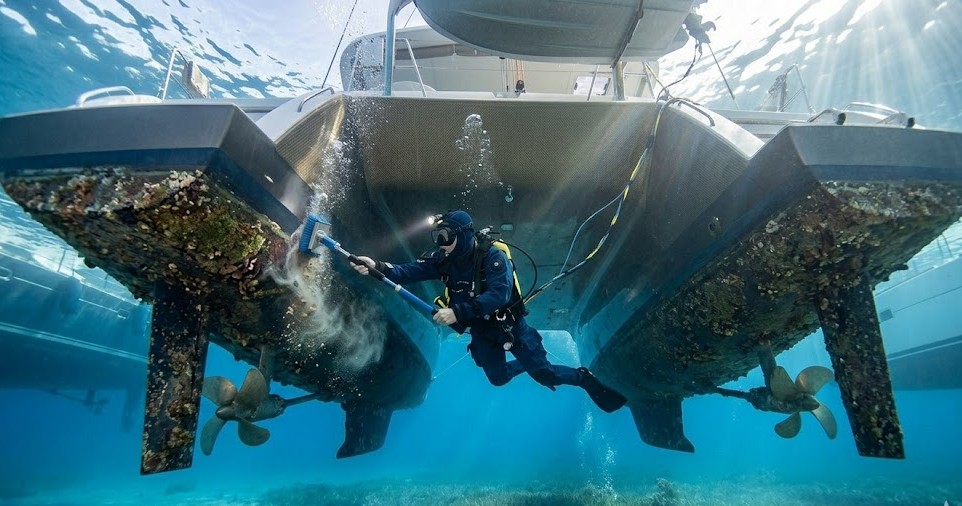
Multihull vessels have transformed modern boating by offering exceptional stability, spacious living areas, shallow draft capabilities, and impressive sailing efficiency. From luxury cruising catamarans to high-performance trimarans, these vessels provide advantages that continue to attract recreational sailors and long-distance cruisers alike.
However, when it comes to underwater maintenance, multihulls present unique challenges that many owners underestimate. The same design features that make these vessels efficient above the waterline can influence how marine growth develops below it.
Understanding how biofouling behaves on catamarans and trimarans is essential for preserving performance, reducing operating costs, and extending the lifespan of underwater coatings. Proper catamaran hull cleaning is not simply a larger version of monohull maintenance—it requires a different approach based on the vessel’s unique hydrodynamic characteristics.
Why Multihulls Experience Biofouling Differently
All vessels are vulnerable to marine growth. Slime, algae, barnacles, mussels, and other fouling organisms naturally attach to submerged surfaces over time.
However, multihulls create different water flow patterns compared to traditional monohulls.
Factors influencing multihull biofouling include:
- Twin or triple hull configurations
- Wider underwater surface area
- Reduced draft profiles
- Unique water circulation zones
- Bridge deck structures
- Additional underwater appendages
These characteristics can create areas where water movement is reduced, encouraging marine organisms to establish themselves more easily.
How Catamaran Design Affects Marine Growth
Catamarans feature two parallel hulls connected by a bridge deck. While this configuration offers remarkable stability and efficiency, it also creates maintenance considerations that differ significantly from monohulls.
Water flow between the hulls can vary depending on vessel speed, loading conditions, and hull design.
As a result, certain areas may accumulate growth faster than others.
Common fouling zones include:
- Inside hull surfaces
- Bridge deck undersides
- Rudder assemblies
- Saildrive units
- Propellers
- Transom sections
Regular catamaran hull cleaning helps address these areas before growth begins affecting vessel performance.
The Impact of Sail Catamaran Draft on Fouling Patterns
One of the most attractive features of a modern cruising catamaran is its relatively shallow draft.
The reduced sail catamaran draft allows access to anchorages, coastal waters, and cruising grounds that may be unavailable to deeper-draft vessels.
However, shallow draft characteristics can influence fouling development.
Because catamarans often spend time in shallow anchorages with warmer water temperatures and higher biological activity, marine growth can accumulate rapidly.
Additionally, prolonged anchoring periods in protected bays often expose hulls to nutrient-rich environments that encourage biofouling.
How Trimarans Differ from Catamarans Below the Waterline
While catamarans feature two primary hulls, trimarans utilize a central main hull accompanied by two smaller outer amas.
This design introduces additional maintenance considerations.
Effective trimaran bottom care requires attention to:
- Main hull surfaces
- Ama structures
- Crossbeam connections
- Centerboards
- Daggerboards
- Rudders
- Folding mechanisms on trailerable designs
The greater number of underwater components increases the total area available for marine growth attachment.
Why Multihull Biofouling Can Impact Performance Faster
Multihulls are often highly sensitive to changes in underwater drag.
Unlike many displacement monohulls that prioritize comfort over speed, performance-oriented catamarans and trimarans rely heavily on efficient hull flow.
Even moderate multihull biofouling can cause:
- Reduced sailing speed
- Poor acceleration
- Increased fuel consumption
- Decreased maneuverability
- Reduced upwind performance
- Greater engine workload
The International Maritime Organization (IMO) recognizes biofouling management as an important factor in vessel efficiency and environmental performance.
Common Fouling Hotspots on Catamarans
Owners often focus primarily on the outer hull surfaces while overlooking areas where growth tends to accumulate most aggressively.
During routine catamaran hull cleaning, special attention should be paid to:
| Area | Why It Fouls Quickly |
|---|---|
| Inside Hull Faces | Variable water circulation |
| Bridge Deck Underside | Reduced sunlight and flow |
| Saildrives | Complex shapes attract growth |
| Propellers | Constant underwater exposure |
| Rudders | High surface area |
| Transoms | Turbulence and stagnation zones |
Ignoring these areas can reduce the effectiveness of an otherwise well-maintained antifouling system.
Understanding Trimaran Bottom Care Requirements
Trimarans often feature additional appendages compared to conventional vessels.
Depending on the design, underwater maintenance may include:
- Daggerboard inspections
- Centerboard cleaning
- Ama hull cleaning
- Rudder maintenance
- Propulsion system inspections
- Crossbeam attachment checks
Routine trimaran bottom care helps ensure that these performance-oriented vessels continue operating at peak efficiency.
How Antifouling Paint Performs on Multihulls
Modern antifouling coatings remain one of the most important defenses against marine growth.
However, coating performance depends on several factors:
- Water temperature
- Vessel usage frequency
- Storage conditions
- Hull cleaning practices
- Local fouling pressure
Multihulls that spend long periods at anchor may experience faster fouling than vessels that operate regularly.
The BoatUS Foundation recommends regular hull inspections to identify fouling before it significantly affects vessel performance.
Comparing Multihull and Monohull Maintenance
| Maintenance Factor | Monohull | Multihull |
|---|---|---|
| Number of Hulls | One | Two or Three |
| Underwater Surface Area | Lower | Higher |
| Bridge Deck Maintenance | Not Applicable | Required |
| Fouling Inspection Complexity | Moderate | Higher |
| Performance Sensitivity | Moderate | Often Higher |
Although maintenance requirements may be more extensive, proactive care helps preserve the advantages that attract owners to multihull vessels in the first place.
Best Practices for Catamaran Hull Cleaning
Consistent maintenance is the most effective strategy for preventing heavy fouling.
Recommended practices include:
- Schedule routine underwater inspections
- Remove slime before barnacles develop
- Inspect saildrives regularly
- Monitor antifouling coating condition
- Clean propellers and rudders
- Evaluate bridge deck growth accumulation
Frequent inspections often reduce the need for aggressive cleaning later.
Common Mistakes Multihull Owners Make
Ignoring the Space Between Hulls
The area between catamaran hulls can accumulate growth that remains unnoticed from dockside inspections.
Cleaning Only Visible Areas
Many performance-impacting fouling zones are hidden beneath the bridge deck or near underwater appendages.
Waiting Too Long Between Inspections
Marine growth can develop quickly, especially in warm-water environments.
Overlooking Saildrive Maintenance
Saildrives are particularly susceptible to fouling and require regular attention.
Frequently Asked Questions
Why is catamaran hull cleaning different from monohull cleaning?
Catamarans have twin hulls, bridge decks, and unique water flow patterns that create additional fouling zones not found on most monohulls.
What causes multihull biofouling?
Marine organisms attach to submerged surfaces over time. Multihull configurations can create areas where growth develops more rapidly due to water circulation patterns.
How does sail catamaran draft affect maintenance?
Shallow draft often allows catamarans to spend extended periods in warm, protected anchorages where marine growth can accumulate quickly.
What is included in trimaran bottom care?
Trimaran bottom care typically includes cleaning and inspecting the main hull, amas, rudders, centerboards, daggerboards, and propulsion components.
How often should a multihull hull be inspected?
Inspection frequency depends on local conditions, vessel usage, and fouling rates, but regular underwater inspections help prevent significant growth accumulation.
Can biofouling affect sailing performance?
Yes. Increased drag from marine growth can reduce speed, increase fuel consumption, and negatively impact overall vessel handling.
Conclusion
While multihulls offer impressive advantages in comfort, stability, and efficiency, they also require specialized underwater maintenance strategies. Effective catamaran hull cleaning involves more than simply removing growth from visible hull surfaces. Owners must consider bridge decks, saildrives, rudders, and the unique fouling characteristics associated with multihull biofouling.
Whether maintaining a cruising catamaran or managing comprehensive trimaran bottom care, regular inspections and proactive maintenance help preserve performance and protect valuable underwater systems. Understanding how sail catamaran draft and multihull design influence fouling patterns allows owners to keep their vessels operating efficiently throughout the boating season.
Schedule Professional Multihull Hull Cleaning Services
Maintaining a clean multihull requires experience, attention to detail, and a thorough understanding of underwater fouling patterns. Professional diving and hull cleaning services can inspect difficult-to-reach areas, remove marine growth safely, and help protect your vessel’s performance. Contact a qualified underwater maintenance specialist today to schedule a catamaran or trimaran inspection and keep your multihull performing at its best.
