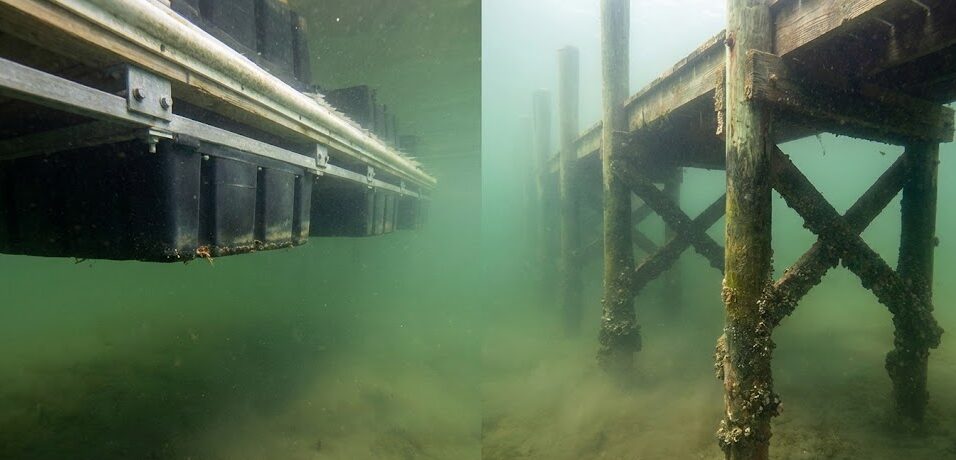
Choosing between a floating dock and a fixed dock is a major decision for waterfront property owners, marinas, and boaters. Beyond cost and appearance, long-term care plays a critical role in overall value. Understanding floating dock vs fixed dock maintenance differences helps you plan upkeep, prevent structural issues, and avoid unexpected repair expenses over time.
This guide breaks down how floating docks and fixed docks differ in maintenance requirements, including piling care, cleaning frequency, inspections, durability, and environmental exposure. By knowing what each dock type demands, you can make a smarter long-term investment.
Understanding Floating Docks and Fixed Docks
Before comparing floating dock vs fixed dock maintenance, it’s important to understand how each dock is constructed and how it interacts with the water.
What Is a Floating Dock?
A floating dock rests on buoyant floats and rises and falls with water levels. It is typically anchored in place but not rigidly fixed to the seabed.
What Is a Fixed Dock?
A fixed dock is supported by pilings driven into the seabed. The dock remains stationary regardless of changing water levels.
Floating Dock vs Fixed Dock Maintenance: Key Differences
Maintenance needs vary significantly between floating and fixed dock systems.
| Maintenance Area | Floating Dock | Fixed Dock |
| Structural support | Floats and connection hardware | Pilings and underwater foundations |
| Underwater maintenance | Moderate | High |
| Cleaning frequency | Moderate | More frequent |
| Storm impact risk | Lower (moves with water) | Higher (rigid structure) |
| Piling inspections | Minimal or none | Critical and recurring |
Floating Dock Maintenance Requirements
Floating dock maintenance focuses primarily on components that enable buoyancy and movement.
Float Inspection and Replacement
Floats should be inspected for leaks, cracking, or water intrusion. Damaged floats reduce stability and can stress the dock frame.
Hardware and Connection Points
Bolts, brackets, and hinge points experience constant movement and should be checked for wear and corrosion.
Marine Growth Removal
Algae and barnacles can attach to floats and frames, increasing drag and weight. Regular cleaning helps maintain performance.
Anchoring Systems
Chains, cables, or guide posts that secure floating docks must be inspected to prevent drift or misalignment.
Fixed Dock Maintenance Requirements
Fixed dock systems demand more intensive long-term maintenance due to their reliance on pilings.
Piling Inspection and Cleaning
Pilings must be inspected above and below the waterline for cracks, corrosion, marine growth, and structural movement.
Marine Growth Control
Barnacles and algae attach aggressively to fixed dock pilings and should be removed regularly to prevent deterioration.
Structural Integrity Checks
Cross braces, beams, and fasteners attached to pilings should be monitored for stress caused by waves and water level changes.
Storm and Wave Damage
Fixed docks absorb the full force of waves and storm surge, making post-storm inspections essential.
Cleaning Frequency: Floating Dock vs Fixed Dock Maintenance
Cleaning schedules differ based on how each dock interacts with water.
- Floating docks: cleaning every 6–9 months in most environments
- Fixed docks: cleaning every 3–6 months in saltwater
Fixed docks require more frequent underwater cleaning because pilings remain constantly submerged.
Cost Differences in Long-Term Maintenance
When evaluating floating dock vs fixed dock maintenance, cost over time is a major factor.
| Cost Factor | Floating Dock | Fixed Dock |
| Routine maintenance | Lower | Higher |
| Underwater services | Occasional | Regular |
| Storm repair risk | Moderate | Higher |
| Long-term durability | Depends on float quality | Very high with proper care |
Environmental Factors That Affect Maintenance Needs
Environmental conditions influence maintenance demands for both dock types.
- Saltwater increases corrosion and marine growth
- Strong currents stress fixed dock pilings
- Fluctuating water levels favor floating docks
- Storm-prone regions increase inspection frequency
According to the Environmental Protection Agency, environmentally responsible dock maintenance helps protect surrounding waterways while extending structure lifespan.
Which Dock Type Is Easier to Maintain?
In most cases, floating docks require less intensive underwater maintenance, while fixed docks offer greater long-term stability but demand consistent piling care. The better choice depends on water conditions, dock usage, and maintenance budget.
For areas with large tidal changes, floating docks are often easier to manage. In high-traffic or commercial settings, fixed docks provide durability but require professional maintenance.
FAQs About Floating Dock vs Fixed Dock Maintenance
Do floating docks require underwater inspections?
Yes, but less frequently than fixed docks. Anchoring and float condition should still be checked regularly.
Are fixed docks more expensive to maintain?
Generally yes, due to piling inspections, cleaning, and storm-related repairs.
Which dock lasts longer?
Fixed docks typically last longer when properly maintained, while floating dock lifespan depends heavily on float quality.
Can marine growth damage floating docks?
Yes. Growth adds weight and stress, making regular cleaning important.
Conclusion
Understanding floating dock vs fixed dock maintenance differences allows dock owners to plan smarter, budget accurately, and protect their waterfront investments. Floating docks offer flexibility and reduced underwater maintenance, while fixed docks provide strength and permanence at the cost of more intensive upkeep.
If you need professional dock maintenance support, contact us today. We also provide Hull Cleaning, Cavitation Cleaning, Zinc Replacement, Underwater Inspections, and Wash & Detailing to keep both floating and fixed dock systems safe, clean, and performing at their best.
