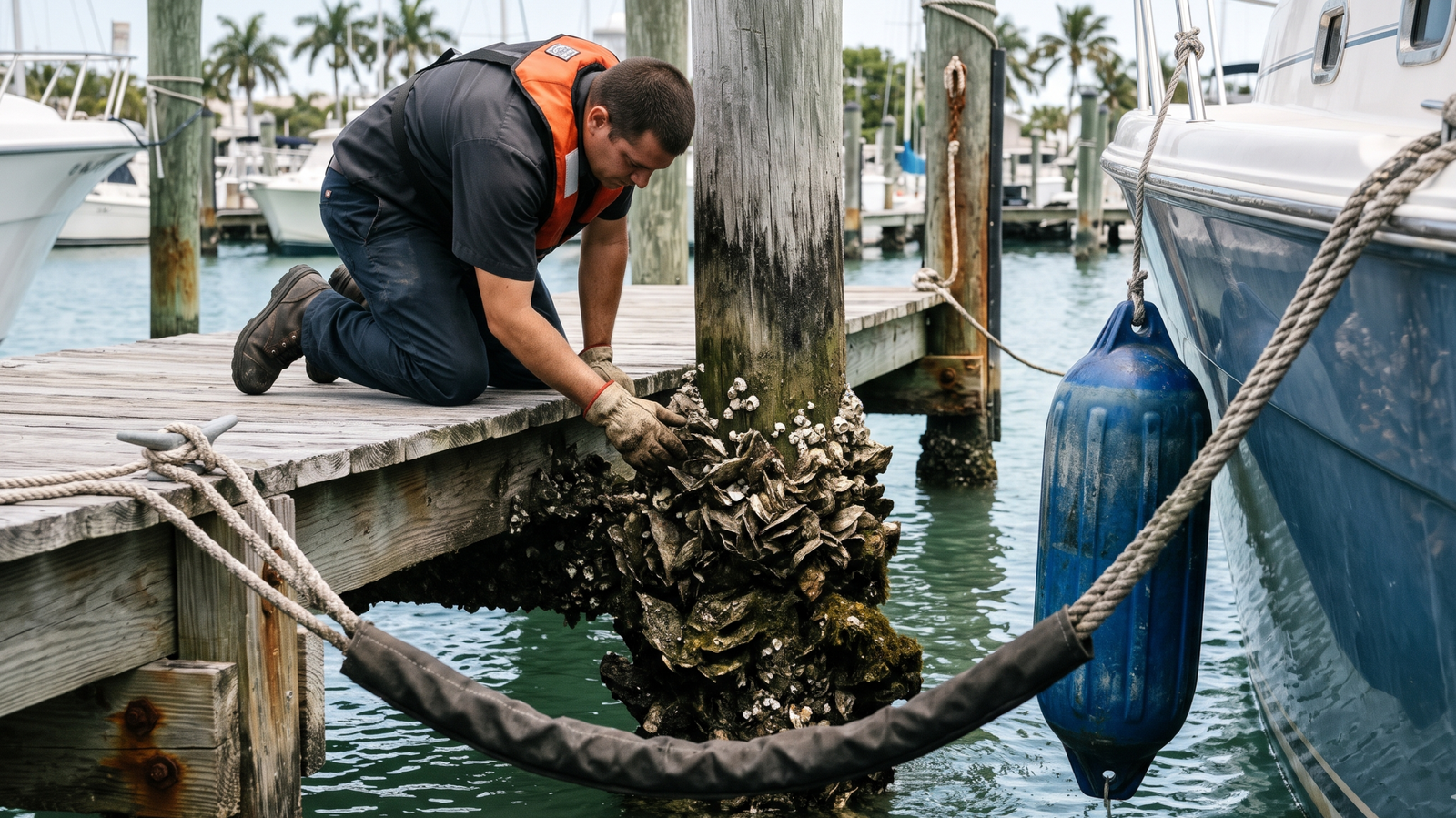
Dock pilings are easy to overlook until a mooring line starts fraying, a fender gets punctured, or you discover sharp oyster shells scraping against your boat. In South Florida, oysters, barnacles, and other marine growth can turn an ordinary piling into an abrasive surface that damages equipment every time the boat moves with wind, wake, or tide.
To reduce damage from oyster shells and barnacles on dock pilings, inspect the areas where your boat, lines, and fenders make contact. Arrange appropriate piling maintenance, use correctly positioned chafe protection, and keep fenders between the hull and rough surfaces. Regular inspections and early maintenance are more effective than waiting until a line or fender is damaged.
Knowing how to keep barnacles off dock pilings is useful, but the goal is not necessarily to make every piling completely free of marine life. The priority is to create a safe, durable contact area while respecting the dock structure, local environmental rules, and established marine habitats.
Why Oyster Shells and Barnacles on Dock Pilings Are a Problem
Oysters and barnacles attach themselves to hard underwater surfaces. As colonies grow, their shells and edges can become irregular, hard, and sharp. When a boat moves against an encrusted piling, those surfaces can act like abrasive cutting points against ropes, inflatable fenders, and hull finishes.
The damage often develops gradually. A line may rub against the same rough section of piling every time the boat rises and falls. A fender may look properly positioned while its outer material repeatedly contacts a sharp shell. Eventually, abrasion can weaken the equipment or create a puncture.
Common damage caused by rough pilings
- Mooring line abrasion: Repeated movement over sharp shell edges can wear through the line’s outer fibers and weaken its construction.
- Inflatable fender punctures: Oyster points and barnacle clusters can damage inflatable fender surfaces when the boat presses against the piling.
- Hull scratches: A boat that swings or shifts against an encrusted piling can suffer scratches, scuffs, and localized finish damage.
- Hidden equipment deterioration: Chafe damage can develop in areas that are difficult to see from the dock, especially below the waterline.
These problems are not limited to hurricane season. Everyday wakes, changing tides, passing vessels, and wind can move a boat enough to create repeated contact.
How to Keep Barnacles Off Dock Pilings
The most practical approach is a planned piling-maintenance program. Inspect the growth around the boat’s contact points, identify sharp or heavily encrusted areas, and arrange suitable cleaning or protective measures before the shells damage lines and fenders. The correct treatment depends on the piling material, condition, location, and environmental restrictions.
1. Inspect the entire contact area
Start with the sections of each piling that your boat or equipment touches. Look above and below the waterline, including the areas where fenders rest and where lines pass around the piling.
Do not assume that a piling is safe simply because its exposed upper section looks smooth. Marine growth can extend below the surface, and the sharpest edges may be hidden underwater. A qualified underwater inspection can help identify growth and damage that cannot be assessed from the dock.
2. Arrange appropriate piling cleaning
When oyster shells and barnacles create a genuine equipment hazard, have the piling assessed to determine whether cleaning is appropriate. The method should account for the material and condition of the piling, the amount of growth, and the surrounding marine environment.
Uncontrolled scraping, aggressive power tools, or chemical treatments can damage surfaces and create environmental problems. Some marine growth may also form part of an established habitat. Before removing it, check applicable marina rules, local requirements, and any restrictions involving protected marine resources.
For dock owners and marina operators, professional piling cleaning services can help assess and address marine growth on submerged dock structures. The appropriate scope should be determined after inspecting the actual piling conditions.
3. Consider suitable protective piling systems
Depending on the dock design, a marine contractor may recommend a purpose-made piling sleeve, wrap, or fender system. These products can provide a smoother contact surface or reduce direct rubbing between the boat and the piling.
However, not every wrap or sleeve is appropriate for every dock. The installation must suit the piling material, diameter, structural condition, water movement, and local environmental requirements. A protective covering should not conceal deterioration or interfere with inspection and maintenance.
How to Stop Dock Pilings from Cutting Boat Lines
Protect mooring lines anywhere they contact rough pilings, cleats, chocks, or other abrasive surfaces. Use properly sized marine chafe guards or suitable hose-style protection, position the protection over the actual rubbing point, and inspect it regularly. Replace damaged or weakened lines rather than relying on a cover to hide existing deterioration.
Use chafe protection at every rubbing point
A line can be damaged where it passes around a piling even if the rest of the rope looks new. Install chafe protection where the line contacts the rough surface, and make sure it stays in position as the boat moves.
Common options include purpose-made marine chafe sleeves, reinforced hose-style guards, and other products designed for mooring-line protection. Choose a product compatible with the line material and expected movement. A loose or poorly positioned guard may slide away from the area that needs protection.
Check line condition instead of relying on appearance
Look for flattened sections, fuzzing, cuts, discoloration, stiffness, and changes in diameter. Pay particular attention to the section hidden beneath a chafe guard. If the rope shows significant damage, have it assessed and replace it when necessary.
For a wider maintenance routine, regular underwater inspections can help identify submerged hazards around the berth before they become more expensive problems.
How to Stop Oyster Shells from Puncturing Inflatable Boat Fenders
Keep inflatable fenders from making direct contact with sharp oyster shells or barnacles. Position them so they remain between the hull and the piling, use suitable fender covers or protective boards where appropriate, and check for leaks, cuts, and abrasion after contact. A fender that repeatedly rubs against an encrusted piling may need repositioning or replacement.
Position fenders for the boat’s actual movement
A fender that hangs too high or too low may leave part of the hull exposed. Check its position at different tide levels and consider how the boat moves when neighboring vessels pass or wakes reach the dock.
Do not assume that adding more inflation will solve the problem. Follow the fender manufacturer’s inflation guidance. Overinflation can place unnecessary stress on the material and fittings.
Use fender boards when appropriate
A properly designed fender board can help spread contact across a wider surface and keep the hull away from an irregular piling. It must be secured and positioned correctly so it does not become a new source of abrasion, entanglement, or impact damage.
Inspect fenders frequently, particularly after windy weather or periods of heavy boat traffic. If an inflatable fender has a puncture, split seam, or persistent air loss, repair or replace it according to the manufacturer’s instructions.
Should You Clean Dock Pilings Yourself?
Minor above-water maintenance may be manageable for a dock owner, but underwater oyster and barnacle removal is not simply a scraping job. Before attempting it, consider water conditions, sharp shells, structural hazards, marine life, and local restrictions. For submerged or heavily encrusted pilings, a qualified marine maintenance professional is generally the safer choice.
DIY cleaning can create several problems:
- Injury risk: Sharp oyster shells can cut hands, arms, and legs. Underwater work adds visibility, current, entanglement, and access hazards.
- Damage to the piling: Aggressive scraping or power tools may damage protective coatings, timber, concrete, or other surfaces.
- Environmental impact: Dislodged shells and growth can affect the surrounding water and habitat. Chemical cleaners and uncontrolled debris disposal create additional concerns.
- Missed structural problems: Removing visible growth does not establish whether a piling is structurally sound. A separate assessment may be needed if deterioration is suspected.
For general guidance on maintaining structures in aquatic environments, consult Fisheries and Oceans Canada’s Code of Practice for In-Water Structures. Although its requirements are Canadian, it illustrates why maintenance methods should account for the structure and surrounding aquatic environment. Florida property owners should also check the rules applicable to their specific location.
Clean Dock Pilings Before Hurricane Season: What Should You Check?
Before hurricane season, inspect the pilings, mooring lines, fenders, and dock attachment points as part of one preparation routine. Address sharp growth that threatens equipment, replace worn lines, and install appropriate chafe protection. If a storm approaches, follow your marina’s plan and official guidance rather than attempting last-minute dock work in unsafe conditions.
Storm conditions can increase boat movement and place additional demands on mooring systems. A line that survives ordinary tidal movement may experience much more severe abrasion and loading during a storm.
Use this pre-season checklist:
- Inspect piling surfaces where lines and fenders make contact.
- Arrange appropriate maintenance for hazardous oyster and barnacle growth.
- Check mooring lines for cuts, worn fibers, and weakened sections.
- Install and inspect chafe protection at all relevant contact points.
- Check fenders for leaks, punctures, worn covers, and damaged attachment points.
- Confirm that the dock, cleats, and piling attachment points are in suitable condition.
- Review your marina’s hurricane procedures and prepare additional lines and fender protection if required.
The Florida Fish and Wildlife Conservation Commission’s storm preparation guidance recommends doubling lines when a vessel must remain in a marina berth, using cross-spring lines, attaching lines high enough to accommodate rising water, and protecting lines against chafe. It also recommends fenders, fender boards, or tires to reduce contact damage.
The National Weather Service advises boaters to prepare before a hurricane warning, not when dangerous conditions are already approaching. Never put yourself at risk by attempting maintenance or line adjustments in unsafe storm conditions.
Safe Dock Tie-Up: A Practical Protection Checklist
A safe tie-up combines suitable mooring lines, effective chafe protection, correctly positioned fenders, and a dock that is in sound condition. Check every point where the boat can rub against the piling, and make sure protective equipment stays in place as water levels and boat movement change.
| Area | What to check | Protective action |
|---|---|---|
| Dock pilings | Sharp oyster shells, barnacles, damaged surfaces | Arrange suitable inspection, cleaning, or an approved protective system |
| Mooring lines | Fuzzing, cuts, flattened fibers, rubbing points | Use correctly positioned chafe protection and replace damaged lines |
| Inflatable fenders | Punctures, leaks, worn covers, poor positioning | Reposition, protect, repair, or replace as appropriate |
| Fender boards | Loose attachments, rough edges, unstable positioning | Secure and inspect the board to prevent additional damage |
| Dock hardware | Loose cleats, damaged fittings, deteriorated attachment points | Arrange repairs before relying on the hardware for storm preparation |
For broader vessel upkeep, UMS also provides underwater hull cleaning, cavitation cleaning, and zinc replacement. These are separate maintenance services, but they can form part of a wider plan to keep a vessel in good working condition.
Frequently Asked Questions
How often should dock pilings be cleaned?
There is no universal cleaning interval for every dock. Marine growth depends on local water conditions, salinity, temperature, exposure, and the piling material. Inspect contact areas regularly and arrange maintenance when growth creates a hazard or when the dock’s maintenance plan calls for it.
Can barnacles and oysters cut through dock lines?
Yes. Repeated rubbing against sharp shells can abrade a rope’s outer fibers and weaken the line. The damage may be concentrated at one contact point, so inspect the full length of each mooring line, especially where it passes around a piling or through dock hardware.
Why do inflatable boat fenders keep getting punctured?
Sharp oyster shells, barnacles, rough piling surfaces, and repeated movement can wear through inflatable fender material. Check the fender’s position, inspect its outer surface, and consider a suitable protective cover or fender board. Follow the manufacturer’s inflation and maintenance instructions.
Can I scrape oysters off dock pilings myself?
Do not assume that scraping is safe or permitted. Sharp shells can cause serious cuts, while aggressive removal can damage the piling and disturb marine habitat. Check local requirements and the dock owner’s rules. Have submerged or extensive growth assessed before choosing a cleaning method.
Should I clean dock pilings before hurricane season?
Inspecting pilings before hurricane season is sensible, especially where sharp growth threatens mooring lines or fenders. Address hazards early, check line condition, and prepare suitable chafe protection. Follow your marina’s hurricane plan and official weather guidance for storm-specific tie-up arrangements.
What is the best way to protect a boat tied to a rough piling?
Keep the hull separated from the piling with correctly positioned fenders or a suitable fender board, and protect mooring lines at every rubbing point. Inspect the setup as tide and wind change. If the piling itself is hazardous, arrange an assessment rather than relying only on extra fenders.
Read More: Marine Maintenance for South Florida Boats
Dockside protection is only one part of maintaining a boat in South Florida’s marine environment. You can also explore our guides and services for boat washing and detailing, underwater maintenance, and other vessel-care needs.
For more practical information, visit the Underwater Marine Services blog.
Protect Your Boat from Sharp Dock Pilings Before Damage Happens
Knowing how to keep barnacles off dock pilings starts with recognizing where marine growth creates a real risk. Sharp oyster shells and barnacles can damage mooring lines, puncture inflatable fenders, and scratch a boat when repeated movement brings equipment into contact with an encrusted piling.
Regular inspections, appropriate piling maintenance, correctly positioned fenders, and effective chafe protection can reduce those risks. Do not wait until a mooring line is nearly worn through or a fender has lost air. Address rough contact areas early and make piling condition part of your regular dockside maintenance routine.
If you have hazardous marine growth around your berth or need help assessing submerged dock conditions, contact Underwater Marine Services to discuss the situation and the appropriate maintenance approach.
Contact Underwater Marine Services to discuss your dockside maintenance needs.
