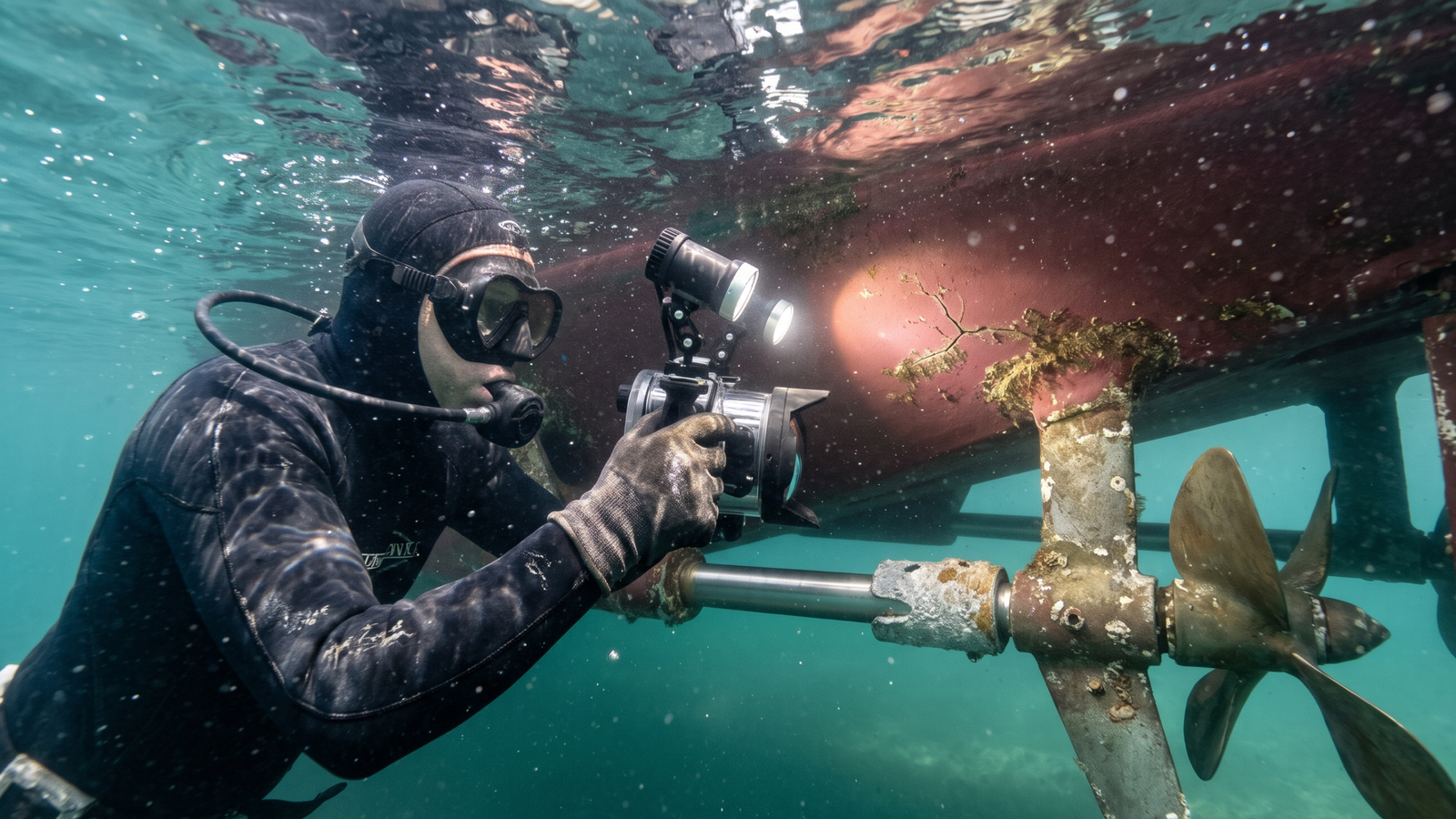
Buying a used boat can look straightforward when the vessel is sitting cleanly in a marina slip. The gelcoat shines, the interior looks well maintained, and the engines may sound perfectly healthy during a test run. But what is happening underneath the waterline? A damaged propeller, leaking through-hull fitting, deteriorated anode, or poorly repaired fiberglass section can turn an exciting purchase into an expensive repair project.
A pre purchase boat inspection should include an underwater assessment before you finalize the transaction. A professional commercial diver can examine accessible submerged surfaces, document hull damage, inspect running gear, and provide underwater photographs or video. This additional inspection helps buyers identify potential problems that may not be visible during a conventional dockside inspection or sea trial.
If you are buying a center console, sportfish, cruiser, or yacht in South Florida, arranging an underwater inspection before the final marine survey can give you a clearer picture of the vessel’s condition.
Why Hire an Underwater Diver Before Buying a Boat?
A conventional pre-purchase marine survey examines the vessel’s overall condition, including accessible structural components, machinery, electrical systems, safety equipment, and onboard installations. However, if the boat remains in the water, the surveyor may have limited access to the entire underwater hull.
An underwater diver provides a closer look at the submerged components. This can reveal visible damage, marine growth, corrosion, and signs of previous repairs that deserve further investigation.
The two inspections serve different purposes and work best together.
What a commercial diver can identify underwater
- Fiberglass cracks, visible impact damage, and damaged gelcoat.
- Osmotic blisters or other visible surface abnormalities.
- Damaged, bent, or visibly distorted propeller blades.
- Corrosion and deterioration around shafts, struts, and rudders.
- Loose, missing, or heavily consumed sacrificial anodes.
- Marine growth covering important hull areas.
- Visible damage around accessible through-hull fittings.
- Signs of previous underwater repairs or patching.
An underwater inspection documents observable conditions, not hidden structural integrity. A diver cannot establish the full extent of internal delamination, concealed moisture damage, or structural defects through visual inspection alone.
Pre-Purchase Marine Survey vs. Underwater Diver Inspection
One of the biggest mistakes buyers make is assuming that a marine survey and an underwater inspection are interchangeable. They are not. A marine surveyor evaluates the broader condition and value of the vessel, while a commercial diver focuses on accessible underwater components.
| Inspection Area | Marine Surveyor | Underwater Diver |
|---|---|---|
| Interior and accommodation | Yes | No |
| Engine and machinery assessment | Within agreed scope | Limited external observations |
| Electrical and onboard systems | Within agreed scope | No |
| Submerged hull surface | Limited if not hauled | Yes, visually accessible areas |
| Propeller and shaft inspection | Depends on access | Yes, visual assessment |
| Underwater anode condition | Depends on access | Yes, visual assessment |
| Sea trial and vessel operation | Within agreed scope | No |
| Overall condition and valuation report | Yes | No |
The American Boat and Yacht Council explains that a pre-purchase survey is a comprehensive condition-and-valuation assessment. It can include operational testing and a sea trial, depending on the agreed scope.
Read the ABYC guide to surveying a boat before arranging your purchase inspection.
What Does an Underwater Pre-Purchase Boat Inspection Include?
A useful underwater inspection should follow a consistent process. The diver examines accessible underwater surfaces, documents notable findings, and communicates observations in a way that helps the buyer and marine surveyor understand the vessel’s condition.
1. Hull condition and fiberglass damage
The hull is the first area buyers should investigate. Look for visible cracks, impact marks, damaged gelcoat, previous patches, exposed laminate, and suspicious areas around the keel or chines.
For fiberglass boats, visible osmotic blisters may also deserve attention. These can appear as raised areas beneath the gelcoat and may indicate moisture-related deterioration. However, determining the extent of underlying damage requires further assessment by an appropriately qualified surveyor or repair specialist.
2. Propeller and running gear inspection
Propeller damage can affect vibration, performance, and mechanical reliability. A diver can examine accessible propeller blades for visible bends, missing material, impact marks, fishing-line entanglement, and corrosion.
The inspection should also cover accessible shaft assemblies, struts, rudders, and trim tabs. A damaged shaft or misaligned running gear may require additional mechanical testing after the underwater inspection.
Our underwater cavitation and running-gear cleaning services provide additional information about maintaining these submerged components.
3. Sacrificial anodes and corrosion protection
Check the condition of the vessel’s zinc or aluminum sacrificial anodes. These components are designed to corrode preferentially, helping protect more valuable underwater metals from galvanic corrosion.
Look for anodes that are heavily depleted, loose, missing, or incorrectly installed. Also check for visible corrosion around connected underwater hardware.
A diver can document visible anode condition, but diagnosing the entire cathodic protection system may require electrical testing by a qualified marine technician.
Learn more about professional zinc replacement and anode maintenance.
4. Through-hull fittings and underwater openings
Through-hull fittings allow water to enter or leave the vessel through the bottom or sides of the hull. They may serve cooling systems, drainage, air conditioning, and other onboard equipment.
During an underwater inspection, the diver can examine accessible exterior fittings for visible corrosion, damage, loose-looking components, and signs of leakage. Internal valve condition and sealing integrity require additional inspection from inside the vessel or through appropriate testing.
5. Marine growth and previous cleaning damage
Heavy barnacle growth can hide portions of the hull and make it difficult to identify underlying damage. It can also reveal how long the vessel may have been sitting without regular maintenance.
Before drawing conclusions, distinguish between marine growth and actual surface damage. If cleaning is needed to expose the hull properly, arrange suitable cleaning and reassessment before the final condition evaluation.
Our South Florida underwater hull cleaning services can help prepare accessible surfaces for inspection when appropriate.
Why Underwater Video Inspection Matters to Boat Buyers
Photographs and underwater video provide useful visual evidence of the vessel’s condition at the time of inspection. They allow buyers to review findings after the diver has left the water and share relevant observations with their marine surveyor.
A good video should show identifiable vessel locations, relevant underwater components, and any visible defects clearly enough for later review.
What should the video document?
- The forward hull and bow sections.
- Port and starboard underwater surfaces.
- The keel, bottom, and accessible chines.
- Propellers, shafts, rudders, and struts.
- Visible anodes and underwater metal fittings.
- Through-hull fittings and other accessible openings.
- Close-up footage of suspicious cracks, impact marks, or repairs.
Video quality depends on visibility, lighting, water movement, and marine growth. Poor visibility should be recorded as a limitation rather than presented as evidence that the hull is in good condition.
For a meaningful assessment, ask the diver to provide clear observations alongside the footage rather than sending an unlabelled collection of underwater clips.
When Should You Schedule the Diver Before the Marine Survey?
Ideally, arrange the underwater inspection after the initial viewing and before the final purchase decision. This gives you an opportunity to identify visible underwater concerns before investing in additional survey expenses or negotiating the final price.
A practical sequence for buyers is:
- Initial vessel viewing: Inspect the boat, review its history, and discuss the seller’s maintenance records.
- Underwater diver inspection: Document accessible hull surfaces, running gear, anodes, and visible underwater defects.
- Review findings: Share relevant photographs and video with your independent marine surveyor.
- Professional marine survey: Arrange a comprehensive condition-and-valuation assessment and sea trial as appropriate.
- Haul-out if required: Examine the exposed hull, keel, running gear, and other components that cannot be properly evaluated underwater.
- Purchase negotiations: Use the combined findings to discuss repairs, further testing, or adjustments to the purchase price.
This sequence can help identify major concerns early, although scheduling should remain flexible. Your surveyor may recommend a haul-out before or after the diver’s inspection depending on the vessel and the suspected problems.
When Is a Haul-Out Still Necessary?
An underwater diver inspection is valuable, but it cannot replace a proper out-of-water examination when the vessel’s condition requires one. Certain structural and mechanical problems need direct access to the exposed hull.
A haul-out may be recommended when:
- The hull has suspected cracks, structural damage, or significant impact history.
- There are visible signs of blistering or possible laminate deterioration.
- The keel attachment or keel-to-hull joint needs closer examination.
- The shaft, propeller, rudder, or bearings require detailed measurement.
- Heavy marine growth prevents meaningful visual inspection.
- The buyer or marine surveyor needs percussion sounding or other out-of-water testing.
The U.S. Coast Guard’s 2025 underwater survey guidance discusses the importance of hull cleanliness, visibility, inspection procedures, and equipment when conducting formal underwater examinations of applicable vessels.
That guidance concerns regulated underwater surveys and should not be confused with a routine recreational boat buyer’s inspection. It nevertheless demonstrates why underwater visibility and proper inspection procedures matter.
Common Boat Buying Mistakes an Underwater Diver Can Help Prevent
Buyers often concentrate on engines, electronics, interiors, and appearance while overlooking the underwater equipment that keeps the vessel moving safely.
Trusting a clean-looking hull
A freshly cleaned hull is not proof of structural integrity. Marine growth removal may improve visibility, but cracks, repairs, and damage still need proper examination.
Ignoring propeller and shaft damage
Small-looking blade damage can cause vibration or indicate a previous underwater impact. A diver can document visible problems before a buyer commits to the purchase.
Assuming a marine survey includes everything
Survey scopes differ. Some surveyors recommend a haul-out, while others conduct inspections with the vessel in the water. Buyers should confirm exactly which underwater components will be examined and which limitations apply.
Buying without reviewing underwater evidence
Verbal assurances from a seller or broker are not a substitute for independent observations. Request photographs, video, and written findings that can be reviewed with your surveyor.
Frequently Asked Questions
Should I hire an underwater diver before buying a boat?
Yes, an underwater inspection can be a valuable additional step before purchasing a used boat. A commercial diver can examine accessible submerged surfaces, propellers, shafts, rudders, anodes, and visible hull damage. The findings help you decide whether further testing or a haul-out is necessary.
Does an underwater diver inspection replace a marine survey?
No. An underwater diver focuses on submerged hull surfaces and accessible running gear. A marine surveyor evaluates the broader condition of the vessel, including its structure, machinery, electrical systems, safety equipment, and valuation within the agreed survey scope. Both inspections provide different information.
What does a pre-purchase underwater inspection check?
A typical inspection checks accessible hull surfaces, visible cracks, impact damage, marine growth, propellers, shafts, rudders, struts, sacrificial anodes, and underwater fittings. Photographs or video can document notable findings. Hidden structural damage and internal mechanical conditions require additional testing.
Can an underwater diver find fiberglass hull damage?
A diver can identify visible fiberglass damage, including cracks, impact marks, damaged gelcoat, exposed laminate, and suspicious previous repairs. However, visual inspection cannot confirm the full extent of internal delamination or moisture damage. Further assessment by a qualified marine surveyor may be necessary.
Should a boat be hauled out before purchasing it?
A haul-out is recommended when the buyer or surveyor needs direct access to the exposed hull, keel, propeller, rudder, or other underwater components. It allows closer examination and testing that may not be possible underwater. Whether it is necessary depends on the vessel’s condition and inspection findings.
Is underwater video inspection useful when buying a yacht?
Yes. Underwater video provides visual documentation of accessible submerged components and helps buyers review potential problems after the inspection. It can also be shared with a marine surveyor. Video quality depends on water clarity, lighting, and access, so it should accompany written observations.
Read More: Professional Underwater Marine Maintenance
Understanding a vessel’s underwater condition is an important part of responsible ownership and maintenance. Explore our marine maintenance articles and underwater inspection resources for more practical information about protecting boats and yachts.
Make a More Informed Boat Purchase with an Underwater Inspection
A pre purchase boat inspection should look beyond the vessel’s appearance above the waterline. Visible hull damage, deteriorated anodes, propeller problems, and previous underwater repairs can all influence the cost and suitability of a boat purchase.
Hiring a commercial diver before finalizing your purchase gives you an additional set of eyes on the submerged components. Combined with an independent marine survey, a sea trial, and a haul-out when necessary, an underwater inspection can help you make a better-informed buying decision.
At Underwater Marine Services, we provide professional underwater inspection and marine maintenance services throughout South Florida. If you are considering purchasing a boat in Fort Lauderdale, Miami, or surrounding areas, contact our team to discuss an underwater inspection.
Buying a Boat? Inspect Below the Waterline First.
Before you commit to your next boat or yacht, arrange an underwater inspection to document the condition of its hull, propeller, running gear, and underwater fittings.
