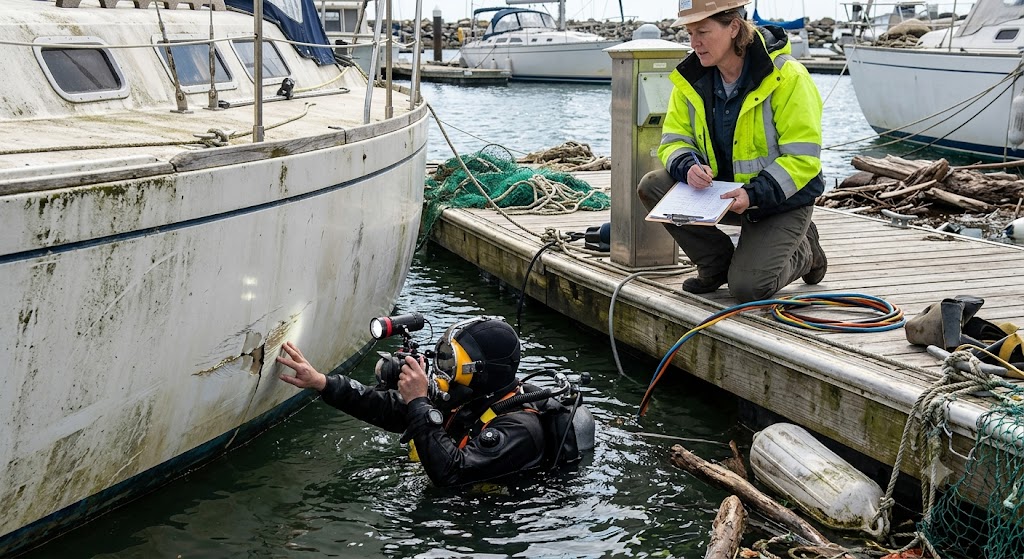
Discovering damage to your boat after a collision, grounding, hurricane, or severe storm can be overwhelming. While topside damage is often easy to spot, many of the most expensive problems lie beneath the waterline. That’s why a marine insurance underwater inspection is one of the most important steps in documenting damage, supporting your insurance claim, and ensuring your vessel is safe to operate.
Whether you own a recreational boat, sportfishing vessel, yacht, or commercial craft, understanding what happens during an underwater assessment helps you work more effectively with your insurer, marine surveyor, and repair professionals. A thorough inspection not only strengthens your claim but can also uncover hidden structural damage before it becomes a much larger—and more costly—problem.
What Is a Marine Insurance Underwater Inspection?
A marine insurance underwater inspection is a professional dive assessment that documents the condition of a vessel’s submerged hull, propulsion system, rudders, trim tabs, through-hull fittings, and other underwater components following an accident or loss. The inspection provides visual evidence that insurers, marine surveyors, and repair facilities use to evaluate damage and determine appropriate repairs.
Unlike a standard maintenance dive, insurance inspections focus on identifying damage, collecting photographic evidence, and recording findings that support the claims process.
The U.S. Coast Guard Boating Safety Division encourages boat owners to inspect vessels thoroughly after collisions, groundings, or severe weather before returning them to service.
When Is an Underwater Insurance Inspection Needed?
Insurance companies commonly request an underwater assessment whenever damage below the waterline is suspected. Even if your boat appears undamaged above the surface, underwater impacts can compromise structural integrity and propulsion systems.
Common situations include:
- Grounding on sandbars, reefs, or rocks
- Collision with another vessel or submerged object
- Hurricane or tropical storm damage
- Docking accidents
- Floating debris strikes
- Suspected propeller or shaft damage
- Insurance claim investigations
Promptly scheduling a professional Underwater Inspection can help preserve valuable evidence before additional marine growth obscures the damage.
What Does the Inspection Include?
A professional boat damage claim dive follows a systematic process to ensure all critical underwater components are evaluated.
Hull Examination
Divers inspect the hull for cracks, punctures, delamination, abrasions, blistering, and structural deformation. Even seemingly minor impacts can produce hidden damage beneath antifouling coatings.
Propellers and Running Gear
Propellers, shafts, struts, rudders, trim tabs, and stabilizers are carefully examined for bending, cracks, impact marks, and corrosion that may affect safe operation.
Through-Hull Fittings
Seacocks, intakes, transducers, and discharge fittings are inspected for damage that could lead to leaks or system failures.
Photographic Documentation
High-resolution underwater photographs and videos provide visual evidence that supports both insurance adjusters and repair estimates.
How Marine Surveyors Use Underwater Inspection Reports
A marine surveyor underwater assessment often relies on professional dive reports to complement topside inspections. Since surveyors cannot always inspect every submerged component firsthand, detailed diver documentation helps verify damage and prioritize repairs.
Inspection reports may include:
- Photographs of damaged areas
- Video documentation
- Descriptions of observed damage
- Condition of underwater coatings
- Running gear evaluation
- Recommendations for haul-out or further inspection
Organizations such as National Association of Marine Surveyors (NAMS) recognize the importance of comprehensive vessel inspections when assessing marine damage.
Post-Storm Boat Assessments: Why Timing Matters
A post-storm boat assessment should be performed as soon as it is safe to access the vessel after hurricanes, tropical storms, or severe weather.
Storms often create underwater hazards that are not immediately visible, including:
- Impact damage from floating debris
- Bent propellers
- Misaligned shafts
- Hull abrasions
- Damaged rudders
- Dislodged through-hull fittings
Prompt documentation also helps establish that the damage occurred during the insured event, simplifying the claims process.
The National Oceanic and Atmospheric Administration (NOAA) provides storm preparedness and recovery guidance for recreational boat owners operating in coastal waters.
What Happens After a Hurricane Boat Damage Report?
Preparing a thorough hurricane boat damage report involves more than taking a few photographs. Insurance carriers often require documentation from qualified professionals before approving repairs.
The typical process includes:
- Notify your insurance company immediately.
- Avoid operating the vessel if underwater damage is suspected.
- Schedule a professional underwater inspection.
- Collect photographs and inspection reports.
- Coordinate with your marine surveyor and repair facility.
- Obtain repair estimates if required by your insurer.
Professional documentation helps minimize disputes while providing a clear record of the vessel’s condition.
Supporting Maintenance After the Inspection
Once repairs are completed, preventative maintenance helps restore performance and protect the vessel from future issues.
Hull Cleaning
Professional Hull Cleaning removes marine growth that can conceal damage and reduce vessel efficiency.
Cavitation Cleaning
For underwater running gear affected by fouling, Cavitation Cleaning safely restores propellers and other delicate metal components.
Zinc Replacement
Impact damage sometimes exposes underwater metals to accelerated corrosion. Routine Zinc Replacement helps restore corrosion protection after repairs.
Common Mistakes During Marine Insurance Claims
- Continuing to operate the vessel before documenting damage.
- Waiting too long to schedule an underwater inspection.
- Failing to photograph submerged damage.
- Ignoring minor propeller or rudder impacts.
- Cleaning damaged areas before documentation is complete.
- Skipping follow-up inspections after repairs.
Frequently Asked Questions
What is included in a marine insurance underwater inspection?
A marine insurance underwater inspection evaluates the hull, propellers, shafts, rudders, trim tabs, through-hull fittings, and other submerged components while documenting damage with photographs and written observations to support an insurance claim.
Do I need an underwater inspection after a hurricane?
Yes. Even if no visible topside damage exists, hurricanes can cause hidden underwater damage from debris, groundings, or impacts that should be documented before operating the vessel again.
Can underwater inspection reports support insurance claims?
Yes. Professional dive reports provide photographic evidence and detailed observations that assist insurance adjusters, marine surveyors, and repair facilities during the claims process.
Should I clean my hull before an insurance inspection?
No. Cleaning the hull before documentation may remove evidence that helps establish the cause and extent of damage. Follow your insurer’s guidance before performing maintenance.
How quickly should I schedule an underwater assessment?
As soon as conditions are safe. Early inspections preserve evidence, simplify claim documentation, and help prevent additional damage from going unnoticed.
Looking for more boating maintenance tips and underwater service guides? Visit our blog for expert insights and practical advice.
Conclusion
A marine insurance underwater inspection provides the detailed documentation needed to support insurance claims while protecting your vessel from overlooked damage. Whether you’re dealing with a collision, grounding, or hurricane-related incident, professional underwater assessments help identify structural problems, strengthen claim documentation, and guide effective repairs. Acting quickly after an incident ensures your insurer receives accurate information and helps get your boat safely back on the water.
Ready to protect your vessel?
If you need expert help with this, our team of certified divers and marine technicians is ready to step in. Learn more about our specific services here.
Prefer to speak with an expert immediately? Contact us today to schedule a service or get a free quote!
