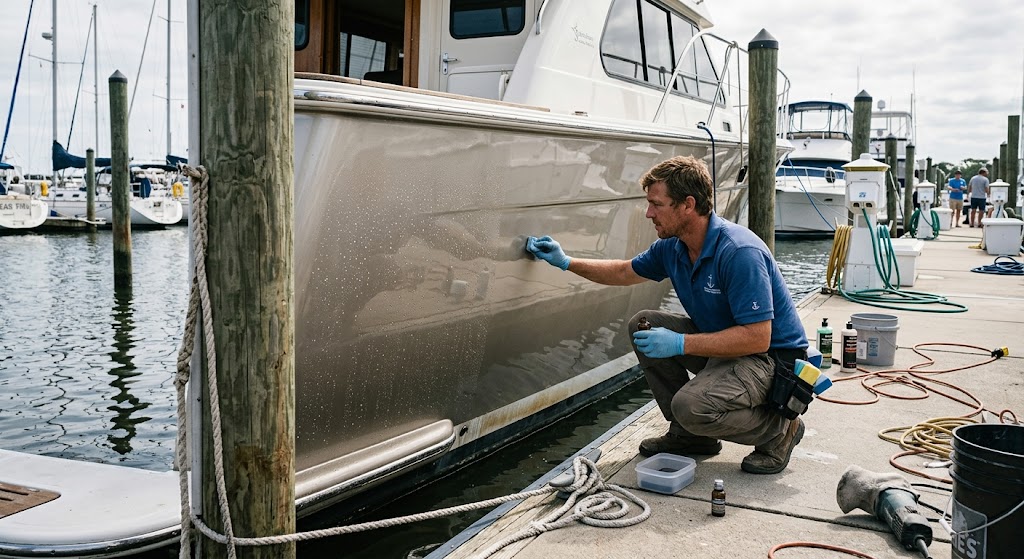
A boat’s gelcoat is constantly exposed to harsh sunlight, salt spray, oxidation, airborne contaminants, and waterborne pollutants. Over time, these elements dull the finish, reduce resale value, and make routine cleaning more difficult. Boat owners looking for lasting protection often compare marine ceramic coating vs wax to determine which solution offers the best balance of durability, appearance, and maintenance.
While traditional carnauba wax has protected boats for decades, modern ceramic coatings have introduced a new level of long-term surface protection. Understanding how each option performs helps you choose the right solution based on your boating habits, climate, and maintenance expectations.
Marine Ceramic Coating vs. Wax: What’s the Difference?
Marine ceramic coating and traditional carnauba wax both protect a boat’s exterior, but they work differently. Carnauba wax creates a temporary protective layer that enhances shine for several months, while marine ceramic coatings chemically bond to the gelcoat, providing longer-lasting protection against UV rays, oxidation, salt, water spots, and environmental contaminants with less frequent maintenance.
Both products improve appearance, but their longevity, durability, and maintenance requirements vary significantly.
Manufacturers such as Meguiar’s and System X offer marine protection products designed specifically for harsh marine environments.
Understanding Boat Gelcoat Protection
The gelcoat is the outer protective surface applied to most fiberglass boats. It provides color, gloss, and protection for the fiberglass laminate beneath. However, prolonged exposure to ultraviolet radiation, saltwater, and pollution gradually breaks down this protective layer.
Without proper gelcoat protection, boat owners may experience:
- Oxidation and fading
- Chalking surfaces
- Loss of gloss
- Water staining
- Increased dirt buildup
- More difficult cleaning
The NOAA National Ocean Service notes that saltwater environments accelerate weathering and material degradation, making preventative maintenance especially important for vessels kept in the water.
How Traditional Carnauba Wax Protects Boats
Long lasting boat wax products containing premium carnauba create a sacrificial barrier between the gelcoat and the environment. They enhance gloss while helping repel water, salt deposits, and airborne contaminants.
Advantages of Carnauba Wax
- Rich, warm shine
- Easy to apply
- Lower upfront cost
- Excellent for seasonal maintenance
- Widely available
Limitations
- Typically lasts only a few months
- Requires frequent reapplication
- Less resistant to detergents and UV exposure
- Can wear away quickly in tropical climates
How Marine Ceramic Coatings Work
Boat nano coating technology uses advanced ceramic compounds that bond directly to the gelcoat surface, forming a durable protective layer instead of simply sitting on top like traditional wax.
Professional ceramic coating for boats provides:
- Exceptional water repellency
- Superior stain resistance
- Long-term gloss retention
- Improved resistance to oxidation
- Easier routine cleaning
- Enhanced UV protection gelcoat
Many ceramic coatings also reduce the adhesion of salt, bird droppings, fuel residue, and environmental contaminants, making regular washing considerably easier.
Marine Ceramic Coating vs. Wax Comparison
| Feature | Marine Ceramic Coating | Traditional Carnauba Wax |
|---|---|---|
| Durability | One to several years* | Several weeks to months |
| UV Protection | Excellent | Good |
| Water Repellency | Excellent | Moderate |
| Gloss Retention | Long-lasting | Requires frequent reapplication |
| Maintenance | Lower | Higher |
| Application Cost | Higher initial investment | Lower initial cost |
*Actual lifespan depends on product quality, preparation, environmental conditions, and maintenance.
Which Boats Benefit Most from Ceramic Coatings?
Ceramic coatings are particularly beneficial for:
- Luxury yachts
- Offshore fishing boats
- Center consoles
- Performance boats
- Cruising sailboats
- Boats stored outdoors year-round
Owners who spend significant time on the water often appreciate reduced cleaning time and longer-lasting surface protection.
Proper Surface Preparation Is Essential
Regardless of the protective product you choose, preparation determines the quality of the final result.
Before applying ceramic coatings or wax, professionals typically:
- Wash the vessel thoroughly
- Remove salt deposits
- Eliminate oxidation
- Correct surface imperfections if necessary
- Ensure the gelcoat is clean and dry
Routine Boat Wash & Detailing helps maintain the protective finish while extending the life of both ceramic coatings and wax.
Protecting the Entire Vessel
Exterior protection should be combined with regular underwater maintenance to keep the entire boat performing at its best.
Hull Maintenance
Professional Hull Cleaning removes marine growth that increases drag and fuel consumption.
Running Gear Cleaning
Specialized Cavitation Cleaning restores propellers and underwater metal components without damaging delicate surfaces.
Corrosion Protection
Routine Zinc Replacement helps protect underwater metals from galvanic corrosion.
Common Mistakes Boat Owners Make
- Applying ceramic coatings over oxidized gelcoat.
- Waxing without thoroughly cleaning the surface first.
- Using automotive products not designed for marine environments.
- Ignoring routine washing after applying protective coatings.
- Assuming ceramic coatings eliminate all maintenance.
- Skipping underwater maintenance while focusing only on cosmetic appearance.
Frequently Asked Questions
Is ceramic coating better than wax for boats?
For many boat owners, yes. Ceramic coatings generally provide longer-lasting protection, superior UV resistance, and easier cleaning than traditional wax, although they require greater initial investment and careful application.
How long does marine ceramic coating last?
Longevity varies depending on the product, application quality, storage conditions, and maintenance routine. Professional-grade coatings typically outlast traditional wax by a significant margin.
Can ceramic coating prevent gelcoat oxidation?
Ceramic coatings help reduce oxidation by shielding the gelcoat from UV radiation and environmental contaminants, but regular cleaning and maintenance remain important.
Is traditional carnauba wax still a good option?
Absolutely. High-quality marine wax remains an excellent choice for owners who enjoy routine detailing or prefer a lower upfront investment with seasonal reapplication.
Do ceramic-coated boats still need washing?
Yes. Ceramic coatings make cleaning easier by reducing contaminant adhesion, but routine washing is still necessary to remove salt, dirt, and other marine deposits.
For more expert boating maintenance advice, detailing tips, and underwater service guides, visit our blog.
Conclusion
Choosing between marine ceramic coating vs wax depends on your maintenance goals, budget, and how you use your boat. Traditional carnauba wax delivers an attractive finish with lower upfront cost, while ceramic coatings provide exceptional long-term protection, superior UV resistance, and easier maintenance. Regardless of your choice, combining topside protection with regular underwater maintenance helps preserve your boat’s appearance, performance, and long-term value.
Ready to protect your vessel?
If you need expert help with this, our team of certified divers and marine technicians is ready to step in. Learn more about our specific services here.
Prefer to speak with an expert immediately? Contact us today to schedule a service or get a free quote!
