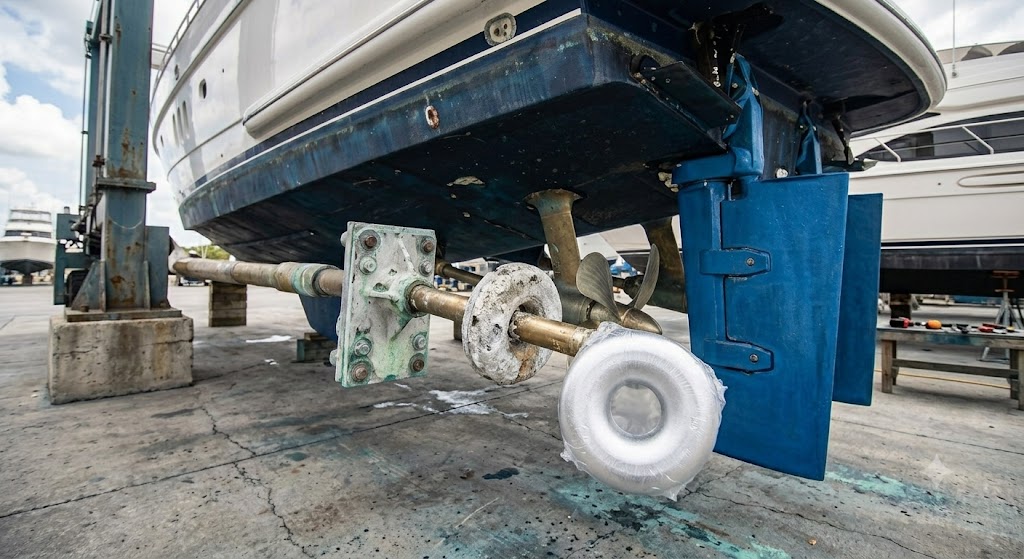
Sacrificial zinc anodes are one of the least expensive yet most important components protecting your boat below the waterline. Installed on propeller shafts, saildrives, trim tabs, rudders, and other underwater metals, these anodes sacrifice themselves to prevent galvanic corrosion from attacking expensive marine hardware.
However, many boat owners unknowingly wait too long before replacing them. A common misconception is that an anode should be used until it has almost completely disappeared. In reality, experienced marine technicians recommend following the replace zinc anodes early principle—often referred to as the “50 Percent Rule.”
Once an anode has lost approximately half of its original mass, its ability to provide consistent corrosion protection begins to decline. Replacing it before it becomes heavily depleted helps maintain reliable protection for your propeller, shaft, and other underwater components.
This guide explains why the 50 Percent Rule matters, how zinc anodes work, and how routine inspections can save thousands of dollars in underwater repairs.
What Are Sacrificial Zinc Anodes?
Sacrificial anodes are specially designed metal components that corrode in place of more valuable underwater metals.
Instead of allowing galvanic corrosion to attack your propeller or shaft, the zinc anode gradually dissolves first.
Common locations include:
- Propeller shafts
- Propellers
- Saildrives
- Trim tabs
- Rudders
- Bow thrusters
- Heat exchangers
Because the anode is intentionally consumed over time, regular inspection and replacement are essential.
What Is the 50 Percent Rule?
The 50 Percent Rule is a widely accepted maintenance guideline recommending that sacrificial zinc anodes be replaced once approximately half of the original material has been consumed.
Although some corrosion protection remains beyond this point, replacing anodes early provides a greater margin of safety and helps maintain more consistent protection throughout the boating season.
Waiting until an anode is almost gone increases the risk that valuable underwater metals become the next target for galvanic corrosion.
Why You Should Replace Zinc Anodes Early
The simplest way to avoid corrosion damage is to replace zinc anodes early rather than waiting until complete depletion.
Early replacement helps:
- Maintain consistent corrosion protection
- Protect expensive propellers
- Reduce shaft deterioration
- Protect underwater hardware
- Lower long-term repair costs
- Reduce unexpected maintenance
Considering the relatively low cost of zinc anodes compared to underwater metal repairs, proactive replacement is one of the most cost-effective maintenance practices available.
How Zinc Anodes Protect Your Propeller
Saltwater acts as an electrolyte, allowing electrical current to flow between dissimilar underwater metals.
Without sacrificial protection, this natural electrochemical process can attack:
- Bronze propellers
- Stainless steel shafts
- Bronze struts
- Rudder hardware
- Through-hulls
The zinc anode becomes the preferred point of corrosion, sacrificing itself before more valuable components are damaged.
What Happens When Anodes Become Too Small?
As zinc anodes wear away, both their mass and surface area decrease.
Heavily depleted anodes may:
- Provide less effective protection
- Wear more rapidly near the end of their service life
- Leave valuable metals increasingly exposed
- Require more frequent monitoring
Replacing anodes before they reach this stage helps maintain dependable corrosion protection.
Signs Your Zinc Anodes Need Replacement
Routine underwater inspections make it easy to identify worn anodes before they become ineffective.
Common signs include:
- Approximately 50% material loss
- Deep pitting
- Uneven wear
- Cracked zinc
- Loose mounting hardware
- Heavy surface scaling
If any of these conditions are present, replacement should be considered promptly.
How Often Should Zinc Anodes Be Inspected?
Inspection frequency depends on several factors.
- Water salinity
- Boat usage
- Marina electrical activity
- Bonding system condition
- Water temperature
Many boats benefit from underwater inspections every few months, especially when kept in the water year-round.
Common Causes of Rapid Anode Wear
Not all zinc anodes wear at the same rate.
Faster-than-normal consumption may result from:
- Stray electrical current
- Poor bonding connections
- Incorrect anode material
- High salinity
- Faulty shore power grounding
If anodes disappear unusually quickly, a professional corrosion inspection may be necessary.
Propeller Damage Can Be Extremely Expensive
Propellers are precision-engineered components designed for efficiency and balance.
Corrosion can lead to:
- Pitting
- Metal loss
- Reduced performance
- Increased vibration
- Premature replacement
Replacing a zinc anode is inexpensive compared to repairing or replacing a damaged propeller.
Benefits of Routine Underwater Inspections
Professional underwater inspections allow divers to assess more than just zinc anodes.
During an inspection they can evaluate:
- Propellers
- Shafts
- Hull condition
- Running gear
- Marine growth
- Bonding hardware
Routine inspections help identify developing problems before they become major repairs.
Common Mistakes Boat Owners Make
Waiting Until the Zinc Is Almost Gone
Delaying replacement leaves less margin for corrosion protection.
Ignoring Uneven Wear
Uneven anode wear may indicate bonding or electrical issues that require further investigation.
Replacing Only One Anode
When multiple sacrificial anodes are installed, they should all be inspected during routine maintenance.
Skipping Underwater Inspections
Most zinc anodes are located below the waterline where wear cannot be monitored from the dock.
Assuming New Boats Don’t Need Inspections
Every vessel with underwater metals benefits from routine corrosion protection checks regardless of age.
Benefits of Replacing Zinc Anodes Early
| Benefit | Why It Matters |
|---|---|
| Better corrosion protection | Maintains consistent sacrificial protection |
| Lower repair costs | Protects expensive underwater hardware |
| Improved reliability | Reduces risk of unexpected corrosion damage |
| Longer component life | Helps preserve propellers, shafts, and rudders |
| Greater peace of mind | Reduces the chance of hidden underwater damage |
Frequently Asked Questions
Why should I replace zinc anodes early?
Replacing zinc anodes before they become heavily depleted helps maintain consistent corrosion protection for underwater metals and reduces the risk of expensive damage.
Is the 50 Percent Rule mandatory?
No. It is a widely accepted maintenance guideline used by many marine professionals because it provides a practical safety margin before anodes become excessively worn.
Can zinc anodes wear out faster than expected?
Yes. Factors such as water salinity, stray electrical current, marina conditions, and bonding system issues can accelerate anode consumption.
How often should zinc anodes be inspected?
Most vessels benefit from periodic underwater inspections throughout the boating season, particularly those kept in saltwater marinas.
Can worn zinc anodes damage my propeller?
Once sacrificial protection becomes insufficient, galvanic corrosion can begin attacking valuable underwater metals, including propellers and shafts.
Conclusion
The cost of replacing sacrificial anodes is minimal compared to repairing underwater corrosion damage. Following the simple practice to replace zinc anodes early—rather than waiting until they are almost completely consumed—helps maintain reliable protection for your propeller, shaft, and other underwater components.
Routine underwater inspections, timely anode replacement, and regular corrosion monitoring are some of the most effective ways to extend the life of your boat’s underwater hardware while avoiding costly surprises.
Schedule a Professional Zinc Anode Inspection
If your boat has been in the water for several months or you’re unsure about the condition of its sacrificial anodes, our professional underwater inspection service can help. We inspect zinc anodes, propellers, shafts, running gear, and hull condition while providing expert recommendations to keep your vessel protected. Contact us today to schedule an underwater inspection and ensure your corrosion protection system is working as intended.
