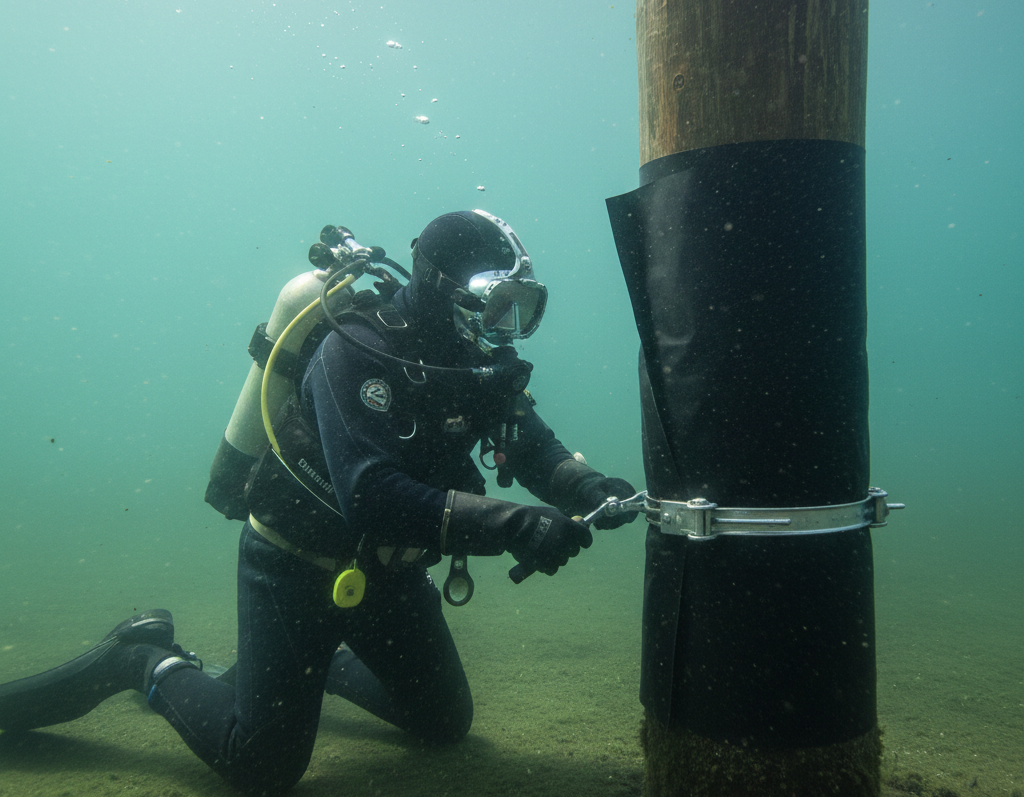
Dock pilings are the backbone of any waterfront structure, yet they endure constant exposure to water, marine growth, corrosion, and physical stress. Selecting the right dock piling wraps and jackets is a proven way to protect these critical components, reduce maintenance, and significantly extend dock lifespan. With multiple materials and systems available, understanding your options is essential for making a smart, long-term investment.
This guide explains what piling wraps and jackets are, how they work, the different types available, and how to choose the best solution based on your dock environment and piling material.
What Are Dock Piling Wraps and Jackets?
Dock piling wraps and jackets are protective systems installed around pilings to shield them from marine growth, moisture intrusion, corrosion, and physical damage. Unlike coatings alone, wraps and jackets form a physical barrier that isolates the piling from direct exposure to harsh marine conditions.
They are commonly used on wood, concrete, and steel pilings in both residential docks and commercial marinas.
Why Dock Piling Protection Systems Are Important
Unprotected pilings deteriorate faster due to constant environmental stress. Dock piling wraps and jackets offer proactive protection that minimizes these risks.
- Prevents barnacles, algae, and mussels from attaching
- Reduces moisture penetration and rot
- Slows corrosion on steel pilings
- Protects against ice, debris, and impact damage
- Extends the structural life of dock pilings
Using piling protection systems early can dramatically reduce future repair and replacement costs.
Types of Dock Piling Wraps and Jackets
Different environments and piling materials require different protection solutions. Below are the most common types of dock piling wraps and jackets.
| Type | Material | Best Use Case |
| Plastic piling wraps | HDPE or PVC | Marine growth prevention and abrasion resistance |
| Fiberglass jackets | Fiberglass + resin | Structural reinforcement for damaged pilings |
| Steel jackets | Galvanized or coated steel | Heavy-duty industrial or commercial docks |
| Composite wraps | Hybrid materials | Eco-friendly and corrosion-resistant applications |
Choosing Dock Piling Wraps and Jackets Based on Piling Material
Wood Pilings
Wood pilings benefit greatly from wraps that block moisture and marine borers. Plastic and composite wraps are commonly used to prevent rot and organism penetration.
Concrete Pilings
Concrete pilings often use fiberglass jackets to contain cracking, prevent spalling, and add structural strength.
Steel Pilings
Steel pilings require corrosion-resistant jackets that isolate metal from water and oxygen, slowing rust and material loss.
Environmental Factors to Consider
Your dock’s environment plays a major role in selecting the right dock piling wraps and jackets.
- Saltwater vs freshwater exposure
- Marine growth intensity
- Wave action and current strength
- Ice formation or floating debris
- Local environmental regulations
High-growth saltwater environments typically benefit from full-coverage wrap systems combined with routine inspections.
Installation: Why Professional Application Matters
Correct installation is critical for dock piling wraps and jackets to perform as intended.
Surface Preparation
Pilings must be thoroughly cleaned and inspected before installation to ensure proper fit and adhesion.
Sealing and Fastening
Improper sealing allows water intrusion that can trap moisture and worsen deterioration instead of preventing it.
Long-Term Performance
Professionally installed systems last longer, perform better, and comply with environmental guidelines set by the Environmental Protection Agency.
Cost vs. Value of Dock Piling Wraps and Jackets
While wraps and jackets have an upfront cost, they often provide excellent long-term value.
| Factor | Without Protection | With Wraps/Jackets |
| Maintenance frequency | High | Reduced |
| Repair costs | Frequent | Minimal |
| Piling lifespan | Shortened | Extended |
| Structural reliability | Variable | Consistent |
In most cases, piling protection systems pay for themselves over time.
Maintenance After Installing Piling Wraps and Jackets
Even protected pilings require periodic inspection to ensure continued effectiveness.
- Annual visual inspections
- Post-storm checks
- Monitoring for wrap damage or loosened fasteners
- Routine underwater inspections
The BoatUS Foundation recommends combining protective systems with regular inspections for maximum dock longevity.
FAQs About Dock Piling Wraps and Jackets
Do piling wraps stop marine growth completely?
Wraps significantly reduce attachment but may still require occasional cleaning at seams or edges.
Can wraps be installed on existing pilings?
Yes, most systems are designed for retrofit installation after cleaning and inspection.
Are piling jackets environmentally safe?
When installed correctly using approved materials, piling wraps and jackets are environmentally compliant.
How long do dock piling wraps last?
Quality systems typically last 10–25 years depending on material and environment.
Conclusion
Choosing the right dock piling wraps and jackets is a smart, proactive approach to protecting dock structures from marine growth, corrosion, and environmental stress. By selecting the appropriate material, ensuring professional installation, and performing routine inspections, dock owners can dramatically extend piling lifespan and reduce long-term maintenance costs.
For expert piling protection and professional marine services, contact us today. We also provide Hull Cleaning, Cavitation Cleaning, Zinc Replacement, Underwater Inspections, and Wash & Detailing to keep your dock and marine assets protected, compliant, and performing at their best.
