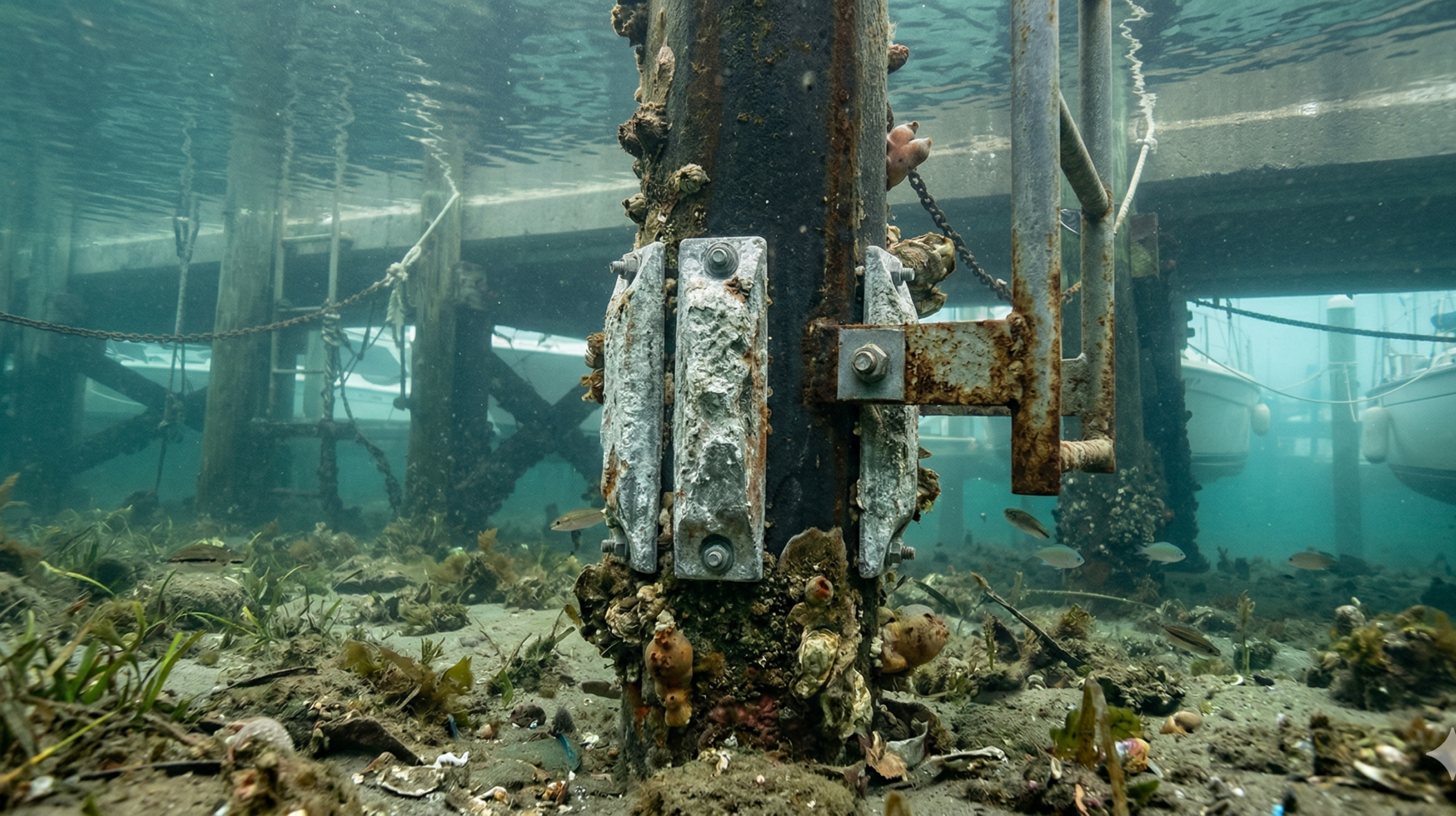
Corrosion is one of the biggest hidden threats to docks and marine structures. Whether your dock uses steel, aluminum, or reinforced concrete, exposure to saltwater creates conditions for electrochemical damage. Installing zinc anodes for dock pilings is one of the most effective ways to prevent corrosion, extend structural life, and reduce costly repairs.
Many boat owners are familiar with zinc anodes on their vessels, but fewer understand how critical they are for dock pilings and marina infrastructure. This guide explains how zinc anodes work, why they are necessary, how to choose the right type, and how they fit into a complete dock maintenance strategy.
What Are Zinc Anodes for Dock Pilings?
Zinc anodes for dock pilings are sacrificial metal components designed to protect submerged metal structures from corrosion. They are typically attached to steel pilings, brackets, ladders, and other metal components exposed to water.
Zinc anodes corrode instead of the protected metal, acting as a shield against electrochemical damage. This process is known as sacrificial protection.
How Zinc Anodes Prevent Corrosion
In marine environments, different metals interact with water and electrical currents, leading to galvanic corrosion.
Galvanic Corrosion Explained
When two dissimilar metals are in contact in water, an electrical current forms. One metal becomes the anode and corrodes, while the other becomes the cathode and remains protected.
Sacrificial Protection
Zinc anodes are intentionally installed to act as the sacrificial metal, ensuring that critical dock components do not deteriorate.
According to the Environmental Protection Agency, corrosion control is essential for maintaining marine infrastructure and reducing environmental risks.
Why Zinc Anodes Are Important for Dock Pilings
Without proper protection, metal dock components can weaken quickly, especially in saltwater environments.
- Prevents rust and structural weakening
- Protects metal fasteners and connectors
- Extends lifespan of steel and reinforced pilings
- Reduces repair and replacement costs
- Improves overall dock safety
Installing zinc anodes for dock pilings is a proactive step that prevents major damage before it begins.
Where Zinc Anodes Are Installed on Docks
Zinc anodes are placed strategically where corrosion risk is highest.
| Location | Purpose |
| Steel dock pilings | Protects against direct corrosion |
| Metal brackets and hardware | Prevents fastener failure |
| Ladders and access points | Reduces rust and wear |
| Underwater connectors | Maintains structural integrity |
Types of Marine Anodes Used for Dock Protection
While zinc is the most common, other materials may be used depending on water conditions.
Zinc Anodes
Best suited for saltwater environments, zinc anodes provide reliable corrosion protection for most dock systems.
Aluminum Anodes
Often used as an alternative to zinc, aluminum anodes offer longer lifespan and are effective in both saltwater and brackish water.
Magnesium Anodes
Typically used in freshwater environments, magnesium anodes provide stronger electrical potential.
How Often Should Zinc Anodes Be Replaced?
Zinc anodes gradually dissolve as they protect dock structures. Regular inspection is necessary to ensure they remain effective.
- Inspect every 3–6 months in saltwater
- Replace when 50% or more of the anode is consumed
- Check after storms or heavy marine activity
Routine monitoring ensures continuous corrosion protection.
Signs Your Dock Needs New Zinc Anodes
Recognizing early warning signs can prevent major damage.
- Visible corrosion on metal components
- Loose or deteriorating hardware
- Anodes significantly worn or missing
- Increased rust on ladders or brackets
Timely replacement keeps dock systems protected.
Common Mistakes with Zinc Anodes
Improper use of zinc anodes can reduce their effectiveness.
- Using the wrong type for water conditions
- Poor installation or loose connections
- Failing to replace worn anodes
- Installing too few anodes for the structure size
Professional installation ensures optimal protection.
Zinc Anodes vs Other Corrosion Protection Methods
| Method | Effectiveness | Maintenance |
| Zinc anodes | High | Moderate |
| Coatings | Moderate | Requires reapplication |
| Wrap systems | High | Long-term solution |
Combining methods often provides the best protection strategy.
How Zinc Anodes Fit into a Complete Dock Maintenance Plan
Zinc anodes should be part of a broader dock maintenance routine.
- Regular dock piling cleaning
- Underwater inspections
- Marine growth control
- Hardware maintenance
This integrated approach ensures long-term dock performance and safety.
FAQs About Zinc Anodes for Dock Pilings
Do all dock pilings need zinc anodes?
No. Zinc anodes are primarily needed for metal components and steel-reinforced structures.
Can zinc anodes be used in freshwater?
They are less effective in freshwater; magnesium anodes are typically preferred.
How long do zinc anodes last?
Usually 6–12 months depending on conditions and water salinity.
Is professional installation necessary?
Yes, for proper placement and effectiveness, especially in complex dock systems.
Conclusion
Installing zinc anodes for dock pilings is a simple yet powerful way to protect marine structures from corrosion. By preventing electrochemical damage, zinc anodes extend the lifespan of dock components, reduce maintenance costs, and improve safety. Regular inspection and proper installation ensure these systems continue working effectively in demanding marine environments.
For expert corrosion protection and dock maintenance, contact us today. We provide Hull Cleaning, Cavitation Cleaning, Zinc Replacement, Underwater Inspections, and Wash & Detailing to keep your dock and marine assets protected, efficient, and long-lasting.
