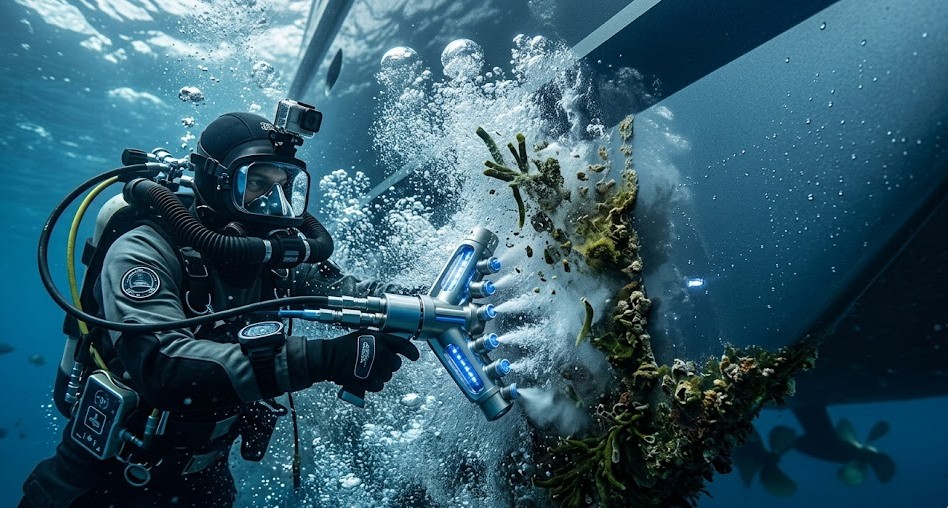
Marine growth is one of the most persistent challenges boat owners, marina operators, and commercial vessel managers face. Barnacles, algae, slime, and other forms of biofouling can accumulate surprisingly fast, reducing vessel efficiency, increasing fuel consumption, and accelerating wear on underwater surfaces.
As environmental regulations become stricter and vessel owners seek more effective maintenance methods, cavitation bubble marine cleaning has emerged as an innovative solution. Unlike aggressive scraping, grinding, or abrasive blasting methods, cavitation-based cleaning harnesses the power of controlled physics to remove marine growth while minimizing damage to hull surfaces and protective coatings.
Understanding how cavitation works helps explain why this technology is becoming increasingly popular for underwater maintenance and hull cleaning applications.
What Is Cavitation Bubble Marine Cleaning?
Cavitation bubble marine cleaning is a hull-cleaning process that uses controlled cavitation bubbles to dislodge marine growth from underwater vessel surfaces.
Cavitation occurs when pressure changes within a liquid create microscopic vapor-filled bubbles. When these bubbles collapse, they release concentrated energy that can break apart contaminants, marine organisms, and biofouling attached to a vessel’s hull.
Unlike traditional abrasive methods, properly controlled cavitation targets unwanted growth while helping preserve the underlying hull and coating systems.
This makes it particularly attractive for vessel owners seeking effective cleaning without excessive surface wear.
The Science Behind Hydrodynamic Cavitation Physics
At the heart of this technology is hydrodynamic cavitation physics, a phenomenon that has been studied extensively in fluid dynamics, marine engineering, and industrial cleaning applications.
Cavitation develops when liquid pressure drops below the vapor pressure of the fluid.
As water moves through specially designed equipment at high speed, localized low-pressure zones form.
This pressure reduction creates vapor-filled bubbles.
When the bubbles move into higher-pressure regions, they rapidly collapse.
The implosion generates:
- Localized micro-jets
- Pressure waves
- Mechanical energy release
- Microscopic cleaning forces
The NASA Glenn Research Center and numerous fluid dynamics researchers have documented the powerful forces produced during cavitation events in liquids.
Why Bubble Implosions Are So Effective
One of the most fascinating aspects of hydrodynamic cavitation physics is the enormous energy concentration that occurs when vapor bubbles collapse.
Although the bubbles themselves are microscopic, their implosion releases highly focused energy at the point of collapse.
This energy can:
- Break adhesion bonds
- Disrupt biofilms
- Remove slime layers
- Detach marine organisms
- Lift contaminants from surfaces
The cleaning action occurs at a microscopic level, allowing marine growth to be removed without the large-scale mechanical force associated with scraping or grinding.
How Cavitation Targets Biofouling
Biofouling develops when microorganisms, algae, and larger marine organisms attach themselves to submerged surfaces.
The process typically begins with:
- Organic conditioning films
- Bacterial colonies
- Slime layers
- Algae growth
- Barnacle settlement
- Shell-forming organisms
As biofouling matures, adhesion strength increases.
Traditional cleaning methods often rely on direct physical force to break these attachments.
By contrast, cavitation energy attacks the bond between the growth and the surface.
This makes non abrasive biofouling removal possible while reducing the risk of unnecessary hull damage.
Why Vessel Owners Are Seeking Non Abrasive Biofouling Removal
Many traditional underwater cleaning techniques can be effective, but they may also create unintended consequences.
Common concerns include:
- Damage to antifouling coatings
- Premature paint wear
- Surface scratching
- Increased maintenance costs
- Reduced coating lifespan
As a result, demand for non abrasive biofouling removal solutions continues to grow.
When performed correctly, cavitation-based cleaning offers a balance between effective growth removal and surface preservation.
Comparing Cavitation Cleaning to Traditional Hull Cleaning Methods
| Method | Marine Growth Removal | Potential Surface Impact | Best Use Case |
|---|---|---|---|
| Hand Scraping | High | Moderate to High | Heavy growth removal |
| Wire Brushes | High | High | Stubborn fouling |
| Abrasive Pads | Moderate to High | Moderate | Routine cleaning |
| Pressure Washing | Moderate | Variable | Haul-out cleaning |
| Cavitation Bubble Marine Cleaning | High | Low when properly controlled | Surface-sensitive cleaning |
The key advantage lies in the ability to remove growth while minimizing physical contact with the hull.
The Role of Safe Hull Growth Blast Technology
Modern underwater cleaning systems often incorporate what many operators describe as a safe hull growth blast approach.
Rather than relying on aggressive abrasion, these systems use carefully controlled energy delivery to loosen and remove marine fouling.
The objective is to:
- Preserve hull coatings
- Maintain hydrodynamic efficiency
- Reduce repainting frequency
- Extend maintenance intervals
- Improve vessel performance
For vessels with premium antifouling systems, coating preservation can represent significant long-term savings.
Environmental Benefits of Cavitation-Based Cleaning
Environmental concerns play an increasingly important role in hull maintenance decisions.
Many ports and regulatory agencies are focused on controlling invasive species transfer and minimizing pollution from underwater cleaning activities.
The International Maritime Organization (IMO) recognizes biofouling management as an important component of protecting marine ecosystems.
When properly managed, cavitation cleaning can support:
- Reduced coating damage
- Improved fuel efficiency
- Lower emissions
- Better biofouling control
- Extended coating service life
Maintaining a cleaner hull also helps reduce hydrodynamic drag, which directly affects fuel consumption.
How Marine Growth Impacts Vessel Performance
Many boat owners underestimate the impact even small amounts of fouling can have on performance.
Research from organizations such as the U.S. Department of Energy and maritime efficiency studies consistently demonstrate that surface roughness increases drag.
Consequences of excessive fouling may include:
- Reduced top speed
- Higher fuel consumption
- Increased engine workload
- Poor maneuverability
- Higher operating costs
Regular hull maintenance helps vessels operate closer to their intended efficiency levels.
Applications Across Different Vessel Types
Cavitation bubble marine cleaning can be used across a wide range of marine vessels.
Common applications include:
- Recreational boats
- Sailing yachts
- Motor yachts
- Commercial fishing vessels
- Passenger vessels
- Workboats
- Research vessels
- Government fleets
The suitability of any cleaning method should always be evaluated based on hull material, coating type, and fouling conditions.
Common Misconceptions About Cavitation Cleaning
It Damages Hull Surfaces
Uncontrolled cavitation can cause wear in certain industrial settings. However, marine cleaning systems are specifically engineered to use controlled cavitation for cleaning purposes.
It Is the Same as Pressure Washing
Cavitation relies on vapor bubble collapse rather than simply directing high-pressure water at a surface.
It Only Removes Light Fouling
Depending on equipment design and operating conditions, cavitation systems can address a range of fouling levels.
It Replaces All Maintenance
While highly effective, cavitation cleaning remains part of a broader hull maintenance strategy that includes inspections, coating management, and scheduled cleaning programs.
Best Practices for Hull Maintenance
Regardless of the cleaning technology used, maintaining a proactive approach produces the best results.
- Schedule regular underwater inspections
- Monitor biofouling accumulation
- Clean before heavy growth develops
- Maintain antifouling coatings
- Document maintenance history
- Address performance changes promptly
Early intervention often reduces cleaning costs and improves long-term hull protection.
Frequently Asked Questions
What is cavitation bubble marine cleaning?
Cavitation bubble marine cleaning is a hull-cleaning method that uses the controlled formation and collapse of vapor bubbles to remove marine growth from underwater vessel surfaces.
How does hydrodynamic cavitation physics work?
Hydrodynamic cavitation physics involves pressure changes in flowing water that create vapor bubbles. When those bubbles collapse, they release concentrated energy capable of dislodging fouling and contaminants.
Is cavitation cleaning considered non abrasive biofouling removal?
Yes. Properly designed cavitation systems are intended to remove marine growth while minimizing physical abrasion to hull surfaces and coatings.
What is a safe hull growth blast?
A safe hull growth blast refers to a controlled cleaning process that removes biofouling using focused energy rather than aggressive scraping or grinding methods.
Can cavitation cleaning damage antifouling paint?
When properly performed using appropriate equipment and procedures, cavitation cleaning is designed to minimize coating damage compared to many traditional abrasive methods.
Which vessels benefit most from cavitation cleaning?
Recreational boats, yachts, commercial vessels, and fleet operators can all benefit from effective hull cleaning that helps preserve coatings and maintain performance.
Conclusion
The growing popularity of cavitation bubble marine cleaning is rooted in a simple but powerful scientific principle: microscopic vapor bubbles can release remarkable cleaning energy when they collapse. By leveraging the forces described by hydrodynamic cavitation physics, modern marine cleaning systems can remove biofouling efficiently while supporting coating preservation.
For vessel owners seeking non abrasive biofouling removal, cavitation technology offers an effective alternative to more aggressive cleaning methods. As maintenance practices continue to evolve, controlled cavitation is helping redefine what a truly safe hull growth blast can achieve for marine performance, efficiency, and long-term hull protection.
Schedule Professional Hull Cleaning and Inspection Services
Keeping marine growth under control is essential for protecting vessel performance and reducing operating costs. Whether you manage a recreational boat, luxury yacht, or commercial fleet, professional underwater cleaning and inspection services can help maintain hull efficiency while preserving valuable coatings. Contact an experienced marine maintenance specialist today to discuss the best cleaning solution for your vessel and schedule a comprehensive underwater assessment.
