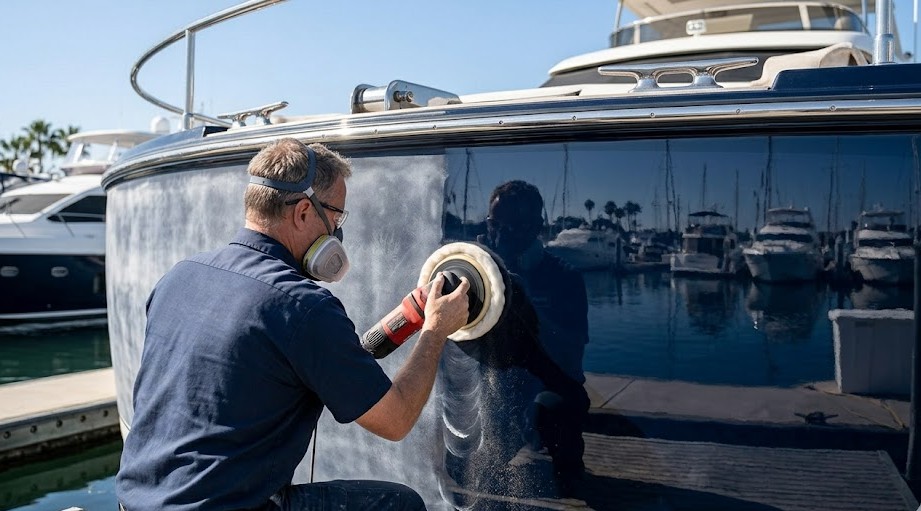
If you’ve ever spent an entire weekend waxing your boat only to watch the shine disappear a few weeks later, you’re not alone. Many boat owners assume that marine wax is the solution to every fiberglass appearance problem. However, when gelcoat becomes heavily oxidized and chalky, wax alone often delivers disappointing results.
Understanding how gelcoat works, why oxidation develops, and what is actually required for effective gelcoat restoration boat projects can save boat owners significant time, money, and frustration. In many cases, the problem isn’t the wax itself—it’s that the surface beneath the wax is already deteriorating.
Before investing in another bottle of marine wax, it’s important to understand the science behind gelcoat deterioration and why professional restoration methods often achieve dramatically better results.
What Is Gelcoat and Why Does It Matter?
Gelcoat is the protective outer layer applied to most fiberglass boats during manufacturing. This specialized resin coating serves several important purposes:
- Protects the fiberglass laminate beneath
- Provides color and gloss
- Resists water intrusion
- Improves durability
- Enhances appearance
Unlike automotive paint, gelcoat is significantly thicker and designed to withstand constant exposure to sunlight, saltwater, freshwater, weather, and physical wear.
However, despite its durability, gelcoat is not immune to aging. Over time, ultraviolet radiation, oxygen, moisture, and environmental contaminants gradually break down the surface layer.
This process leads to oxidation, which is the primary reason boat surfaces become dull, faded, and chalky.
Understanding Gelcoat Oxidation
Oxidation occurs when the outermost layer of gelcoat deteriorates due to prolonged environmental exposure.
Common causes include:
- Ultraviolet (UV) radiation
- Saltwater exposure
- Airborne pollutants
- Acid rain
- Improper maintenance
- Extended outdoor storage
As oxidation progresses, the smooth glossy surface becomes rough and porous.
Eventually, boat owners begin noticing:
- Faded color
- Loss of shine
- White chalky residue
- Uneven gloss
- Water spotting
- Staining
The BoatUS Foundation identifies UV exposure as one of the most significant contributors to long-term fiberglass deterioration and cosmetic damage.
Why Marine Wax Oxidation Problems Continue Returning
One of the most common misconceptions among boat owners is that wax removes oxidation.
In reality, wax is designed primarily to protect surfaces—not repair them.
When boat owners apply wax directly over oxidized gelcoat, several things happen:
- The chalky layer remains intact
- The wax temporarily darkens the surface
- Minor gloss improvement occurs
- The oxidation remains beneath the protective coating
Initially, the boat may appear cleaner and slightly shinier.
However, as the wax wears away, the same dull finish quickly reappears.
This cycle leads many owners to repeatedly wax their boats without addressing the underlying problem.
The Difference Between Protection and Restoration
To understand why wax often fails, it helps to distinguish between surface protection and true restoration.
| Process | Purpose | Result |
|---|---|---|
| Waxing | Protect existing finish | Temporary shine and protection |
| Polishing | Refine light imperfections | Improved gloss |
| Compounding | Remove oxidation | Restored surface clarity |
| Gelcoat Restoration | Correct oxidation and damage | Long-lasting shine and protection |
For heavily weathered surfaces, effective gelcoat restoration boat services typically require compounding and polishing before any protective wax or sealant is applied.
How Chalky Fiberglass Develops
When oxidation reaches advanced stages, the gelcoat surface begins to break down physically.
The powdery residue often found on hands or towels after touching a neglected boat is oxidized gelcoat material.
This condition is commonly referred to as chalky fiberglass boat repair territory because simple cleaning and waxing are no longer sufficient.
At this stage, the damaged layer must usually be removed mechanically before restoration can occur.
Why Machine Compounding Gelcoat Is Often Necessary
One of the most effective methods for restoring severely oxidized fiberglass is machine compounding gelcoat.
Unlike waxes and cleaners that work on the surface, compounding physically removes the damaged oxidized layer.
The process typically involves:
- Thorough washing
- Contaminant removal
- Surface evaluation
- Machine compounding
- Polishing
- Protective sealing or waxing
Professional-grade compounds contain specialized abrasives that level and smooth deteriorated gelcoat without causing unnecessary damage when used correctly.
Once oxidation is removed, the healthy gelcoat beneath can once again reflect light properly.
Signs Your Boat Needs More Than Wax
Many boat owners wonder whether they need restoration or simply routine detailing.
Several indicators suggest that wax alone will not solve the problem:
- Persistent chalky residue after washing
- Dull appearance despite recent waxing
- Uneven gloss across surfaces
- Faded color
- Visible oxidation streaks
- Rough surface texture
- Water no longer beads effectively
If several of these symptoms are present, professional restoration may provide far better results than repeated waxing.
The Risks of Ignoring Oxidized Gelcoat
Oxidation is often viewed as a cosmetic issue, but prolonged neglect can create additional concerns.
As gelcoat deteriorates, the underlying fiberglass becomes increasingly vulnerable to:
- Moisture intrusion
- Staining
- Surface degradation
- Reduced resale value
- More expensive future repairs
The longer oxidation remains untreated, the more aggressive restoration efforts may become necessary.
The National Park Service Preservation Directorate notes that protecting fiberglass surfaces from weathering is essential for maintaining long-term material integrity.
Professional Gelcoat Restoration vs DIY Waxing
While routine maintenance can often be handled by owners, restoring severely oxidized gelcoat requires specialized equipment, products, and experience.
| DIY Waxing | Professional Restoration |
|---|---|
| Temporary improvement | Corrects oxidation |
| Limited surface correction | Removes damaged gelcoat layer |
| Minimal equipment required | Professional machine tools used |
| Short-term results | Long-lasting finish restoration |
| Best for healthy gelcoat | Ideal for oxidized surfaces |
For vessels exposed to harsh marine environments year-round, restoration often produces dramatically better long-term value.
Best Practices for Maintaining Restored Gelcoat
Once oxidation has been removed and shine restored, proper maintenance becomes critical.
Marine industry organizations such as the National Marine Manufacturers Association emphasize the importance of regular maintenance to extend vessel appearance and longevity.
Recommended maintenance practices include:
- Frequent rinsing after use
- Routine washing with marine-safe cleaners
- Regular protective sealant application
- Covered storage when possible
- Prompt removal of stains and contaminants
- Periodic inspections for early oxidation
These steps help preserve the results achieved through restoration and reduce future correction costs.
Common Mistakes Boat Owners Make
Applying Wax Over Heavy Oxidation
This is the most common mistake. Wax cannot remove damaged gelcoat and often masks the issue temporarily.
Using Household Polishes
Products designed for automotive finishes or household surfaces may not be suitable for marine gelcoat.
Waiting Too Long to Address Oxidation
Minor oxidation is easier and less expensive to correct than advanced deterioration.
Using Aggressive Abrasives Incorrectly
Improper compounding techniques can damage gelcoat and create uneven finishes.
Skipping Protective Maintenance
Even newly restored surfaces require ongoing protection to prevent oxidation from returning.
How Gelcoat Restoration Improves Boat Value
Appearance plays a significant role in vessel value and buyer perception.
A professionally restored finish can:
- Improve curb appeal at the marina
- Increase buyer confidence
- Support stronger resale values
- Reduce visible signs of aging
- Demonstrate consistent maintenance
For owners planning to sell, restoration often delivers one of the most noticeable cosmetic improvements available.
Frequently Asked Questions
Why does my boat still look dull after waxing?
If oxidation is present, wax may only provide temporary improvement. The oxidized gelcoat beneath the wax must typically be removed through compounding and polishing.
What causes chalky fiberglass on boats?
Chalky fiberglass develops when UV exposure, weather, and environmental conditions break down the outer layer of gelcoat, creating oxidized residue.
Can marine wax remove oxidation?
No. Marine wax is primarily a protective product. While it can improve appearance temporarily, it does not remove significant oxidation.
What is machine compounding gelcoat?
Machine compounding gelcoat is a restoration process that uses specialized compounds and polishing equipment to remove oxidized material and restore gloss.
How often should gelcoat be restored?
The frequency depends on exposure conditions, storage practices, and maintenance routines. Boats stored outdoors in sunny climates typically require more frequent correction.
Is gelcoat restoration worth it?
Yes. Professional restoration can dramatically improve appearance, protect fiberglass surfaces, and help maintain vessel value.
Conclusion
Understanding the difference between protection and correction is the key to maintaining a fiberglass boat’s appearance. Traditional marine wax plays an important role in surface protection, but it cannot reverse oxidation or repair deteriorated gelcoat.
When chalkiness, fading, and dullness become apparent, proper gelcoat restoration boat techniques are often necessary to remove damaged material and reveal healthy gelcoat beneath. By addressing oxidation early and using the right restoration methods, boat owners can achieve longer-lasting shine, better protection, and improved vessel value.
Restore Your Boat’s Finish the Right Way
If your vessel has lost its shine and repeated waxing no longer delivers results, it may be time for professional gelcoat restoration. Experienced marine restoration specialists can assess oxidation levels, perform machine compounding gelcoat correction, and apply long-lasting protection that helps your boat look its best. Contact a trusted marine detailing and restoration professional today to schedule an evaluation and bring your fiberglass finish back to life.
