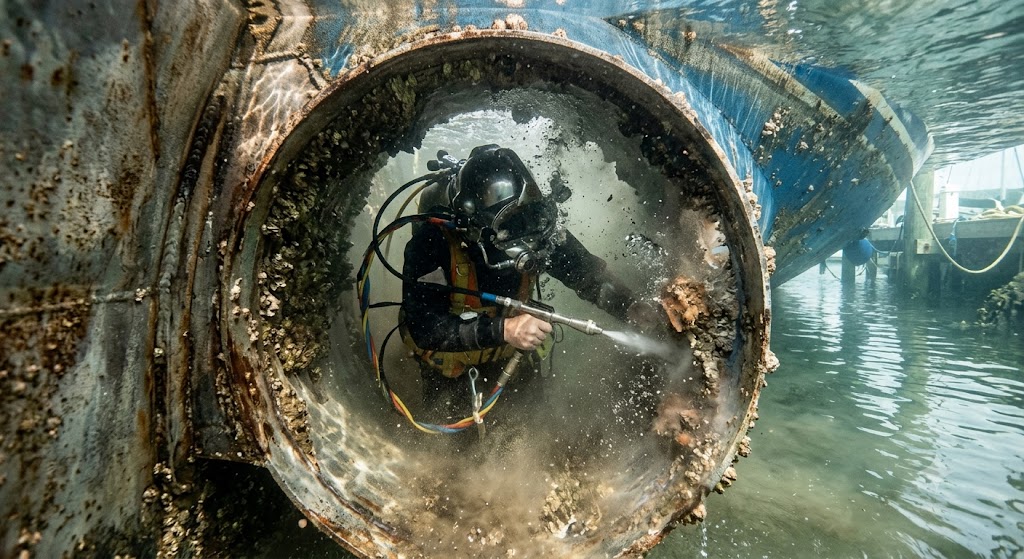
Precise maneuvering is essential when docking in crowded marinas, navigating tight channels, or positioning a vessel in changing currents. Yet many boat owners overlook one critical component until it stops performing properly—the bow thruster. Marine growth inside the thruster tunnel and on the propeller can significantly reduce thrust, making docking more difficult and increasing stress on the entire system. That’s why bow thruster cavitation cleaning has become an essential part of preventative underwater maintenance.
Whether you own a sportfishing boat, luxury yacht, commercial vessel, or cruising sailboat, maintaining a clean bow thruster helps preserve maneuverability, protect expensive equipment, and reduce unexpected repairs. Professional underwater cleaning removes marine growth safely without damaging delicate components or protective coatings.
What Is Bow Thruster Cavitation Cleaning?
Bow thruster cavitation cleaning is a specialized underwater cleaning process that uses controlled cavitation technology to safely remove marine growth, barnacles, algae, and biofouling from bow thruster propellers, tunnels, and surrounding underwater components without causing mechanical damage.
Unlike aggressive scraping or abrasive cleaning methods, cavitation cleaning uses microscopic vapor bubbles generated underwater. As these bubbles collapse, they gently dislodge marine organisms from surfaces while preserving metal finishes and protective coatings. This makes it especially effective for sensitive propulsion components where precision is essential.
The International Maritime Organization (IMO) recognizes biofouling management as an important practice for maintaining vessel efficiency, reducing fuel consumption, and minimizing the spread of invasive aquatic species.
Why Marine Growth Inside Thruster Tunnels Matters
The tunnel surrounding a bow thruster is constantly exposed to seawater, making it an ideal environment for algae, slime, barnacles, and other marine organisms. Because this area is difficult to inspect without diving, fouling often goes unnoticed until performance declines.
As marine growth accumulates, water flow through the tunnel becomes restricted, reducing thrust output and forcing the motor to work harder. Over time, this can lead to:
- Reduced lateral thrust during docking
- Slower response times
- Higher electrical or hydraulic loads
- Increased vibration and turbulence
- Greater wear on internal components
- Reduced overall boat maneuverability
Signs Your Bow Thruster Needs Cleaning
Many owners don’t realize their thruster is fouled until docking becomes noticeably more difficult. Watch for these common warning signs:
- Reduced side-thrust performance
- Longer response when activating the thruster
- Unusual vibration or noise
- Visible barnacles inside the tunnel
- Higher current draw on electric thrusters
- Difficulty holding position in crosswinds or currents
Scheduling regular Underwater Inspection services helps identify these issues before they affect handling.
How Cavitation Cleaning Protects Marine Thrusters
Professional marine thruster maintenance involves much more than simply removing visible marine growth. Cavitation cleaning reaches areas that are difficult to access using conventional tools while protecting sensitive mechanical components.
Safe for Precision Components
Bow thrusters contain carefully balanced propellers, seals, and bearings. Cavitation cleaning removes fouling without scratching propeller blades or damaging protective coatings.
Improves Water Flow
A clean tunnel allows unrestricted water movement, restoring efficient thrust generation and improving docking control.
Extends Equipment Life
Reducing unnecessary strain helps motors, gearboxes, hydraulic systems, and electrical components operate within their intended load range.
Supports Fuel and Energy Efficiency
Although bow thrusters operate intermittently, cleaner components reduce operating resistance and improve system efficiency during use.
Why Safe Thruster Cleaning Requires Specialized Equipment
Bow thruster tunnels are confined spaces with limited visibility and delicate components. Attempting to remove barnacles using metal scrapers or improvised tools may damage propeller edges, protective coatings, or tunnel surfaces.
Professional safe thruster cleaning uses specialized underwater equipment designed specifically for marine propulsion systems. Experienced divers understand how different thruster designs, coatings, and materials respond to cleaning, ensuring optimal results while minimizing risk.
For heavy marine growth affecting other underwater surfaces, professional Hull Cleaning restores overall vessel efficiency alongside thruster maintenance.
The Importance of Keeping the Thruster Tunnel Clear
A clear thruster tunnel allows water to pass smoothly across the propeller, maximizing thrust while minimizing turbulence.
Marine growth disrupts this flow by:
- Reducing tunnel diameter
- Creating turbulent water movement
- Lowering propeller efficiency
- Increasing motor workload
- Reducing docking precision
Manufacturers such as Side-Power emphasize routine maintenance to preserve optimal thruster performance throughout the vessel’s operating life.
DIY vs. Professional Underwater Thruster Maintenance
| DIY Cleaning | Professional Cavitation Cleaning |
|---|---|
| Limited access inside tunnels | Complete tunnel cleaning |
| Higher risk of surface damage | Non-abrasive cleaning technology |
| Difficult underwater visibility | Performed by trained commercial divers |
| No equipment inspection | Visual inspection included |
| May miss hidden marine growth | Comprehensive underwater maintenance |
Other Underwater Maintenance That Supports Thruster Performance
Propeller Cleaning
Professional Cavitation Cleaning also restores efficiency on propellers, shafts, trim tabs, and other underwater running gear.
Replace Sacrificial Anodes
Routine Zinc Replacement protects underwater metals from galvanic corrosion, helping preserve thruster housings and other submerged equipment.
Maintain Overall Vessel Appearance
Regular Boat Wash & Detailing complements underwater maintenance by protecting topside finishes and reducing long-term maintenance costs.
Common Mistakes Boat Owners Make
- Ignoring bow thrusters until performance noticeably declines.
- Using metal scrapers on propeller blades.
- Allowing heavy barnacle growth to accumulate inside tunnels.
- Skipping underwater inspections between haul-outs.
- Neglecting sacrificial anode replacement.
- Cleaning only the hull while overlooking propulsion components.
Frequently Asked Questions
How often should a bow thruster be cleaned?
Most vessels operating in saltwater benefit from periodic inspections and cleaning based on local fouling conditions, water temperature, and vessel usage. Warm coastal waters generally require more frequent maintenance.
Can barnacles damage a bow thruster?
Yes. Barnacles restrict water flow, reduce thrust efficiency, increase vibration, and place additional strain on the motor and drive components if left untreated.
Is cavitation cleaning safe for thruster propellers?
Yes. Professional cavitation cleaning removes marine growth using non-abrasive technology that helps protect propeller surfaces and underwater coatings when performed by trained technicians.
Does a dirty thruster affect boat maneuverability?
Absolutely. Marine growth inside the tunnel reduces water flow and thrust, making docking and low-speed maneuvering more challenging.
Can underwater inspections detect thruster problems?
Yes. Routine underwater inspections can identify marine growth, damaged propellers, worn anodes, corrosion, and other issues before they become costly repairs.
For more expert boating advice and underwater maintenance insights, explore our blog.
Conclusion
Bow thruster cavitation cleaning is one of the most effective ways to maintain precise boat maneuverability while protecting valuable underwater propulsion equipment. Regular marine thruster maintenance keeps tunnels clear, improves thrust efficiency, reduces mechanical wear, and helps ensure reliable docking performance whenever you need it most. Preventative underwater maintenance remains far more affordable than repairing damaged thruster components after performance has already declined.
Ready to protect your vessel?
If you need expert help with this, our team of certified divers and marine technicians is ready to step in. Learn more about our specific services here.
Prefer to speak with an expert immediately? Contact us today to schedule a service or get a free quote!
