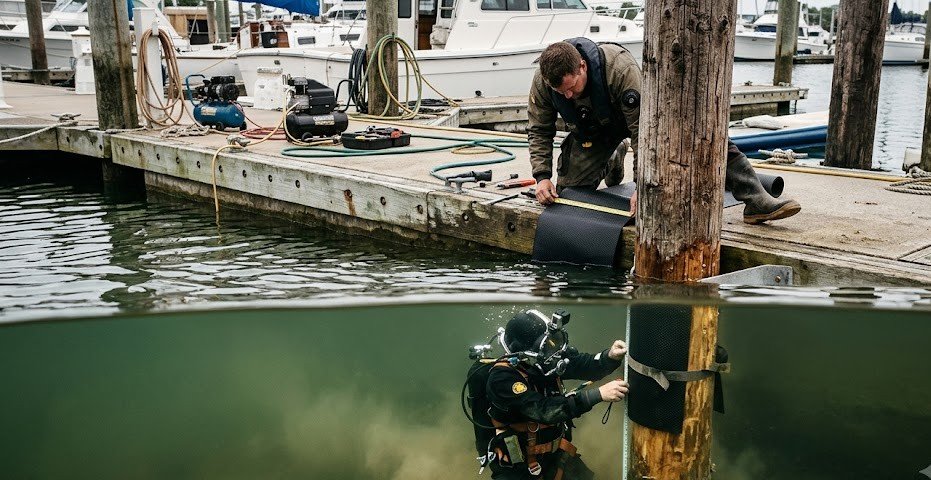
High-density polyethylene (HDPE) piling wraps have become one of the most effective long-term solutions for protecting timber pilings from marine borers, impact damage, and environmental deterioration. However, even the highest-quality wrap system can fail prematurely if the piling is not properly prepared before installation. Following the correct HDPE piling wrap preparation standards helps ensure a secure fit, maximum durability, and long-lasting protection for docks, marinas, seawalls, and waterfront structures.
Whether you’re installing piling wraps on residential docks or large commercial marinas, proper cleaning, inspection, and surface preparation are essential for achieving optimal results.
What Is HDPE Piling Wrap Preparation?
HDPE piling wrap preparation is the process of cleaning, inspecting, repairing, and preparing marine timber pilings before installing protective polyethylene wrap systems. Proper preparation removes marine growth, identifies structural defects, and creates suitable conditions for a secure installation that helps protect pilings from marine borers, abrasion, and environmental damage.
Preparation is just as important as the installation itself because hidden damage or trapped debris can reduce the effectiveness and lifespan of the wrap.
According to the World Association for Waterborne Transport Infrastructure (PIANC), routine inspection and preventative maintenance are essential for extending the service life of marine infrastructure.
Why Proper Preparation Matters
Installing piling wraps over dirty or damaged timber can trap marine organisms, sediment, and moisture beneath the protective barrier. Over time, this may reduce inspection visibility and limit the effectiveness of the protective system.
Proper preparation helps:
- Improve wrap installation quality
- Increase service life
- Identify structural damage early
- Reduce future maintenance
- Improve long-term piling protection
- Support manufacturer installation requirements
Inspect the Piling Before Installation
Every installation should begin with a thorough structural assessment.
Inspect for:
- Marine borer activity
- Cracks and splits
- Loose fasteners
- Wood decay
- Impact damage
- Excessive wear near the splash zone
Professional Underwater Inspection services help determine whether the piling remains structurally suitable for wrapping or requires repair or replacement first.
Clean Dock for Wrapping
Before installation, technicians must thoroughly clean dock for wrapping by removing marine growth and debris from the piling surface.
Typical cleaning removes:
- Barnacles
- Algae
- Slime
- Mussels
- Shell deposits
- Sediment accumulation
Professional Piling Cleaning improves installation quality by exposing the timber surface and allowing installers to inspect the piling more accurately.
Dock Pile Wrapping Preparation Steps
Proper dock pile wrapping preparation generally follows a systematic process.
- Inspect the piling above and below the waterline.
- Remove marine growth completely.
- Repair or replace severely damaged sections if necessary.
- Allow surfaces to meet manufacturer installation requirements where applicable.
- Confirm proper dimensions for the selected wrap system.
- Install wrap components according to manufacturer specifications.
Following a consistent preparation process helps reduce installation errors and improve long-term performance.
HDPE Wraps vs. PVC Pile Sleeves
Property owners often compare HDPE systems with PVC pile sleeves when selecting piling protection.
| HDPE Piling Wraps | PVC Pile Sleeves |
|---|---|
| Flexible wrap system | Rigid protective sleeve |
| Often installed around existing pilings | Typically fitted as a sleeve around the piling |
| Designed for long-term marine protection | Provides physical protection from impact and fouling |
| Installation varies by manufacturer | Installation varies by sleeve design |
| Preparation remains essential | Preparation remains equally important |
The best solution depends on the piling condition, environmental exposure, and project requirements.
Marine Shrink Wrap Pilings vs. HDPE Systems
Some temporary projects use marine shrink wrap pilings for short-term protection during construction or repairs. However, shrink wrap systems differ significantly from permanent HDPE piling wraps.
| Marine Shrink Wrap | HDPE Piling Wrap |
|---|---|
| Primarily temporary protection | Designed for long-term service |
| Often used during construction | Used for ongoing piling protection |
| Short service life | Extended service life |
| Different installation techniques | Permanent installation system |
Understanding these differences helps owners choose the most appropriate solution for their waterfront infrastructure.
Piling Wrap Installation Best Practices
Successful piling wrap installation depends on careful planning and proper workmanship.
Best practices include:
- Use manufacturer-approved materials.
- Inspect every piling before installation.
- Remove all marine growth.
- Repair structural defects before wrapping.
- Verify proper wrap alignment.
- Schedule routine follow-up inspections.
Maintaining Wrapped Pilings
Protective wraps reduce maintenance requirements, but routine inspections remain important.
Routine Underwater Inspections
Professional Underwater Inspection services help monitor wrap condition, attachment integrity, and surrounding marine infrastructure.
Piling Cleaning
Periodic Piling Cleaning removes excessive marine growth from exposed sections while supporting ongoing inspection programs.
Common Mistakes During Piling Wrap Installation
- Installing wraps over heavy marine growth.
- Ignoring structural deterioration before wrapping.
- Skipping underwater inspections.
- Using incorrect wrap sizes.
- Failing to follow manufacturer installation instructions.
- Neglecting routine post-installation inspections.
Frequently Asked Questions
Why is HDPE piling wrap preparation important?
Preparation removes marine growth, identifies structural damage, and creates suitable conditions for proper installation, helping maximize the wrap’s performance and lifespan.
Can piling wraps be installed over barnacles?
No. Marine growth should be removed before installation to ensure proper fit, improve inspection accuracy, and support long-term protection.
Are HDPE piling wraps permanent?
HDPE piling wraps are designed as long-term protection systems, although service life depends on installation quality, environmental conditions, and ongoing maintenance.
How often should wrapped pilings be inspected?
Routine inspections help verify that wraps remain secure and allow early detection of any structural or environmental issues affecting the piling.
Do piling wraps eliminate all maintenance?
No. While they reduce exposure to many marine hazards, regular inspections and preventative maintenance remain essential for protecting waterfront structures.
Looking for more expert dock and marina maintenance advice? Visit our blog for additional guides on piling protection, underwater inspections, and commercial diving services.
Conclusion
Proper HDPE piling wrap preparation is the foundation of a successful piling protection system. Thorough inspections, complete marine growth removal, and careful installation practices help maximize the performance and longevity of HDPE wraps while protecting timber pilings from marine borers, environmental damage, and premature deterioration. Investing time in proper preparation today helps preserve valuable waterfront infrastructure for years to come.
Ready to protect your marine infrastructure?
If you need expert help with piling preparation or underwater inspections, our team of certified divers and marine technicians is ready to assist. Learn more about our piling cleaning services here.
Prefer to speak with an expert immediately? Contact us today to schedule a service or request a free quote.
