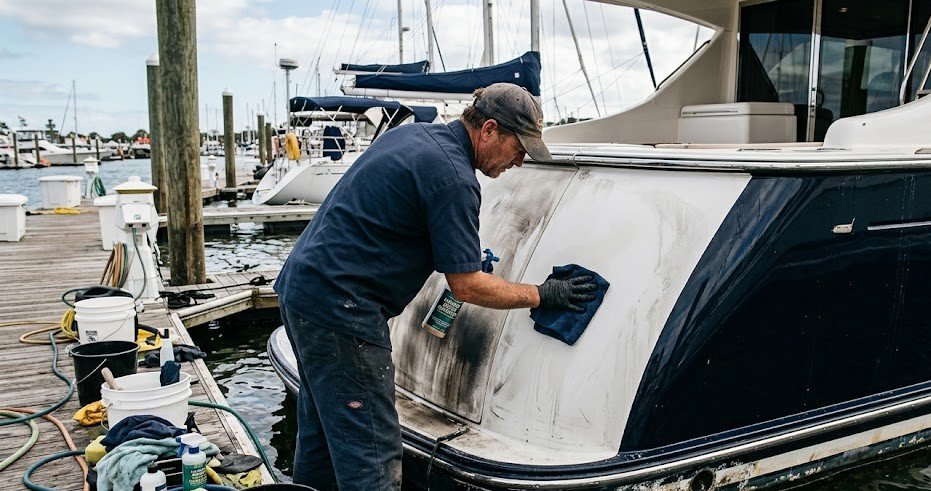
Few things spoil the appearance of a well-maintained yacht faster than black exhaust stains streaking down the transom. Besides making the vessel look neglected, diesel soot can gradually bond to fiberglass and gelcoat, becoming increasingly difficult to remove if left untreated. Understanding the proper approach to yacht exhaust soot removal helps protect your boat’s finish, maintain resale value, and simplify routine maintenance.
Whether you own a sportfishing yacht, motor yacht, trawler, or express cruiser, removing soot promptly and identifying the underlying cause can keep your vessel looking its best while helping you spot potential engine performance issues early.
What Is Yacht Exhaust Soot Removal?
Yacht exhaust soot removal is the process of safely eliminating carbon deposits, diesel residue, and exhaust staining from fiberglass, gelcoat, painted surfaces, and stainless steel using marine-safe cleaning products and techniques. Proper removal restores appearance while protecting the finish from discoloration, oxidation, and long-term staining.
Cleaning soot regularly also provides an opportunity to inspect the transom for scratches, oxidation, and coating wear before they become larger cosmetic issues.
According to the U.S. Environmental Protection Agency (EPA), diesel exhaust contains fine particulate matter that can settle on nearby surfaces, including recreational and commercial vessels.
Why Diesel Exhaust Leaves Black Stains
A diesel stain boat typically develops when microscopic carbon particles in engine exhaust settle on the transom and surrounding surfaces. Moisture, salt spray, and airborne contaminants help these particles adhere tightly to the gelcoat.
Several factors can increase soot buildup:
- Incomplete fuel combustion
- Engine overloading
- Poor injector performance
- Restricted air intake
- Dirty turbochargers
- Extended low-speed operation
- Wind carrying exhaust toward the transom
While occasional staining is normal, excessive soot may indicate an engine maintenance issue that deserves further investigation.
How Marine Exhaust Pollution Affects Your Yacht
Beyond appearance, marine exhaust pollution can contribute to long-term cosmetic damage if soot remains on the boat for extended periods.
Accumulated exhaust residue may:
- Discolor gelcoat
- Accelerate oxidation
- Trap salt deposits
- Increase surface staining
- Reduce overall shine
- Require more aggressive cleaning later
Routine washing prevents these contaminants from becoming permanently embedded in the finish.
How to Clean Diesel Soot from Fiberglass Safely
Clean diesel soot fiberglass using marine-specific cleaning products designed for gelcoat surfaces. Harsh household chemicals or abrasive scrub pads can damage protective finishes and reduce gloss.
A typical cleaning process includes:
- Rinse the transom thoroughly with fresh water.
- Apply a marine-safe soot or exhaust stain remover.
- Allow the cleaner to dwell according to the manufacturer’s instructions.
- Gently wipe using a soft microfiber cloth or non-abrasive sponge.
- Rinse thoroughly.
- Dry the surface before applying wax or protective coating if needed.
Prompt cleaning usually requires much less effort than removing stains that have remained on the surface for weeks.
Professional Transom Cleaning vs. DIY
Routine transom cleaning can often be performed by boat owners, but professional detailing provides advantages when stains become severe or oxidation is present.
| DIY Cleaning | Professional Boat Detailing |
|---|---|
| Suitable for light soot buildup | Removes heavy staining safely |
| Basic cleaning products | Professional marine compounds |
| Limited oxidation correction | Gelcoat restoration available |
| Time-consuming for stubborn stains | Faster, consistent results |
| May leave swirl marks if improper tools are used | Protects the finish with proper techniques |
Professional Boat Wash & Detailing services help restore gloss while protecting fiberglass and painted surfaces.
Preventing Black Smoke Boat Stains
Preventing a black smoke boat stain is often easier than removing one.
Helpful maintenance practices include:
- Wash the transom after each trip.
- Maintain fuel injectors according to manufacturer recommendations.
- Replace clogged air filters.
- Avoid prolonged engine idling when possible.
- Inspect exhaust systems regularly.
- Apply protective wax or ceramic coating.
Manufacturers such as Yanmar Marine and Cummins Marine recommend following scheduled engine maintenance to help maintain efficient combustion and reduce excessive exhaust emissions.
Supporting Overall Yacht Maintenance
Keeping the topsides clean is only one part of maintaining peak vessel performance.
Hull Cleaning
Professional Hull Cleaning removes marine growth that increases drag and fuel consumption.
Cavitation Cleaning
Specialized Cavitation Cleaning restores propellers and underwater running gear while protecting polished metal surfaces.
Underwater Inspection
Routine Underwater Inspection services identify corrosion, impact damage, and other underwater issues before they become costly repairs.
Common Mistakes Boat Owners Make
- Allowing soot to remain on the transom for extended periods.
- Using abrasive household cleaners on gelcoat.
- Scrubbing aggressively with stiff brushes.
- Ignoring excessive black exhaust smoke from the engine.
- Skipping protective wax or ceramic coatings after cleaning.
- Focusing only on cosmetic cleaning without addressing engine maintenance.
Frequently Asked Questions
What causes black soot on a yacht transom?
Black soot is typically caused by carbon particles from diesel exhaust settling on the transom. Engine operating conditions, wind direction, and incomplete fuel combustion can all contribute to staining.
Can diesel soot permanently stain fiberglass?
If left untreated for extended periods, soot can bond to oxidized or porous gelcoat, making removal more difficult. Prompt cleaning helps prevent permanent discoloration.
What is the safest way to clean diesel soot from fiberglass?
Use marine-specific exhaust stain removers with soft microfiber cloths or non-abrasive sponges. Avoid harsh household chemicals and abrasive pads that may damage the finish.
Does excessive soot indicate engine problems?
Sometimes. While some soot accumulation is normal, unusually heavy black deposits may indicate incomplete combustion, injector issues, restricted airflow, or other engine performance concerns that should be evaluated.
How often should the yacht transom be cleaned?
Cleaning after each outing or at regular intervals helps prevent soot from bonding to the gelcoat and keeps the yacht looking its best.
Looking for more expert yacht maintenance advice? Visit our blog for additional guides on detailing, underwater inspections, and professional marine maintenance.
Conclusion
Yacht exhaust soot removal is an important part of maintaining both the appearance and long-term condition of your vessel. Prompt transom cleaning, routine detailing, and regular engine maintenance help prevent stubborn diesel stains while preserving the finish of your fiberglass and gelcoat. Combined with comprehensive underwater maintenance, these simple preventative steps keep your yacht looking professional and operating at its best throughout the boating season.
Ready to protect your vessel?
If you need expert help with this, our team of certified divers and marine technicians is ready to step in. Learn more about our specific services here.
Prefer to speak with an expert immediately? Contact us today to schedule a service or get a free quote!
