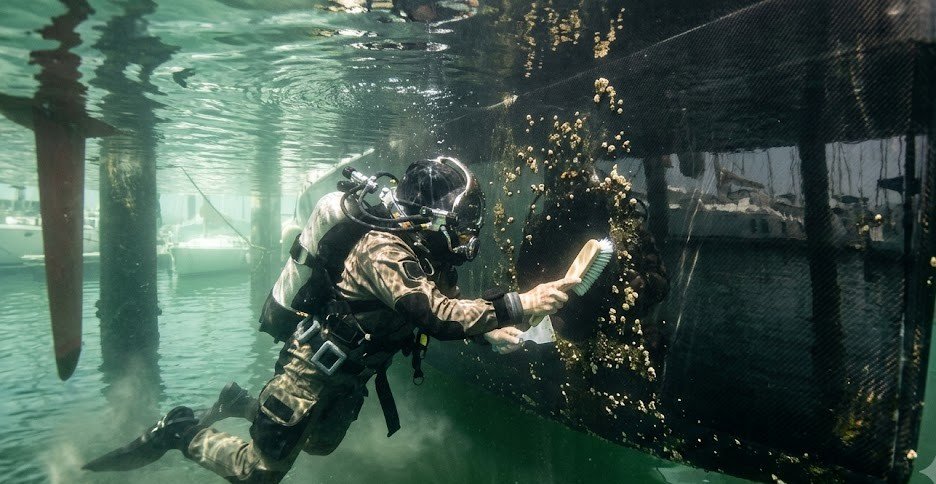
Carbon fiber hulls represent some of the most advanced technology in modern boating, offering exceptional strength, lightweight performance, and remarkable speed. Found on high-performance racing yachts, luxury tenders, military vessels, and premium sport boats, these composite hulls require specialized maintenance techniques that differ significantly from traditional fiberglass construction. When marine growth develops below the waterline, using the wrong cleaning method can damage protective coatings, compromise surface finishes, and reduce hydrodynamic efficiency. That’s why carbon fiber hull cleaning demands careful, non-destructive maintenance performed with appropriate tools and techniques.
Whether your vessel spends its time racing offshore, cruising coastal waters, or remaining in a marina year-round, proper underwater maintenance protects both performance and long-term structural integrity.
What Is Carbon Fiber Hull Cleaning?
Carbon fiber hull cleaning is the careful removal of algae, slime, barnacles, and other marine growth from carbon fiber composite hulls using non-abrasive, non-destructive techniques that protect protective coatings, paint systems, and the composite structure beneath. The goal is to restore hydrodynamic performance without scratching, gouging, or damaging delicate surfaces.
Unlike conventional fiberglass hulls, carbon fiber boats often feature specialized coatings that require greater care during underwater maintenance.
According to the International Maritime Organization (IMO), effective biofouling management improves vessel efficiency while reducing fuel consumption and limiting the spread of invasive aquatic species.
Why Carbon Fiber Hulls Require Specialized Care
Carbon fiber composites provide exceptional stiffness and strength while remaining significantly lighter than many traditional construction materials. However, the hull’s outer finish often includes advanced paint systems or protective coatings that can be damaged by aggressive scraping or improper cleaning.
Common maintenance concerns include:
- Scratching protective coatings
- Damaging clear finishes
- Reducing hydrodynamic smoothness
- Premature coating wear
- Surface abrasion
- Localized impact damage
Routine inspections and careful cleaning help preserve both appearance and performance.
How Marine Growth Affects High-Tech Boat Hulls
A high-tech boat hull performs best when its underwater surfaces remain clean and smooth. Even light marine fouling increases hydrodynamic drag, reducing the advantages carbon fiber construction provides.
Marine growth may cause:
- Reduced top speed
- Higher fuel consumption
- Slower acceleration
- Reduced sailing performance
- Increased engine workload
- Higher operating costs
Removing fouling before heavy barnacle growth develops minimizes cleaning effort and helps protect sensitive coatings.
Safe Barnacle Removal Techniques
Safe barnacle removal begins with choosing cleaning methods appropriate for the hull finish rather than simply removing marine growth as quickly as possible.
Professional divers typically:
- Evaluate coating condition before cleaning.
- Use non-abrasive cleaning tools.
- Remove slime before addressing hard fouling.
- Avoid unnecessary scraping.
- Inspect for coating damage throughout the cleaning process.
- Adjust techniques based on manufacturer recommendations whenever available.
The objective is to remove marine organisms while preserving the hull’s protective finish.
Why Non-Destructive Hull Cleaning Matters
Non-destructive hull cleaning focuses on protecting the vessel while restoring performance. Aggressive cleaning methods may remove marine growth, but they can also damage coatings, expose composite materials, or create unnecessary surface imperfections.
| Non-Destructive Cleaning | Aggressive Cleaning |
|---|---|
| Protects hull coatings | May damage protective finishes |
| Uses specialized marine tools | May use abrasive scraping methods |
| Preserves hydrodynamic smoothness | Can create surface scratches |
| Supports long-term maintenance | May increase future repair costs |
Professional Cavitation Cleaning provides an effective option for removing marine growth from delicate underwater metal components while minimizing surface damage. Cleaning methods for carbon fiber hull surfaces should always be selected based on the coating system and manufacturer guidance.
Composite Hull Maintenance Best Practices
Routine composite hull maintenance helps maximize both appearance and performance.
Recommended practices include:
- Schedule regular underwater inspections.
- Clean marine growth before heavy fouling develops.
- Inspect protective coatings frequently.
- Repair coating damage promptly.
- Use marine-approved cleaning products.
- Follow manufacturer maintenance recommendations.
Preventative maintenance typically requires less effort than restoring heavily fouled or damaged surfaces.
Carbon Fiber Boat Care Beyond the Hull
Effective carbon fiber boat care extends beyond underwater cleaning.
Routine Underwater Inspections
Professional Underwater Inspection services help identify coating wear, impact damage, marine growth, and early maintenance concerns before they become more significant.
Hull Cleaning
Professional Hull Cleaning removes marine growth using techniques appropriate for the vessel’s hull coating and operating conditions.
Corrosion Protection
Although carbon fiber itself does not corrode like metals, underwater propulsion systems and hardware still benefit from routine Zinc Replacement to protect aluminum and other submerged metal components from galvanic corrosion.
Common Mistakes Boat Owners Make
- Using abrasive scrapers on sensitive hull coatings.
- Allowing heavy barnacle growth to develop before cleaning.
- Ignoring small coating defects.
- Using household cleaning products below the waterline.
- Skipping routine underwater inspections.
- Applying maintenance techniques intended for fiberglass hulls without confirming compatibility.
Frequently Asked Questions
Can carbon fiber hulls be cleaned underwater?
Yes. Professional divers can safely clean carbon fiber hulls using non-destructive methods appropriate for the vessel’s protective coatings and surface finish.
Can barnacles damage carbon fiber boats?
Barnacles primarily affect the hull’s coatings and hydrodynamic performance. Removing marine growth promptly helps reduce the risk of coating damage during cleaning.
Are abrasive scrapers safe for carbon fiber hulls?
Generally, aggressive abrasive tools are avoided because they may scratch or damage protective coatings. Cleaning methods should be selected based on the hull’s finish and manufacturer recommendations.
How often should carbon fiber hulls be cleaned?
The ideal schedule depends on water temperature, marine growth rates, and vessel usage. Regular underwater inspections help determine the appropriate cleaning interval.
Does carbon fiber require different maintenance than fiberglass?
Yes. Carbon fiber vessels often use specialized coatings and finishes that may require different cleaning techniques and maintenance procedures than conventional fiberglass hulls.
Looking for more expert marine maintenance advice? Visit our blog for additional guides on hull care, underwater inspections, and professional diving services.
Conclusion
Carbon fiber hull cleaning requires a careful balance between effective marine growth removal and protection of advanced composite surfaces. By combining non-destructive cleaning techniques, routine underwater inspections, timely barnacle removal, and preventative maintenance, boat owners can preserve hydrodynamic performance, protect valuable coatings, and maximize the lifespan of their high-performance vessels. Investing in proper care today helps ensure your carbon fiber boat continues delivering exceptional performance for years to come.
Ready to protect your vessel?
If you need expert help with hull cleaning or underwater inspections, our team of certified divers and marine technicians is ready to assist. Learn more about our hull cleaning services here.
Prefer to speak with an expert immediately? Contact us today to schedule a service or request a free quote.
