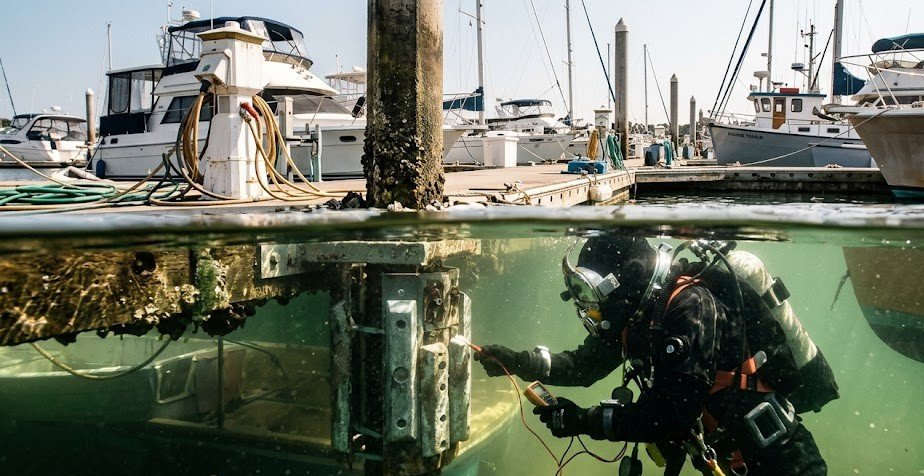
Most boat owners understand that sacrificial anodes eventually wear out, but when zincs disappear unusually fast or corrosion suddenly accelerates, the problem may not be the boat itself. Hidden electrical faults within a marina or nearby vessel can create dangerous stray current conditions that rapidly attack underwater metals. Recognizing the warning signs of marina stray current helps protect your boat from costly corrosion, unexpected equipment failures, and serious safety hazards.
Whether your vessel remains in a marina year-round or only visits occasionally, understanding how stray current develops—and how to identify potential “hot marinas”—is an important part of responsible boat ownership.
What Is Marina Stray Current?
Marina stray current is unwanted electrical current that leaks into the surrounding water from faulty shore power systems, damaged wiring, improperly grounded equipment, or electrical faults aboard vessels. Unlike normal galvanic corrosion, stray current corrosion can rapidly destroy underwater metals such as propellers, shafts, saildrives, trim tabs, and aluminum components if the source is not identified and corrected.
Because electricity naturally seeks the easiest path to ground, even boats with properly maintained electrical systems can be affected when moored near the source of the leakage.
According to the American Boat & Yacht Council (ABYC), proper shore power installation, grounding, and bonding systems are essential for minimizing electrical hazards and corrosion in marinas.
What Is a “Hot Marina”?
A “hot marina” is an informal term used to describe a marina where stray electrical current is present in the water due to electrical faults. These faults may originate from marina infrastructure, dock equipment, shore power pedestals, or nearby boats with defective electrical systems.
Possible sources include:
- Damaged shore power wiring
- Faulty dock electrical equipment
- Improper grounding
- Damaged underwater cables
- Defective onboard battery chargers
- Faulty AC or DC electrical systems aboard neighboring vessels
Identifying these issues early helps reduce corrosion risks while improving overall marina safety.
How Hot Marina Corrosion Develops
Hot marina corrosion occurs when stray electrical current passes through underwater metal components instead of remaining within intended electrical circuits.
This unwanted current can dramatically accelerate corrosion of:
- Propellers
- Propeller shafts
- Saildrives
- Trim tabs
- Rudders
- Through-hull fittings
- Aluminum outdrives
Unlike normal galvanic corrosion, which typically develops gradually, stray current corrosion can damage expensive underwater equipment in a relatively short period if the electrical fault persists.
Warning Signs of Boat Shore Power Issues
Electrical problems often appear gradually before severe corrosion develops. Recognizing early boat shore power issues can help prevent expensive repairs.
Common warning signs include:
- Unexpected electrical shocks when touching metal components
- Repeated tripping of shore power breakers
- Corrosion appearing suddenly
- Unusual electrical odors
- Damaged shore power cords
- Electrical equipment operating erratically
If any of these symptoms occur, disconnect shore power if it is safe to do so and consult a qualified marine electrician before reconnecting.
The U.S. Coast Guard Boating Safety Division emphasizes the importance of maintaining marine electrical systems to reduce both corrosion risks and electrical safety hazards.
Rapid Zinc Loss: One of the Biggest Warning Signs
One of the earliest indicators of electrical problems is rapid zinc loss. Sacrificial anodes naturally corrode over time to protect underwater metals, but unusually fast deterioration often indicates abnormal electrical activity.
Possible causes include:
- Marina stray current
- Faulty onboard wiring
- Poor bonding systems
- Electrical leaks
- Nearby vessels with electrical faults
- Incorrect anode material for the water type
Professional Zinc Replacement services help identify abnormal anode wear while ensuring continued corrosion protection.
Detecting an Underwater Electrical Leak
An underwater electrical leak may not produce obvious symptoms until corrosion becomes severe. Routine inspections help identify early warning signs before expensive underwater components are damaged.
Professional inspections often evaluate:
- Anode condition
- Corrosion patterns
- Propeller condition
- Drive units
- Bonding components
- Visible electrical damage
Professional Underwater Inspection services provide valuable documentation of underwater corrosion while identifying components that may require additional electrical evaluation.
Testing Marina Water for Electricity
Testing marina water for electricity should only be performed using appropriate equipment by qualified professionals following established marine electrical safety procedures.
Testing may involve:
- Measuring electrical potential in the water
- Evaluating shore power systems
- Inspecting dock wiring
- Checking vessel grounding systems
- Investigating abnormal corrosion patterns
Because energized water can present a serious shock hazard, boat owners should never enter the water in a marina where stray current is suspected.
The National Fire Protection Association (NFPA) includes marina electrical safety requirements in NFPA 303, the Fire Protection Standard for Marinas and Boatyards.
Preventing Stray Current Damage
Reducing the risk of marina stray current involves both preventative maintenance and routine inspections.
Best practices include:
- Inspect shore power cords regularly.
- Replace damaged electrical connectors promptly.
- Maintain bonding systems.
- Monitor sacrificial anode wear.
- Schedule routine underwater inspections.
- Have marine electrical systems inspected by qualified professionals.
Supporting Long-Term Corrosion Protection
Routine Hull Cleaning
Professional Hull Cleaning removes marine growth while allowing divers to inspect underwater components for unusual corrosion.
Regular Underwater Inspections
Routine Underwater Inspection services help identify corrosion, damaged anodes, and underwater issues before they become major repairs.
Common Mistakes Boat Owners Make
- Ignoring unusually rapid zinc depletion.
- Assuming corrosion is always caused by saltwater alone.
- Using damaged shore power cords.
- Skipping routine underwater inspections.
- Overlooking bonding system maintenance.
- Entering marina water where electrical leakage is suspected.
Frequently Asked Questions
What is marina stray current?
Marina stray current is unwanted electrical current leaking into the water from faulty shore power systems, marina infrastructure, or nearby vessels, potentially causing rapid corrosion of underwater metal components.
How can I tell if my marina has stray current?
Warning signs may include rapid anode loss, unusual corrosion patterns, electrical problems aboard the vessel, or reports of electrical faults within the marina. Professional testing is required to confirm stray current.
Why are my zinc anodes disappearing so quickly?
Rapid zinc loss may indicate abnormal galvanic activity, stray current corrosion, faulty bonding, or electrical leakage that should be investigated promptly.
Can stray current damage my boat even if my wiring is correct?
Yes. Electrical leakage from nearby boats or marina infrastructure can affect properly maintained vessels sharing the same marina.
Is it safe to swim in a marina with suspected stray current?
No. If stray current is suspected, avoid entering the water and notify marina management immediately. Qualified professionals should investigate the source before the area is considered safe.
Looking for more expert marine maintenance advice? Visit our blog for additional guides on corrosion prevention, underwater inspections, and professional marine services.
Conclusion
Marina stray current is a hidden threat that can rapidly damage underwater metals while creating serious electrical safety concerns. By recognizing the warning signs of hot marina corrosion, monitoring zinc consumption, maintaining shore power equipment, and scheduling regular underwater inspections, boat owners can reduce corrosion risks and protect valuable propulsion systems. Early detection and professional electrical evaluation remain the most effective defenses against costly stray current damage.
Ready to protect your vessel?
If you need expert help with underwater inspections or corrosion monitoring, our team of certified divers and marine technicians is ready to assist. Learn more about our underwater inspection services here.
Prefer to speak with an expert immediately? Contact us today to schedule a service or request a free quote.
